
Related videos:
On this July 4, 2026, the United States of America celebrates two and a half centuries of one of the most significant proclamations in human history. The Declaration of Independence was not simply a political text or a rhetorical gesture from thirteen discontented colonies. It was a break from the old order and the idea that men are born to obey kings or privileged castes. In its essential lines, it asserted that human beings possess inherent rights, that legitimate power derives from the consent of the governed, and that a people have the right to alter or abolish a government that violates their freedoms.
Thomas Jefferson drafted the main document, but it was also the work of John Adams, Benjamin Franklin, Roger Sherman, Robert Livingston, and the men who, in the Continental Congress, took the risk of separating their colonies from the greatest empire of their time. These founders had no guarantees of success. They did not know whether they would be defeated, imprisoned, executed, or reduced to ruin. But they understood that there are causes that are worth more than comfort, wealth, and even life itself: freedom, human dignity, and the right of each nation to govern itself.
The Declaration paved the way, and George Washington made it possible for it not to end in defeat. Leading a poorly dressed, poorly fed army, with scarce resources, sick soldiers, desertions, and enormous difficulties, he maintained the fight against British power. Valley Forge remains the symbol of that resistance: in December 1777, the Continental Army entered there exhausted and poorly supplied, but months later emerged more disciplined, more united, and better prepared to continue the war. American independence did not arise from ease; it was the result of perseverance in the face of cold, hunger, uncertainty, and sacrifice.
It was also a victory for allies and for peoples who understood the magnitude of that epic. France provided decisive forces; Spain opened another front against Great Britain; and Cuba, still a Spanish colony at that time, made a contribution that deserves to be remembered with pride. In 1781, Francisco de Saavedra turned to the inhabitants of Havana to raise urgent funds for the French fleet that would support the campaign at Yorktown. According to the United States National Park Service, more than 500,000 pesos were raised in just six hours. That aid reached Admiral De Grasse's fleet before its departure to the Chesapeake Bay, where Franco-American cooperation tightened the noose around British General Charles Cornwallis.
Popular tradition particularly remembers the ladies of Havana who contributed jewels and resources to that cause. Documented history suggests we should nuance that image: the funding likely combined colonial treasury funds with private contributions. However, the essential fact is indisputable: the money from Havana was crucial for the operation that led to Yorktown. Cuba, while still under Spanish rule at that time, was connected to a victory that helped give birth to the great American republic.
Two hundred fifty years later, American greatness lies not only in its military power, wealth, science, universities, businesses, inventions, or its ability to influence the world. Its greatest legacy is having upheld, perfected, and defended an idea: that no power should be above the law, that citizens have rights that the state cannot grant or withdraw arbitrarily, and that individual freedom, private initiative, faith, family, work, and personal responsibility are the fundamental pillars of a healthy society.
It is true that the United States has faced contradictions, mistakes, and painful chapters. No human nation is perfect. But its strength has been in possessing principles and rights capable of correcting its own shortcomings: equality before the law, freedom of expression, the separation of powers, political alternation, respect for religious conscience, and the possibility for a humble person to rise through effort, talent, and discipline. The Declaration did not resolve all injustices at once, but it set a moral standard to which later generations could appeal to demand more freedom and more rights.
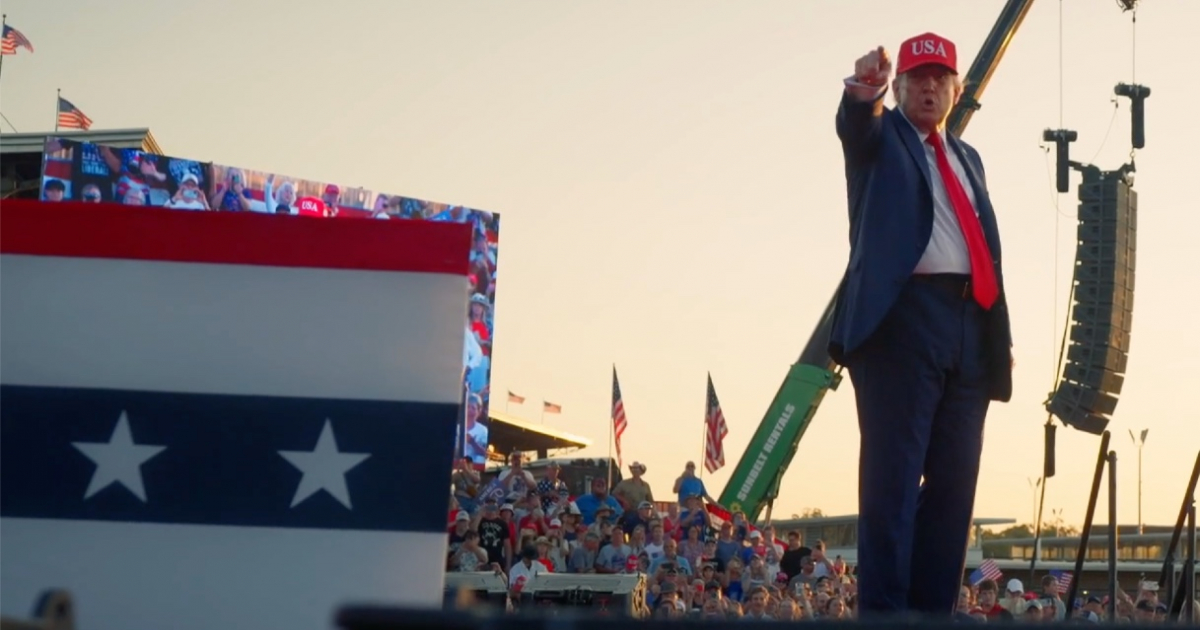
Hence, the importance of the speech delivered by President Donald Trump on the night of July 3, in front of Mount Rushmore, in South Dakota. In front of the images of Washington, Jefferson, Lincoln, and Theodore Roosevelt, Trump presented the anniversary as an occasion to remind that American freedom is not maintained by inertia. He warned about what he called the resurgence of the communist threat and argued that this ideology is incompatible with freedom, the Constitution, and the essence of July 4, 1776. The president referenced the “defeat of Venezuela” and the “beating dealt to the Iranian fundamentalist regime.” However, he did not mention Cuba.
"Communism is not an innocent difference of opinion regarding taxes or regulations." Wherever it has gained absolute power, it has destroyed private property, crushed freedom of the press, persecuted believers, punished dissent, created a political police force, and turned lies into a method of governance. Communists promise equality and end up producing misery; they promise justice and impose oppression; they promise liberation and create slaves.
President Trump and his administration must remain steadfast in the face of this grave danger, both domestically and internationally. This is not about suppressing legitimate thought or criminalizing democratic dissent; nor is it about undermining the sovereignty of other nations. It is about preventing totalitarian ideologies from using free institutions to destroy freedom and ensuring that criminal dictators do not enslave their people.
Ninety miles from Florida lies a communist dictatorship that has not ceased to oppress the Cuban people nor to serve as a platform for interests hostile to the United States. The executive order signed by Trump on January 29, 2026 declared that the Cuban regime poses an unusual and extraordinary threat to national security and U.S. foreign policy, citing its ties to Russia, China, Iran, Hamas, and Hezbollah, as well as its history of repression against dissenters and citizens who oppose the regime.
As long as Cuba, Venezuela, and Nicaragua are not democratic nations, the continent will continue to face a constant source of instability and authoritarian expansion. Castroism has proven over more than six decades that it is not trustworthy: it lies, deceives, buys time, and does whatever it deems necessary to maintain power. U.S. policy should combine effective pressure and vigorous actions against repressive elites, direct solidarity with oppressed peoples, and clear support for a genuine democratic transition.
Washington, Jefferson, Adams, Franklin, Truman, Reagan, and so many others understood, each in their time, that freedom needs strong and brave defenders. I am reminded of that young Frenchman Gilbert du Motier, Marquis de Lafayette, who voluntarily, like others, came to fight for the independence of the Thirteen Colonies.
God bless this Great Nation on the 250th anniversary of its independence. Congratulations to all Americans who fight for democracy, human rights, progress, prosperity, and the strength of their country. The United States must continue to be, in America and around the world, a guardian and defender of freedom against all tyranny.
Filed under:
Opinion article: Las declaraciones y opiniones expresadas en este artículo son de exclusiva responsabilidad de su autor y no representan necesariamente el punto de vista de CiberCuba.