
Related videos:
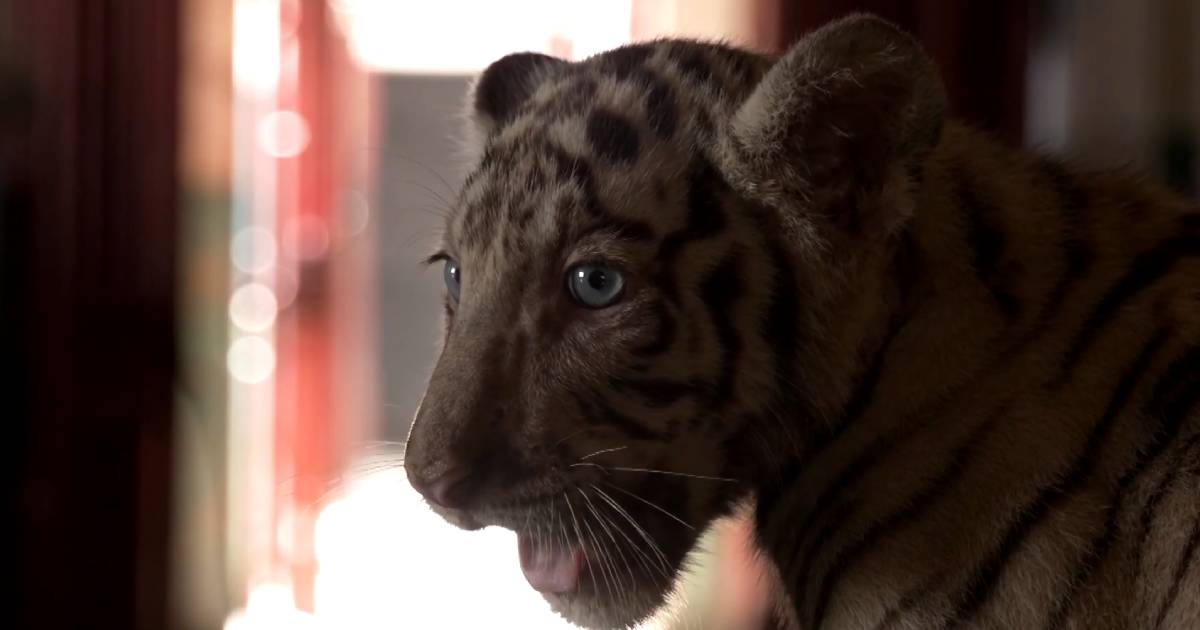
Four Bengal tiger cubs were born at the National Zoo of Cuba, including an extremely rare white specimen, an event that caretaker Ángel Cordero described as "a little miracle" amidst the deep crisis facing the institution.
The birth was highlighted this Monday by the agency Reuters, which depicted the contrast between the arrival of the new cubs and the daily difficulties of a zoo that barely receives a quarter of the fuel necessary to operate.
Cordero, who has been working at the facility for 44 years, witnessed the birth and did not hide his emotion.
"It's only the second time that white tigers have been born in Cuba. And I was there to witness it," he stated.
The first birth of a white tiger at the zoo occurred in March 2021, when four Bengal tiger cubs were also born. The fact that this is happening amidst the country's economic decline makes this birth even more extraordinary.
The white tiger is not a distinct subspecies but rather a rare genetic variation of the Bengal tiger caused by a recessive gene. It is estimated that there are fewer than 200 individuals worldwide, almost all of them in captivity, and no wild populations are known.
The good news arrives as the zoo struggles to keep the attention of hundreds of animals under increasingly challenging conditions. As Cordero explained, the institution needs about 20 liters of diesel daily to transport food for species such as buffalo, zebras, rhinoceroses, hippos, and large felines, but it only receives five liters.
The lack of fuel has forced workers to cover the 375 hectares of the park using horse-drawn carriages and electric tricycles.
"Everything depends on the fuel. The movements of the animals and the distribution of food, which must be transported on wheels; there simply isn't another way," the caretaker explained.
The director of the National Zoo, Juan Carlos Santos, previously stated to Reuters that, despite the limitations, the animal population has remained stable thanks to the efforts of the staff and the support of small private companies that provide some essential supplies.
The difficulties of the park reflect the energy crisis currently facing Cuba. The shortage of fuel and prolonged blackouts have impacted the operation of numerous state institutions. This year, the National Botanical Garden closed its doors after running out of the diesel necessary to operate, while the zoo in Camagüey reported cases of neglect and severe malnutrition among several lions.
Amidst that backdrop, the National Zoo also celebrated the birth of a dromedary, the first in about thirty years.
For the workers, the arrival of the four cubs —especially the rare white tiger— represents much more than a reproductive success: it is an unexpected sign of hope in a place that struggles daily to survive amid the crisis.
Filed under: