
Related videos:
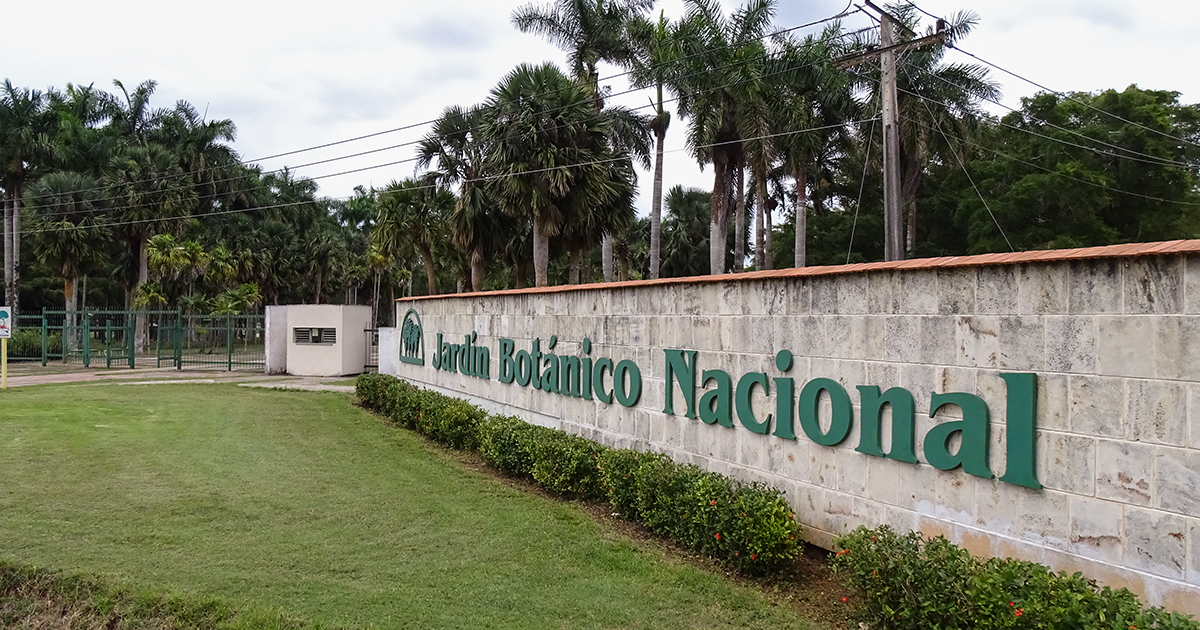
The National Botanical Garden (JBN) of Cuba, closed since April 12 due to a lack of diesel, held its second scientific session of the REVIV-e Project this Tuesday, an international initiative that studies converting garden pruning waste into renewable energy and high-value-added products.
The session, held in Havana, focused on a detailed analysis of the garden pruning process: flows, volumes, and types of branches and leaves from approximately 3,000 plant species, with the aim of assessing their viability for transforming them into wood pellets, chips, and natural substrates under a circular economy model.
The paradox is striking: the JBN closed its doors because it has not received a single liter of the 10,000 liters of diesel approved in its economic plan since February, which halted the tasks of clearing, pruning, and maintaining its collections.
In its closing statement, the garden noted that "during this year we have not been able to receive the minimum fuel necessary to ensure the maintenance of our collections, the transportation of personnel, the resolution of breakdowns, and other vital activities."
Now, those same vegetable residues that cannot be removed due to a lack of fuel are the subject of study for REVIV-e, whose declared objective is "to demonstrate the technical, economic, social, and environmental viability of a comprehensive model for the energy and non-energy recovery of residual forest biomass."
The project, whose full name is "From Waste to Resources: Comprehensive Utilization of Forest Biomass from Sustainable Management of the Almendares Basin," is fully funded by the Spanish Agency for International Development Cooperation (AECID) and coordinated by the University of Zaragoza through its ENERGAIA Institute, with researcher Javier Royo as the central figure.
It includes Cuban institutions such as CUBAENERGIA, INSTEC, CUBASOLAR, and ECOMUNDO, along with Spanish organizations Sodepaz and Ecofricalia.
REVIV-e has a direct predecessor: the Mor-e Project, also coordinated by the University of Zaragoza and funded by AECID with a budget of 507,400 euros, which in October 2024 inaugurated the first Cuban plant for pellet production from residual moringa biomass, achieving a 91% reduction in electricity consumption for drying processes.
The closure of the JBN occurs in the context of the most severe energy crisis that Cuba has faced in decades, with an electric deficit that reached 1,800 megawatts in March 2026, following the interruption of oil supplies from Venezuela and Mexico.
Mexico suspended its oil shipments on January 9, 2026, and throughout the first quarter, Cuba received only two shipments of crude oil, a situation that threatens to leave the country without reserves in the short term.
Fuel in the informal market was priced at 18,000 pesos for just three liters in April 2026, a figure that illustrates the extent of the collapse.
The JBN, affiliated with the University of Havana and covering approximately 500-600 hectares in the Arroyo Naranjo municipality, houses around 4,000 living plant species and a herbarium containing 100,000 specimens. The last time it closed before this year was during the COVID-19 pandemic, reopening its doors to the public in October 2021.
The reactions on social media to the closure were strong. "Because of the embargo, haaaa... we also don’t have a botanical garden, or Lenin Park, or ExpoCuba, or a zoo, or a national aquarium, nor any morals or shame," wrote a user, referring to the official argument that blames the embargo for all the country's ills.
For the moment, the JBN remains closed "until further notice," while researchers from the REVIV-e Project work to determine if their own waste can be converted into the energy needed for the garden to reopen.
Filed under: