
Related videos:
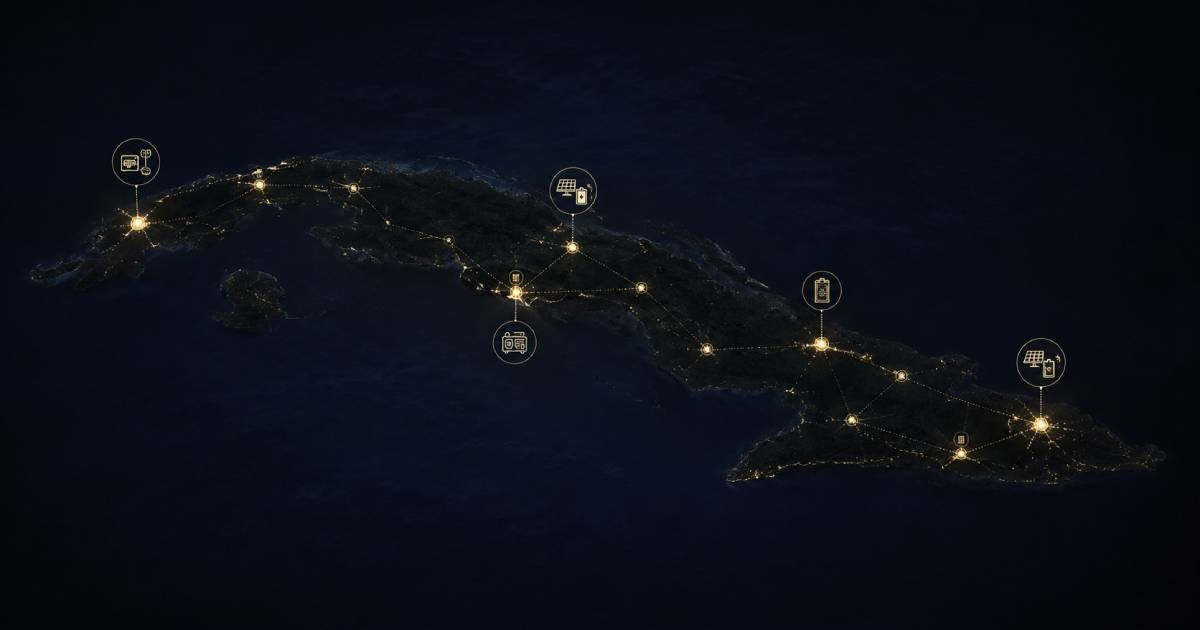
While millions of Cubans continued this Monday without electricity following the seventh total collapse of the National Electric System (SEN) in just 18 months, the state-owned Unión Eléctrica (UNE) published a brief statement on Facebook to inform that "microsystems across the country" were now operational to protect vital services and that a new unit from Energás Boca de Jaruco was beginning to integrate into the system.
Far from conveying tranquility, the message triggered a wave of criticism, irony, and expressions of desperation among social media users.
"What a country! A famous phrase," wrote an internet user in a comment that summed up the feeling of frustration shared by hundreds of Cubans.
Many questioned the effectiveness of the so-called microsystems. "The microsystems don’t work either, don’t generalize; many, when they turned them on, left," commented a Cuban woman. Another user asked, "And the batteries from Cotorro and I don’t know where else, aren’t they supposed to prevent this?"
There were also numerous testimonies from those who have been without electricity for days. "What a way to play with us; the suffering we endure day after day is too much," lamented one person. From another affected area, a Cuban demanded: "And what about El Naranjal? We've been without power for over three days." Meanwhile, an internet user summarized the issue with another critique: "And there's not even enough fuel to ignite a spark in a thermoelectric plant."
Microsystems are isolated electrical networks that operate with diesel generators and photovoltaic parks to maintain supply in prioritized circuits, such as hospitals, communication centers, and water supply systems, when the National Electric System fails. Energás Boca de Jaruco, located in Mayabeque, is one of the key plants to initiate the recovery of the system in the western region.
The announcement from the UNE comes amid one of the worst electrical crises the country has experienced. For this Monday, a deficit exceeding 2,200 megawatts was estimated, with availability close to 1,000 MW against a demand of around 3,100 MW. On Sunday, 72% of the national territory was without service during peak demand hours, an unprecedented level of disruption.
Among the main causes of the collapse are the shutdown of 106 distributed generation plants due to a lack of fuel, leaving about 890 MW offline, in addition to more than three months without receiving oil supplies. This is compounded by the situation at the Antonio Guiteras thermoelectric plant, the largest in the country, which has experienced 17 disconnections so far in 2026 and has not received major maintenance since 2010.
The energy crisis has also begun to spill into the streets. In recent days, protests have been reported in various parts of the country. On July 2, residents of La Lisa gathered outside the municipal headquarters of the Communist Party after being without electricity or water for over 50 hours. The following day, residents of Regla took to the streets after more than 24 hours of blackout, in an event marked by a heavy police presence and internet outages. In some areas of Matanzas, power cuts have lasted up to 87 consecutive hours.
So far, the UNE has not reported how long it will take to fully restore the service. Recovery after a total system disconnection usually takes several hours or even days. The most recent precedent occurred on March 16, 2026, when the reconnection process took 29 hours and 29 minutes.
Filed under: