
Related videos:
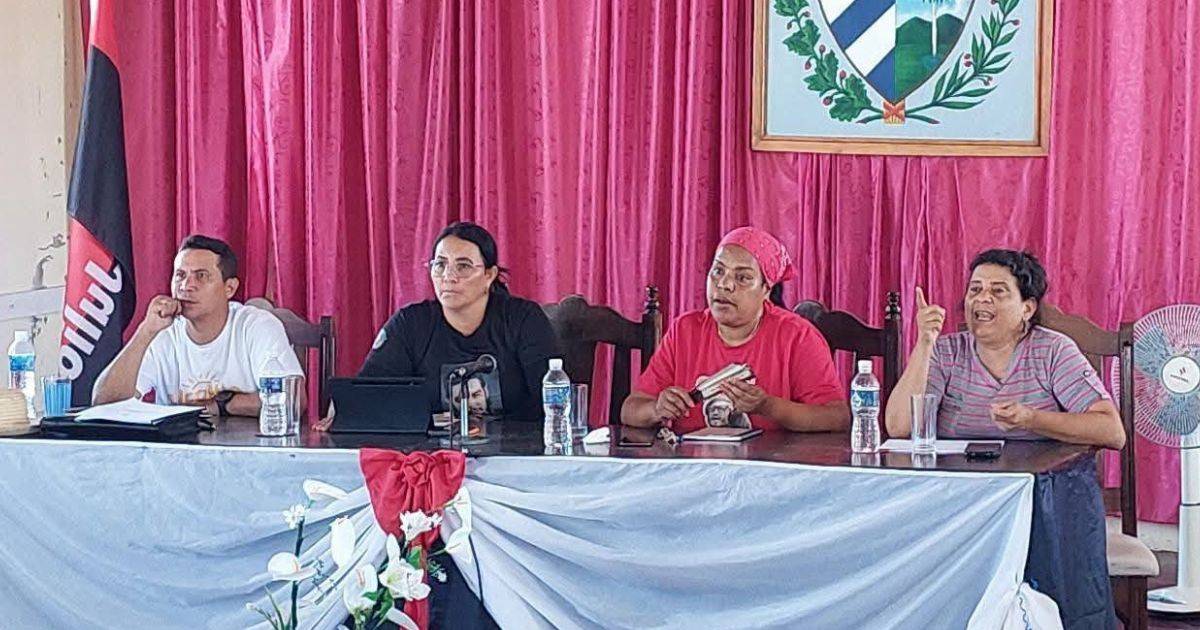
The governor of Granma, Yanetsy Terry Gutiérrez, convened a meeting this Sunday with representatives of small and medium-sized enterprises (mipymes) and self-employed workers in Manzanillo to demand greater responsibility in addressing the municipality's problems, as reported by state media CNC TV Granma, with information from journalist Baldo Alexis Blanco.
The call from the official to the non-state sector comes in a context that the provincial government has recognized as critical: in June 2026, the authorities of Granma admitted that they do not have the more than 400 million pesos necessary to pay their 111,000 retirees.
In the meeting, Terry Gutiérrez addressed the circulation of cash, the importance of bank deposits, and the urgency of ensuring timely payments to retirees and workers. The leader framed the discussion with a phrase that the state media reproduced as a slogan: "Solve problems and promote development."
The governor also urged the private sector to take on a responsibility that goes beyond their businesses, appealing for social empathy with the expression "putting ourselves in others' shoes." She recognized the efforts of those already participating in community support initiatives, such as the direct cash payment of pensions, and stated that "Manzanillo has the conditions to become a benchmark in the province."
What the official presented as "articulation" between sectors is, in practice, a transfer of state obligations to the private sector. In light of the cash crisis that jeopardizes the payment of salaries and pensions, the regime has resorted to pilot plans in which small and medium-sized enterprises and private businesses pay pensions directly to retirees with the money collected from their own services. In Holguín, around 20 private businesses are participating in this scheme, benefiting approximately 5,000 pensioners.
The pressure on the private sector is not limited to speeches. There have been documented cases where finance inspectors, with police support, force small and medium-sized enterprises (mipymes) to deposit their cash in banks to fund pension payments. In Camagüey, there have been reports of forced cash withdrawals from self-employed individuals in what some have called a "banking corralito." Furthermore, since April 2026, Resolution 86 from the Ministry of Finance requires mipymes, self-employed individuals, and cooperatives to report suspicious operations related to money laundering and terrorist financing.
The Cuban private sector contributes 23% of the State's budgetary revenues through taxes, accounts for over half of the retail commerce, and generates nearly a third of employment, according to data on the private sector amidst the crisis. In practice, it is the only support for an economy that the State has been unable to keep afloat during more than six decades of dictatorship.
The Cuban government presented in June 2026 a package of 176 measures that eliminate key limits for small and medium enterprises, such as the cap of 100 workers and the restriction of owning only one business. However, these concessions coexist with increasing controls and the expectation that the private sector will finance functions that the state cannot fulfill.
Cubans who followed the news on social media reacted with skepticism and irony. Many pointed out that the governor is asking private citizens to solve what the state has never been able to guarantee, while subjecting them to inspections, banking obligations, and new regulations. Others recalled that the minimum pension in Cuba has been just 4,000 pesos since September 2025, an amount that inflation has rendered insignificant, and that collecting pensions has turned into a nightmare for the elderly who must wait in endless lines in front of banks.
The official media outlet concluded its publication with a phrase that encapsulates the regime's logic in the face of its own failure: "Development with social justice requires shared responsibility."
Filed under: