
Related videos:
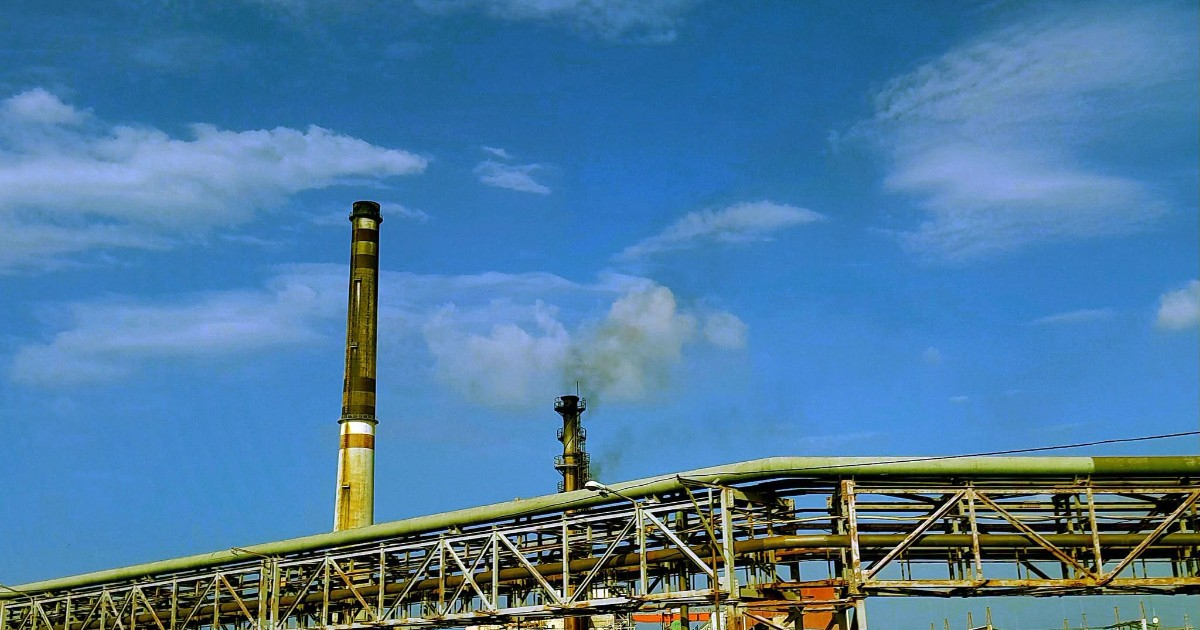
The unit 1 of the Lidio Ramón Pérez Thermoelectric Power Plant (CTE Felton), in Mayarí, Holguín, synchronized with the National Electric System at 1:50 AM this Saturday, generating 155 MW steadily while adjusting parameters to increase its load.
“#FeltonUno now: 155 MW stable and adjusting parameters to increase load. Shift C is in operations. The unit synchronized at 1:50 AM this Saturday,” reported Emilio Rodríguez Pupo on Facebook.
The news arrives just hours after the same plant was involved in a serious incident on Friday night, when a previous synchronization attempt triggered a sharp frequency drop that left the entire province of Granma without electricity.
According to the Electric Company of Granma, the provincial disconnection was an automatic protection protocol: "There was a sudden drop in frequency, which led to the disconnection of the province of Granma to prevent the collapse of the National Electric System."
Minutes earlier, at 8:08 PM on Friday, a fault at the Victoria de Girón Substation in Havana had caused a high fluctuation in the system and the abrupt shutdown of the Renté 3 and Felton 1 units, according to the official report.
Despite the reconnection of Felton 1, the national electrical outlook for this Saturday remains critical: Unión Eléctrica projects a deficit of 2,050 MW during the peak nighttime hours, with a availability of only 1,050 MW against an estimated demand of 3,100 MW.
The projected impact for the nighttime peak this Saturday reaches 2,080 MW, a figure that adds to that of Friday, when the maximum impact reached 2,221 MW at 8:00 PM, with service interrupted for 24 hours nationwide.
Currently, eleven thermal units are out of service: six due to breakdowns —units 6 and 8 of Máximo Gómez, Antonio Guiteras, unit 6 of Diez de Octubre, unit 2 of Felton itself, and unit 3 of Antonio Maceo— and five undergoing maintenance.
To this figure, 106 distributed generation plants are added, which are out of operation due to a lack of fuel, along with the Patana de Regla, the Patana de Melones, the Mariel Fuel Plant, and the Moa Fuel Plant.
The Electric Company of Havana confirmed that the maximum impact in the capital reached 586 MW on Friday, with 407 MW remaining unrepaired "without a scheduled time" at the end of their statement.
The crisis has structural roots that no short-term measures can resolve: Cuba needs between 90,000 and 110,000 barrels of oil daily for its electrical system, but it only produces 40,000, and the Venezuelan supply was cut off in January 2026.
The accumulated desperation has overflowed into the streets. Since July 1, protests, protests with cookware, and blockades have been recorded in neighborhoods of Havana and Santiago de Cuba, with slogans escalating from "We want electricity!" to "Freedom!" and "Down with the dictatorship!".
The Cuban Observatory of Conflicts recorded 1,311 protests in May 2026, the highest number since July 11, 2021, signaling that citizens' patience regarding chronic power outages has reached its limit.
Filed under: