
Related videos:
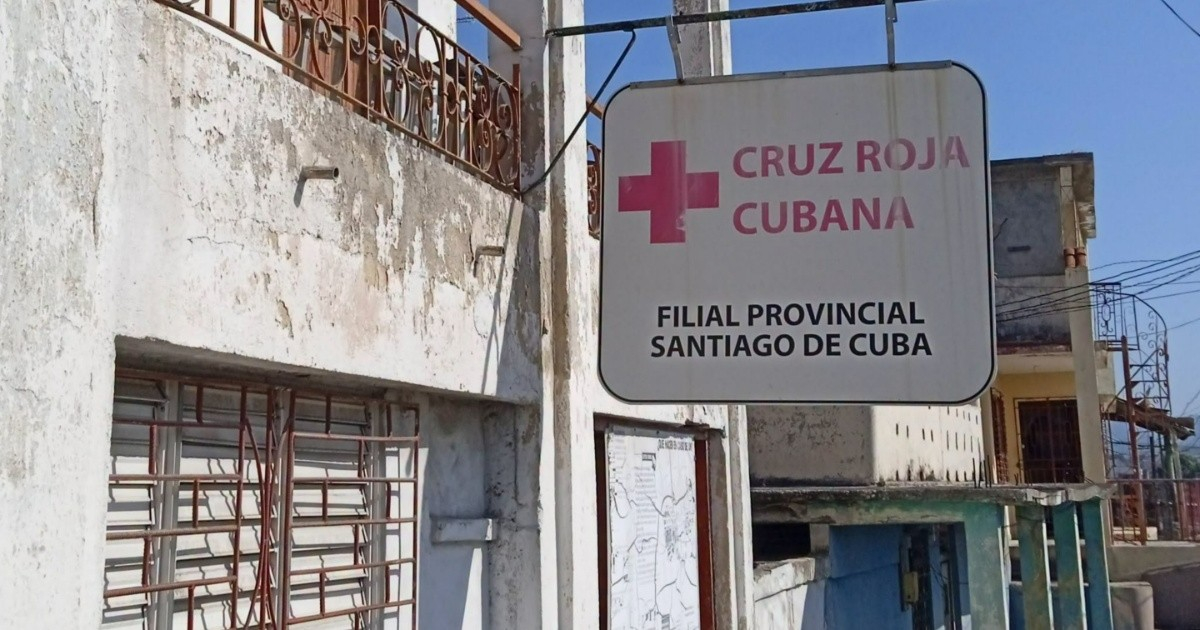
The provincial headquarters of the Cuban Red Cross in Santiago de Cuba has been operating without telephone service for over 10 months, according to a public complaint shared on Facebook by Aris Arias Batalla, a member of the institution.
The author notes that the disruption at the location on Carretera del Morro, streets A and B, number 268, Reparto Vista Hermosa, began well before Hurricane Melissa struck in October 2025, suggesting that the issue dates back to mid-2025 or even earlier.
"Our provincial headquarters has been without phone service for over 10 months, long before Hurricane Melissa passed by," wrote Arias Batalla, who detailed that the center's management has taken "various actions, measures, reports, visits to ETECSA, and beyond" without receiving any response.
In addition to the lack of telephone communication, there is an electrical outage that has lasted over 10 days, recorded under report number 16457, also without a solution at the time of publication.
The paradox highlighted by the complaint is that the branch is not inactive: "right now, hundreds of Red Cross volunteers are present there delivering humanitarian aid sent by the International Red Cross to families affected by the devastating Hurricane Melissa," in addition to conducting training in neighborhoods, communities, and organizations.
Arias Batalla directly points to the inaction of decision-making officials, whom he refers to as "jefes con G" —a colloquial Cuban expression that alludes to high-ranking executives— and criticizes them for "undermining the importance" of the institution's work.
"Our global mission and objective is to save lives and alleviate human suffering. Who is responsible for saving and alleviating ours?" he asked in his post.
The telecommunications situation in Santiago de Cuba is one of accumulated crisis. Following the passage of Hurricane Melissa, Santiago was left with only 3% of its telecommunications services operational due to severe damage to the fiber optic networks in municipalities such as Guamá, Segundo Frente, and Tercer Frente.
This is compounded by chronic blackouts: ETECSA has admitted that its infrastructure does not operate for more than 24 hours without electricity, and the outages —which exceed 16 hours daily in several provinces— leave approximately 47.5% of mobile base stations and 56.5% of telecommunications cabinets out of service.
In Santiago, there have also been reports of thefts of solar panels and sabotage of radio bases, which have left key nodes of the network without energy support, according to reports of attacks on ETECSA infrastructure in the province.
Despite all these difficulties, the Cuban Red Cross —with more than 35,000 active volunteers— played a central role in the response to Hurricane Melissa: it rescued over 500 people and distributed 20 tons of humanitarian aid from the International Federation of Red Cross and Red Crescent Societies, valued at 18 million dollars, among 1,500 affected individuals in Santiago de Cuba, Granma, and Holguín.
Arias Batalla concluded his complaint with a warning: "We will continue to wash that dirty laundry at home despite the existing deficits and the bosses with 'G' who still have not become sensitized to our situation."
Filed under: