
Related videos:
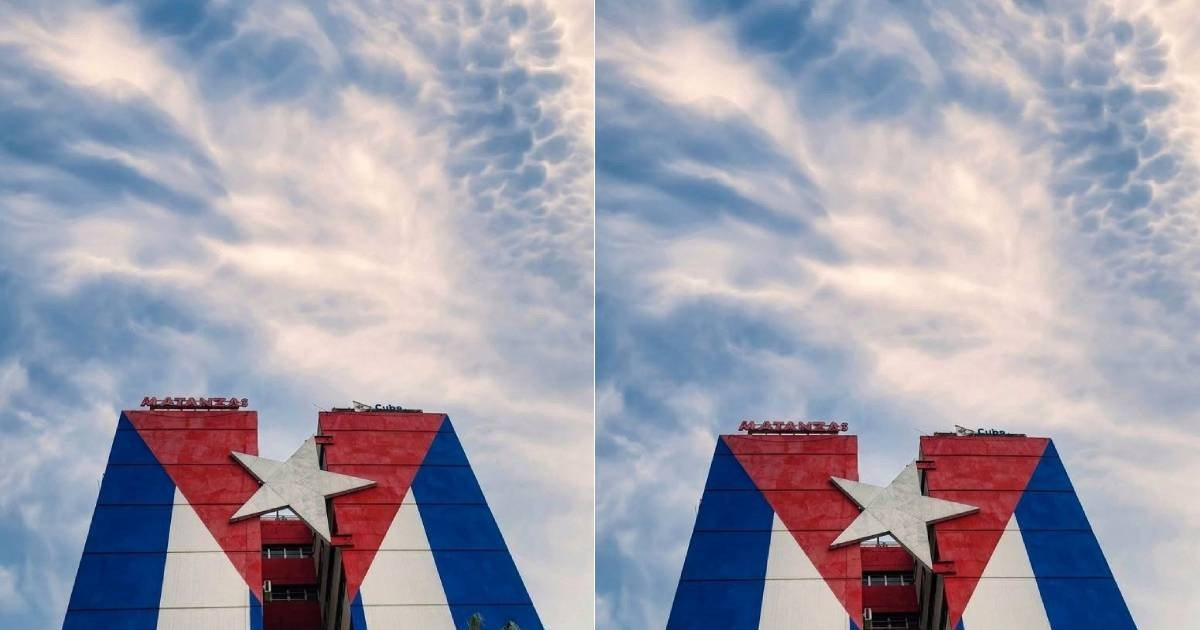
A striking formation of mammatus clouds surprised the residents of Matanzas this week and was captured in a photograph by meteorologist Henry Delgado Manzor, who shared the image on social media along with an explanation of this unusual atmospheric phenomenon.
"Mammatus clouds adorn the sky of Matanzas! Their curious name comes from the Latin 'mamma,' meaning 'mother' or 'udder,' and is due to their unmistakable shape resembling hanging bags or lobes," wrote Delgado Manzor on his Facebook account.
The image shows dozens of rounded protuberances suspended beneath the base of a wide layer of clouds, illuminated by bluish and pinkish hues that create an unusual landscape over the city.
Mammatus, also known as mammoth clouds, do not constitute an independent type of cloud. They form on the underside of large storm clouds, especially cumulonimbus clouds, when masses of cold air descend and come into contact with warmer, unstable air.
According to National Geographic, these formations are named for their resemblance to bags or pouches and are relatively easy to identify due to their distinctive appearance.
Although their appearance can be unsettling, experts clarify that mammatus clouds do not cause tornadoes and are not dangerous on their own. Rather, they are the result of storms that have already developed and, in many cases, indicate that the most intense phase of the weather phenomenon has either passed or is beginning to move away.
Where they certainly draw special attention is in aviation, as their presence can be associated with strong updrafts and downdrafts capable of causing severe turbulence.
It is not the first time that Delgado Manzor has documented unusual atmospheric phenomena over Matanzas. In May 2022, he recorded a fallstreak hole in the sky of the province, and in July 2025, he captured an episode of iridescence that also caught the attention of weather enthusiasts.
Summer is the most favorable time of year to observe this type of formation in Cuba. Between May and October, the increase in storm activity promotes the development of large cumulonimbus clouds, which are the clouds that typically give rise to mammatus.
The photograph shared by the meteorologist once again demonstrated that, in addition to the rains and storms typical of the season, the Cuban sky can also offer natural displays of great beauty that captivate both specialists and enthusiasts alike.
Filed under: