
Related videos:
The Venezuelan geological engineer Luiraima Salazar stated this Monday that the sequence of aftershocks caused by the devastating earthquakes on June 24 is still active, although most of the movements are no longer perceptible to the population.
In her eleventh seismic report, published on the social network X, the expert sent a message of reassurance to Venezuelans who are closely monitoring the evolution of tectonic activity.
"First of all, I want to convey a sense of calm. The sequence of aftershocks remains active, but for the most part, they are no longer noticeable to the population. This does not mean that the Earth has stopped moving; rather, the tectonic adjustment continues through numerous microseisms and low-magnitude earthquakes that are progressively releasing pressure," he wrote.
The report, updated as of 10:15 AM (Venezuelan time), indicates that over the last 24 hours, dozens of earthquakes were recorded, the majority with magnitudes between 2.0 and 3.0, while only a few exceeded that intensity.
The strongest tremors were located in the municipalities of Urdaneta (3.9), San Felipe in the state of Yaracuy (3.2), Naiguatá in La Guaira (3.1), Boca de Aroa in Falcón (3.1), and San Carlos in the state of Cojedes (3.0).
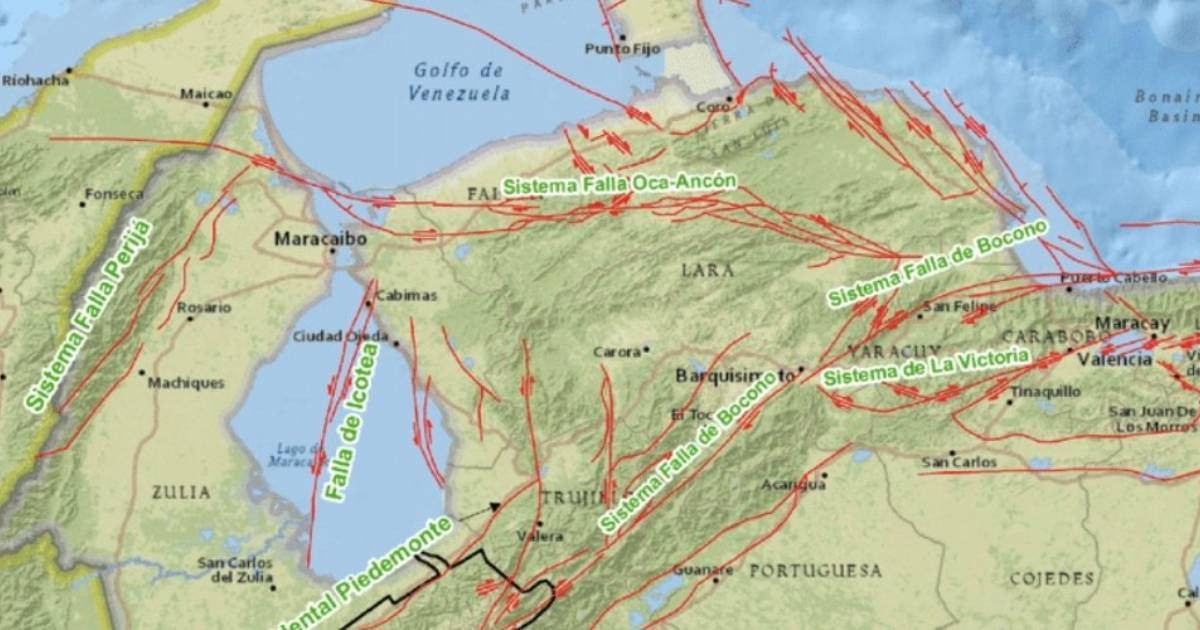
Salazar explained that seismic activity is beginning to redistribute towards the western part of the country, although he insisted that this behavior should not be interpreted as an indication of a new major earthquake.
"This does not mean that the earthquake is spreading westward, nor does it allow us to predict a larger event in that region. What we are observing is a redistribution of stresses within an interconnected fault system, a behavior that is expected following a major earthquake," he specified.
The geologist pointed out that the observed pattern is consistent with the redistribution of stresses between the tectonic plates of the Caribbean and South America, a normal process following a high-intensity seismic event.
The movements occur twelve days after the earthquakes of magnitudes 7.2 and 7.5 that shook northern Venezuela with just 39 seconds apart, considered the most destructive recorded in the country in over a century.
Since then, nearly a thousand aftershocks have been recorded, including several exceeding magnitude 4, which in the initial days even forced the temporary suspension of some rescue operations.
According to the latest official report, the tragedy has left 3,535 dead, 16,740 injured, and more than 17,800 people homeless, while recovery efforts continue in the most affected areas.
At the end of his report, Salazar insisted that the aftershocks could continue for days or even weeks, although the trend indicates increasingly weaker movements. He also urged the public to stay informed only through scientific and official sources to avoid rumors and misinformation regarding the evolution of seismic activity.
Filed under: