
Related videos:
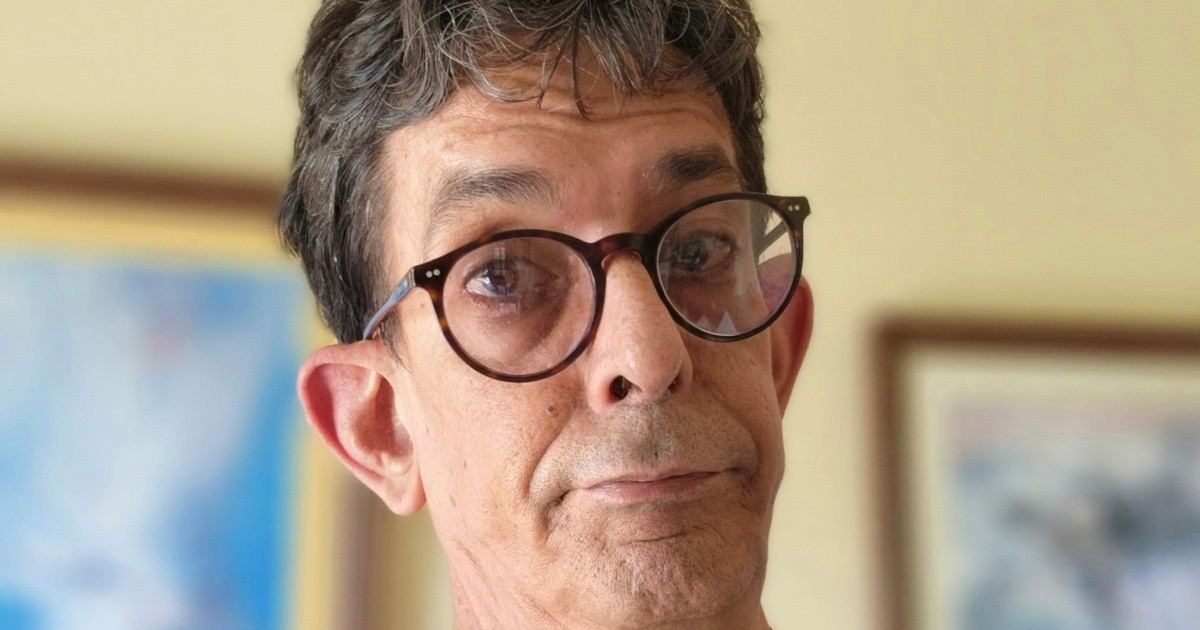
The Cuban comedian Ulises Toirac posed a question on his Facebook profile this Tuesday that, with apparent simplicity, strikes at the heart of the most heated political debate in Cuba: "Which Revolution decides who should step forward and who should step back? Who is Revolution?"
The question is neither abstract nor superficial. It comes shortly after Raúl Guillermo Rodríguez Castro, grandson of Raúl Castro known as "El Cangrejo," gave his — USA Today, published on July 6 — in which he stated: "I have never been interested in politics. It has never been my vocation. But if at any moment the revolution needs me, I will do it".
That phrase—which uses the term "Revolution" as a subject that summons and legitimizes an heir without a democratic mandate—is exactly what Toirac deconstructs with his public question.
El Cangrejo is 42 years old, a colonel in the Ministry of the Interior, and has been the head of personal security for his grandfather since 2016, without holding any elected official position. He welcomed the reporter from USA Today in the office that once belonged to Raúl Castro at the Havana Convention Center, dressed in fitted jeans, a Hugo Boss t-shirt, and Hermès sneakers, a stark contrast to the blackouts that last up to 25 hours experienced by the Cuban population.
In that same interview, he also stated: "I can negotiate with anyone designated by the U.S. If given the opportunity, of course with Trump", and added: "It hurts me a lot that people cannot live as I do. I envision a Cuba where people can buy foie gras in supermarkets."
The reaction from Toirac's followers was overwhelming. References to the crab as an animal that "walks backward" flooded the comments, turning the nickname of Raúl's grandson into a metaphor for the country's direction. "I've never seen a crab take a step forward," wrote one user, laughing. Another asked, "What kind of mental gymnastics will they use to explain how 'The Crab' can negotiate Cuba's foreign policy and condition the freedom of political prisoners over the president of the Republic?"
Several comments pointed to the elusive nature of the concept itself. "The revolution is that abstract entity whose last name we only know, and whose capacity for destruction is directly proportional to the embargo's ability to serve as an excuse," wrote one follower. Another was more direct: "Revolution is the name of the farm." A third comment noted that "a revolution is framed within a period of time" and that the term continues to be used "for the legitimization of power," while what exists in Cuba is "a phase of conservative stagnation." There were also those who summarized it in a few words: "This is a monarchy; there hasn't been a revolution here for a while."
There were also those who raised the fundamental legal question: "Who assumes legal responsibility if the decisions are made by that concept known as 'Revolution,' but it is the ordinary citizen who always pays the consequences?"
Some followers warned Toirac to take care, recalling the proverb about the pitcher and the well. The comedian has been delivering an increasingly direct criticism of the system for months, having described Cuba as a "failed state" and depicted the country as "a maze with no solution."
The rise of El Cangrejo to the center of the debate is not new: the CIA director, John Ratcliffe, had already met with him in Havana on May 14, 2026, during the visit of the highest-ranking official from the Trump administration to Cuban soil since 2016.
"Revolution is the camouflage used to mask what has always been the complete opposite: totalitarian dictatorship," summarized another commentator. Toirac's question, without accusation or naming anyone, said it all.
Filed under: