
Related videos:
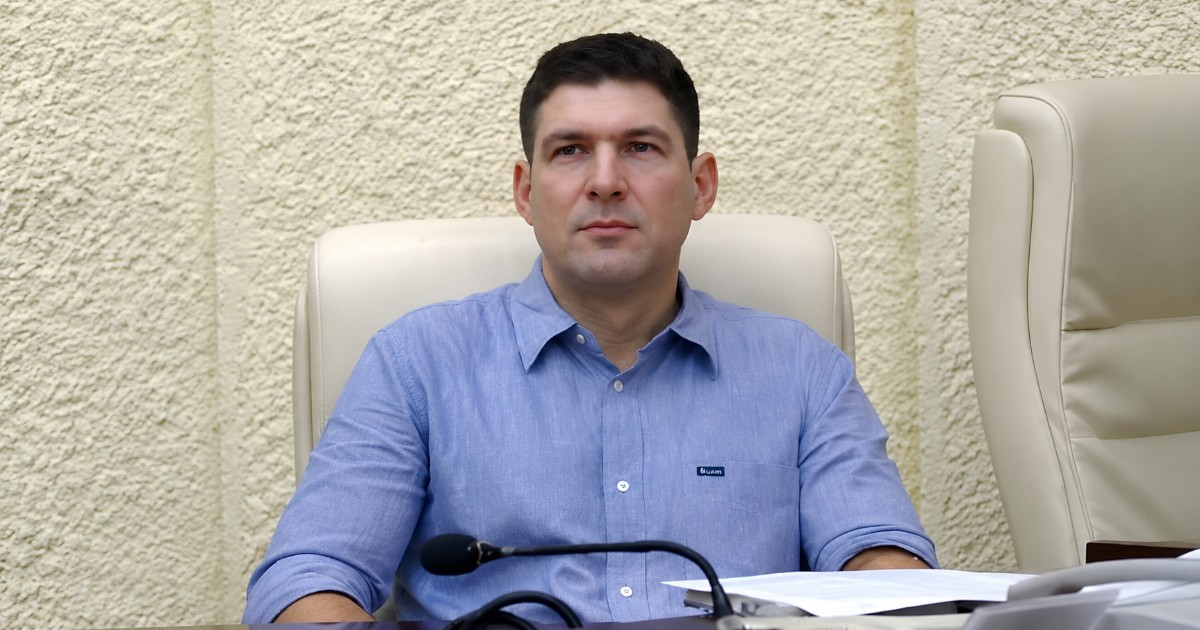
Raúl Guillermo Rodríguez Castro, grandson of the former ruler Raúl Castro, known as "El Cangrejo," gave his — USA Today — from his grandfather's office at the Convention Center in Havana, the venue for the Cuban parliament, and introduced himself as the man ready to negotiate the future of Cuba directly with Donald Trump.
Rodríguez Castro, 42 years old, does not hold an official position in the Cuban government, but he is a colonel in the Ministry of the Interior and a key informal intermediary between the regime's leadership and Washington.
"I've never been interested in politics. It has never been a calling of mine. But if at any point the revolution needs me, I will do it," he stated to the American media during a series of interviews conducted over two days in June in Havana.
Regarding the possibility of negotiating with the Trump administration, he was direct: "I can negotiate with anyone appointed by the U.S. If given the opportunity, of course with Trump."
The interview with USA Today is the first granted to a media outlet in the United States, although on June 19, he had already spoken with the Arab media The National to defend the package of 176 economic reforms approved by the regime.
Rodríguez Castro received the journalist seated in his grandfather's office, dressed in tight jeans, a black Hugo Boss t-shirt, and Hermès sneakers —an image that contrasts sharply with the prolonged blackouts endured by the population.
His rise to the center of power was not improvised. He grew up in the same building as his grandparents, moved in with them at the age of 18, and attended state meetings from a young age, including the debates between Fidel and Raúl Castro.
He is the son of the late General Luis Alberto Rodríguez López-Calleja, who led GAESA —the military conglomerate that controls a substantial part of the Cuban economy— until his death on July 1, 2022.
Frank Mora, a professor at Florida International University, defines it unambiguously: "He is the favorite grandson. Raúl Castro trusted his father, and he is the grandson he loved the most."
He studied at the military school "Los Camilitos" and graduated in Accounting and Finance from the University of Havana.
The CIA director, John Ratcliffe, met with him in Havana on May 14, 2026, marking the visit of the highest-ranking official from the Trump administration to Cuban territory since 2016, which confirmed his role as a key interlocutor.
Despite those contacts, Rodríguez Castro admitted to The National that the negotiations have not yielded results: "I would like to answer yes to that question, but the reality is that no."
The backdrop is an unprecedented crisis. Trump's executive orders have reduced Cuban oil imports by 80% to 90%, and the United Nations High Commissioner for Human Rights, Volker Turk, warned in June that children are dying due to a lack of medication.
Washington, for its part, rejected the 176 economic reforms of the regime as "superficial smoke signals," and on June 23, Marco Rubio announced new sanctions against five entities linked to GAESA, including the Banco Financiero Internacional and GeoMinera S.A.
The vice president JD Vance responded to the reforms cautiously: “Let’s see what they do. If they make smart decisions, we will have a much better relationship with that island.”
Filed under: