
Related videos:
The SMEs CALYPM, PAMA, and Panadería Carlos, located in the municipality of Yaguajay, in the north of Sancti Spíritus, have been selected to receive joint funding of approximately 120,000 dollars as part of the New Economic Actors (NAE) project, supported by the European Union (EU).
This was confirmed by Daysel García Bello, the Director of Territorial Development of the Provincial Government of Sancti Spíritus, who specified that the funds will be allocated for investments in renewable energy, expansion of productive capacities, and acquisition of technological equipment, as reported by Escambray.
The three small and medium-sized enterprises are among more than 60 entities benefiting in Cuba from the NAE project, an initiative with a budget of 14 million euros supported by the EU in Cuba and implemented in partnership with the Ministry of Economy and Planning, its National Institute of Economic Research, French Cooperation in Cuba, and the United Nations Development Programme (UNDP).
The selection process was rigorous: 176 proposals passed an initial evaluation phase, 80 received verification visits for feasibility, and finally, 63 were selected as winners. The results were published on July 1, 2026.
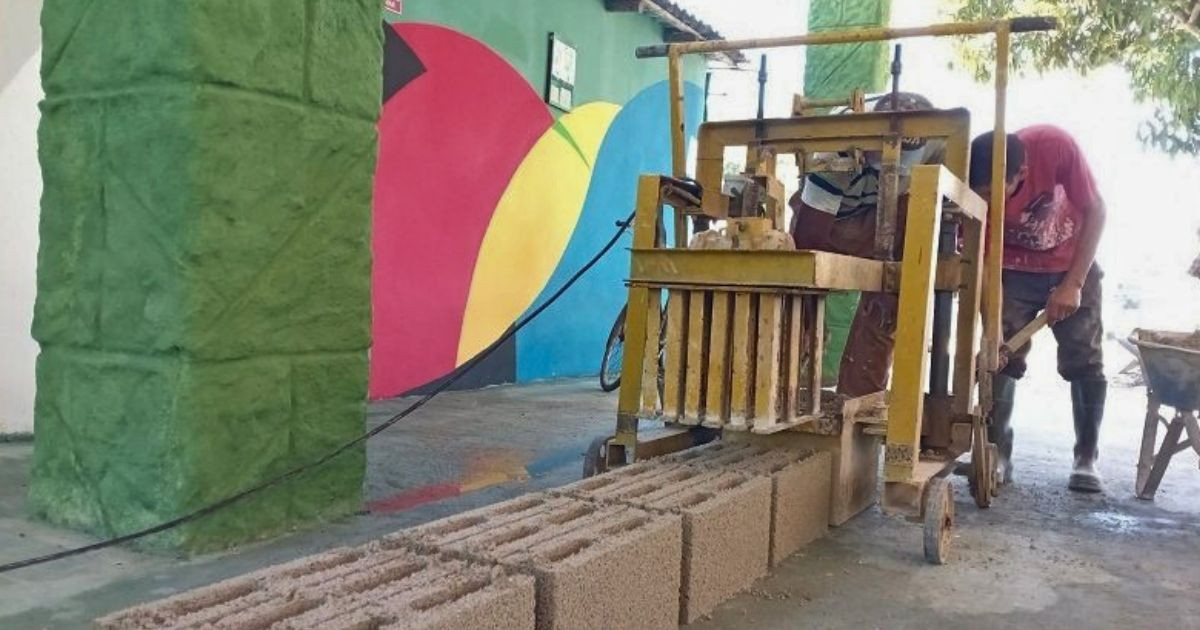
CALYPM, located near the Mayajigua community, produces construction materials from local resources, including mortars—mixtures used in masonry to bond blocks, coat walls, or fill joints—stone dust, blocks, paving stones, and acrylic paints.
PAMA is a small industry established just over three years ago that produces 12 lines of food products —jams, fruit juices, tomato puree, garlic pasta, onion, and seasonings— using crops from farmers in the Meneses area and nearby towns.
Carlos Bakery, also from Mayajigua, is dedicated to the production of bread and aims to diversify its offerings with the support received.
According to the UNDP, the project's calls foresee the provision of material resources and equipment, rather than direct cash payments, with the aim of strengthening productive capacities, improving the quality of products and services, expanding market presence, and promoting job creation in the regions.
The NAE project started in June 2024 and is expected to conclude in October 2028.
On the PNUD portal, the project reports total contributions of $8,679,250, with an execution reported as $25,646 in 2024, $715,528 in 2025, and $336,012 in 2026.
The prioritized sectors are agribusiness, renewable energy sources, and information and communication technologies. Among its objectives is also the promotion of leadership among women and youth, the circular economy, and sustainable production practices.
External support comes amid a context of increased regulatory pressure on the private sector in Cuba.
In May, the UNDP and the EU announced new advances in renewable energy projects for food production in Cuba, but the reality of Cuban agriculture and the food crisis affecting the population starkly contrast with the achievements reported by the regime's official media.
According to Prensa Latina at that time, the Alass project —Local Self-Sufficiency for Sustainable and Healthy Food— had irrigated 123 hectares with solar energy in six municipalities in the central part of the country, including Placetas and Remedios in Villa Clara, as well as areas in Sancti Spíritus.
In addition, in 2025, a dozen projects related to the agri-food sector in eastern Cuba were selected to receive funding as part of a foreign cooperation program promoted by international organizations.
Filed under: