
Related videos:
A dozen projects related to the agri-food sector in eastern Cuba have been selected to receive funding as part of a foreign cooperation program supported by international organizations.
The information was published by the United Nations Development Programme (UNDP), which noted that the proposals were selected in the first call for the project “Support for New Economic Actors for Economic Diversification, Innovation, and Sustainability” (NAE), backed by the European Union and other entities.
Among the beneficiaries are names such as Reparaciones Corona (S.U.R.L) in Santiago de Cuba, Producciones DAISSON and Jaldas (S.R.L) in Guantánamo, OLINÉS (S.R.L) in Holguín, as well as small agroecological production initiatives and technical training programs in Granma and Las Tunas.
The initiatives come from 31 municipalities in Las Tunas, Holguín, Granma, Santiago de Cuba, and Guantánamo, including 51 small and medium-sized enterprises (mipymes) and 40 local development projects.
According to the UNDP, criteria such as economic sustainability, the use of renewable energy, productive linkage, social inclusion, and self-financing contributions were assessed.
Although the project aims to strengthen what is called the business fabric and promote job creation in the territories, the actual impact of these programs remains to be seen, especially in an economic context marked by scarcity, the instability of the Cuban peso, and the structural limitations faced by entrepreneurs on the island.
The project is part of a strategy aimed at attracting external financing in sectors such as agro-food, renewable energy, technology, and the so-called creative economy.
No details were provided regarding the amounts assigned or the control mechanisms for the use of the funds.
The PNUD and European Union program that finances agro-food initiatives in eastern Cuba is part of a broader trend of international cooperation towards projects managed or supervised by the State.
Although these programs are presented as support for local development and sustainability, the funds ultimately benefit the Cuban regime indirectly by reinforcing its control over productive sectors and external resources.
In September, the first homes built under a project funded by European cooperation were unveiled as part of a "resilient housing" plan, although their execution was carried out by state-owned enterprises.
In many cases, small and medium enterprises and local actors involved operate under conditional licenses, with little room for autonomy in managing the funds.
In the energy sector, pilot projects such as the buses powered by biomethane were introduced as technological advancements towards a green economy, also with the support of the European Union and the Swedish International Development Cooperation Agency.
However, access to financial data and accountability for these programs has been limited, raising concerns about their transparency.
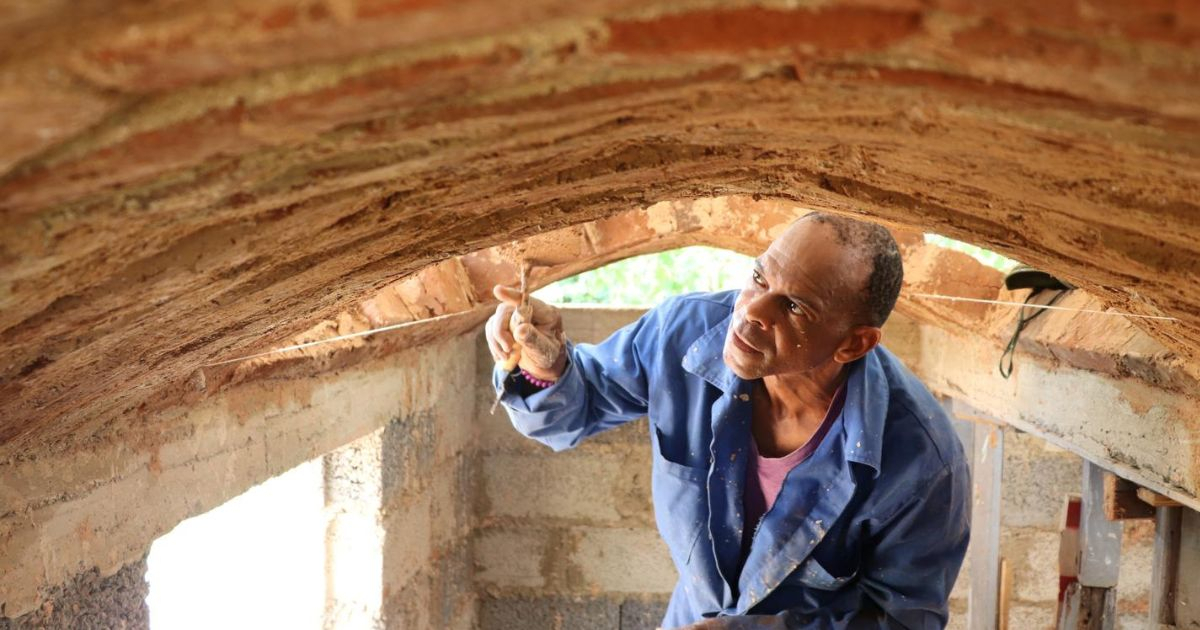
Another example can be found in the construction of housing using low-cost techniques. In July, a group of Mexican specialists trained Cuban technicians in the use of rammed earth to create ecological homes.
Although the initiative was presented as a technical cooperation, the control of the process was in the hands of state entities from the Ministry of Construction.
Agro-Food Initiatives in Eastern Cuba: International Financing and Challenges
Which agri-food projects from eastern Cuba will receive international funding?
A total of ten projects related to the agri-food sector in eastern Cuba have been selected to receive international funding. These initiatives include companies such as Reparaciones Corona in Santiago de Cuba, Producciones DAISSON, and Jaldas in Guantánamo, as well as OLINÉS in Holguín, among others. The aim is to promote economic diversification and support local development in the municipalities of Las Tunas, Holguín, Granma, Santiago de Cuba, and Guantánamo.
What is the objective of the European Union's funding for Cuban micro, small, and medium-sized enterprises?
The financing of up to $40,000 from the European Union for Cuban MSMEs aims to boost entrepreneurship in the eastern part of the country, strengthen the economic fabric, promote employment, and enhance the productive capacities of new economic actors. This support is provided through material resources and equipment, rather than cash, and is focused on sectors such as agri-food, renewable energy, and the creative economy.
What challenges do agri-food projects in Cuba face despite the funding received?
Despite international funding, agrifood projects in Cuba face significant challenges such as scarcity, the instability of the Cuban peso, and structural limitations that affect entrepreneurs on the island. Moreover, the real impact of these programs remains to be seen, as adequate monitoring and control mechanisms are necessary to ensure the efficient use of funds.
How will the NAE project contribute to economic development in Cuba?
The project “Support for New Economic Actors for Innovative and Sustainable Economic Diversification” (NAE), backed by the European Union, aims to strengthen the business fabric and promote job creation in the regions of Eastern Cuba. By promoting social inclusion, the use of renewable energy, and economic sustainability, it is expected that this project will contribute to local economic development, although its success will depend on the effective implementation of programs and resource management.
Filed under: