
Related videos:
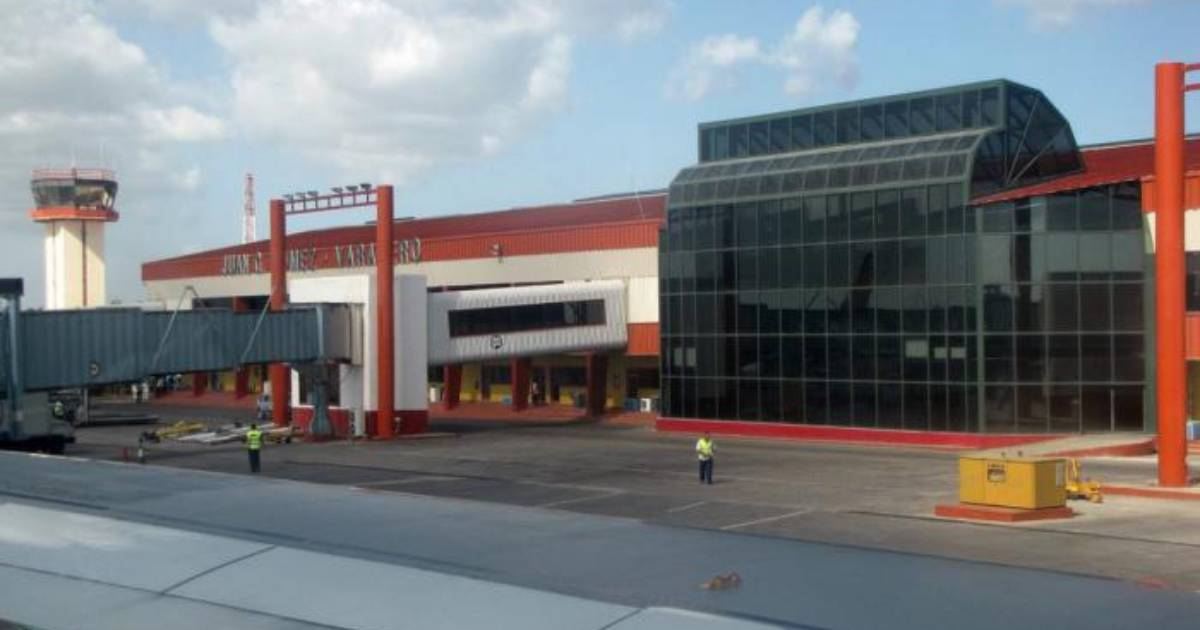
The Juan Gualberto Gómez Ferrer International Airport in Varadero, practically paralyzed by the crisis in Cuban aviation, opened a public tender to lease four fuel tanks from its base to companies or businesses interested in using them for other purposes.
The call, launched on June 24 by the Business Unit of the airport —part of the Cuban Airports and Aeronautical Services Company S.A. (ECASA)—, offers two tanks of 50 cubic meters and two of 35 cubic meters, with a total area of 215.80 square meters.
The monthly fee is set at 264,139.20 Cuban pesos, calculated at a rate of 1,224 CUP per square meter.
The opening of proposals is scheduled for July 14 at 9:30 in the morning, in a notarized event conducted by Licenciada Yaneisy Ruiz Morales, at the Commercial Department of the UEB, located at Carretera Mártires de Barbados Km 5.6, Finca Cabarroca, Carbonera, Matanzas.
To participate, interested parties must submit a letter of application, documents proving legal status, a certification of no debts issued by the National Office of Tax Administration (ONAT), and a budget with a detailed project plan of the planned activities.
The contract explicitly prohibits the assignment or subletting of the space, requires that the tenant's workers are accredited by the airport authorities, and establishes a 30-day period from the invoice submission to pay the monthly fee.
One of the most revealing details of the document is that the contract is "subject to the resumption of airport operations," an implicit admission that the terminal is functioning in a very limited capacity or is practically halted.
The Varadero airport, the main gateway to Cuba's most important tourist destination, is now leasing its infrastructure as a means to generate revenue due to the lack of regular commercial flights.
This measure reflects the depth of the crisis facing Cuban aviation in 2026. Since at least February of this year, the airports in Havana, Varadero, Holguín, and Santiago de Cuba have been unable to guarantee the supply of Jet A-1 fuel to airlines.
The fuel shortage has led to the massive departure of international companies: at least 11 airlines have ceased their routes to Cuba this year, leaving only eight companies operational.
Among the most significant reductions are Iberia, which ceased its historic direct route from Madrid to Havana in June, and Cubana de Aviación, which canceled its only flight between Madrid and Havana on May 12 after the withdrawal of its operator Plus Ultra.
Air Europa and Air France, for their part, have been forced to make technical stops in the Dominican Republic and the Bahamas to refuel before continuing to Cuba.
An executive order from the United States government, signed on May 1, further worsened the situation by tightening legal controls and blocking assets of operators who support key sectors of the Cuban economy, which has deterred more companies from maintaining their operations on the island.
Filed under: