
Related videos:
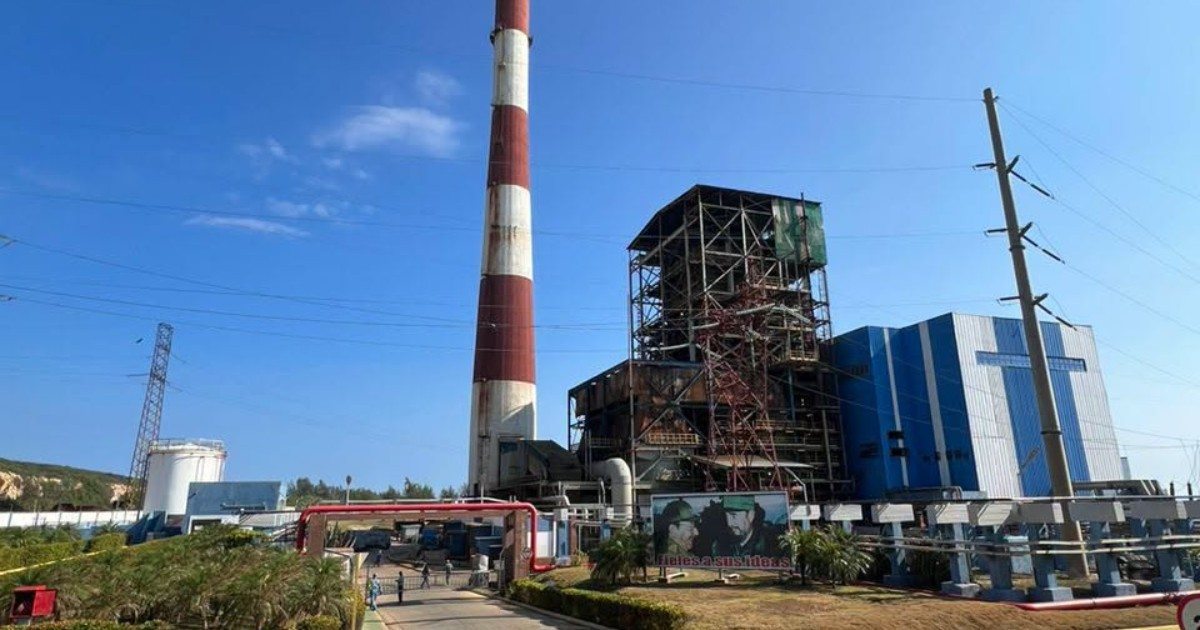
While the regime announced on Wednesday a hydraulic test at the Antonio Guiteras thermoelectric power plant as a preliminary step towards its potential start-up, hundreds of Cubans responded on social media with anger, despair, and a deep-seated distrust accumulated over months of blackouts.
The engineer Román Pérez Castañeda, general director of the yumurino block, confirmed to Radio 26 that it was expected to begin the hydraulic test before the end of the day and that, if the results were favorable, the start-up would proceed. Since this is a cold start, the process may take up to eight hours to synchronize the unit with the National Electroenergetic System (SEN).
Official journalist José Miguel Solís, from Matanzas, explained on that the workers at the power plant maintenance company are trying to maintain generation during this time of year, as in winter the Guiteras must undergo general maintenance.
The public reaction to the announcement was overwhelming.
From the Versalles neighborhood in the Matanzas capital, an internet user wrote: "Guiteras seems to have nothing to do with us. We're going on 94 hours without power." In the Colón municipality, another was more succinct: "Five days without power." A third person bitterly anticipated: "It starts up Wednesday and goes down Thursday morning."
Skepticism about the durability of any repair dominated the comments. "I bet three revolutionary achievements that it won't last even two days," wrote a user.
"It doesn't matter; in the end, it will be the same hours of blackout," another said with pessimism.
A third person was more analytical: "If they take it out and it doesn't last even 48 hours in operation, it's better for them to do the famous maintenance, but we would have to see if they have the parts and money for that. Most likely, they don't, and that's why they keep going like the cobbler patching things up."
Some pointed out the pattern of breakdowns as evidence of structural failure. "It's better to get it over with all at once. Since January, there have been more than 17 outages for the same reason," noted a user. Another warned, "From now until winter, they'll have to stop it more than 17 times. I hope I'm wrong, but we'll be here."
A resident of Jagüey Grande reported the inequality in the distribution of electricity: "We, the people of poor north Jagüey, are in dire need, as we have not seen the light since Sunday. Furthermore, we need someone to take charge of the proper distribution, capable of eliminating favoritism."
Another person pointed directly at the officials: "It’s not the Guiteras causing these power outages of 26 hours or more; it's the officials in each municipality who don’t want to do their jobs properly because they are only interested in their own well-being while the rest of the population suffers."
The Guiteras left the National Electric System (SEN) for the 17th time this year on July 3rd, again due to a leak in the economizer of its boiler, a component that has caused half of all the shutdowns at the plant this year. The Guiteras represents almost 10% of the SEN's capacity when it is operational.
The announcement came three days after the third total blackout of the year, which occurred on July 6, when the shutdown of a unit at the Nuevitas thermoelectric plant triggered a cascading disconnection that left approximately 9.6 million people without electricity, marking the seventh total blackout of the SEN in 18 months.
The plant has been in continuous operation for over 38 years without any capital maintenance since 2010.
The Minister of Energy, Vicente de la O Levy, promised that intervention for the end of 2025, postponed it in December, and announced it again in April without setting a date.
Definitively repairing the economizer would require replacing about 500 tubes during a shutdown of at least 180 days, an operation that the regime has been unable to undertake.
"Has it ever been fixed? Yes, when it was new. Or has it been broken all along? Supposedly, maintenance is scheduled every day for the summer. Where is the summer plan they boasted about?" asked an internet user, summarizing the frustration of those who no longer expect real solutions.
Filed under: