
Related videos:
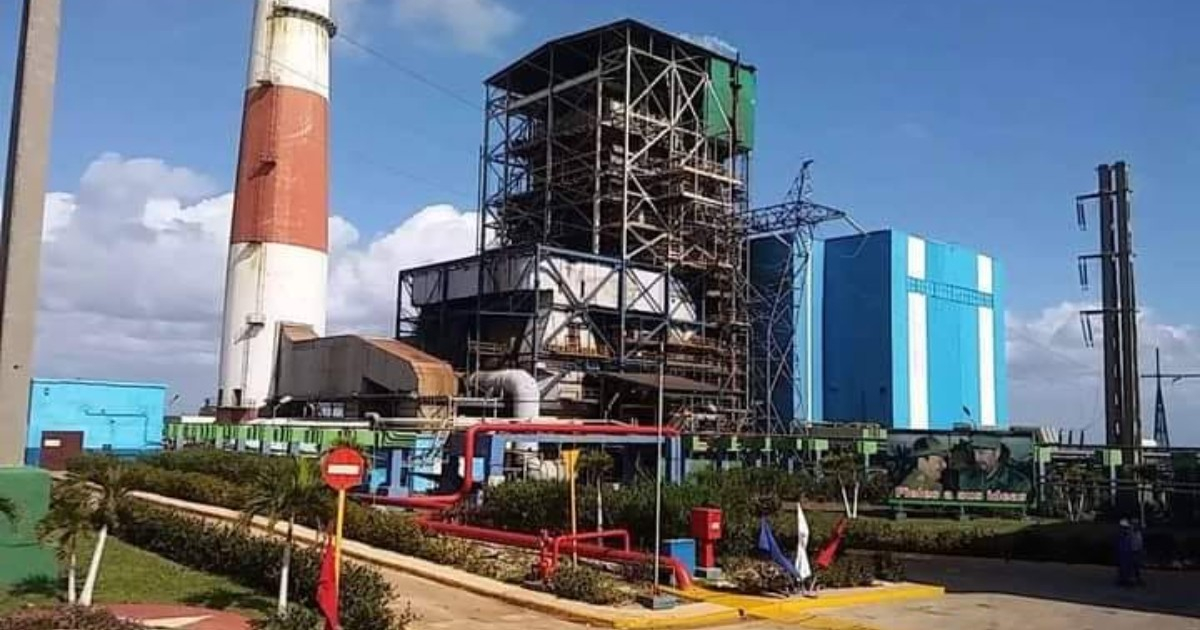
The CTE Antonio Guiteras left the National Electric System (SEN) at 06:58 hours this Friday, as confirmed by the Electric Union on its official Facebook profile.
It is the 17th output of the largest thermoelectric plant in Cuba so far in 2026.
The plant had returned to the SEN just four days earlier, in the early hours of June 29, after its 16th outage on the 24th of that month due to water loss in the boiler.
Even with the Guiteras online, the deficit for the nighttime peak on June 29 was estimated at 2,050 MW, illustrating that the Cuban electrical system cannot meet the demand even with the plant in operation.
The Electric Union (UNE) had not yet published the official forecast for this Friday at the time of the news.
However, the data from Thursday allows for a severe outlook: the maximum impact on July 2 reached 2,081 MW at 10:00 PM, and the forecast for the nighttime peak this Friday indicated a deficit of 1,950 MW, with only 1,150 MW available against a demand of 3,100 MW.
Without the Guiteras in the system, those figures will worsen immediately. The Cerro municipality, in Havana, accumulated more than 24 hours and 35 minutes without electricity on Thursday. Matanzas —the province where the plant is located— has recorded power outages of up to 87 consecutive hours so far in July.
The structural deterioration of the Guiteras is the underlying cause. The facility has been in operation for over 38 years and has not received any capital maintenance since 2010.
Only between January and May 29, 2026, a total of 293 hours of downtime were accumulated due to defects in the boiler economizer, which is responsible for 50% of all shutdowns for the year.
Specialists estimate that approximately 500 pipes need to be repaired and between 1,000 and 1,200 weld cords in an intervention that would require at least 180 days of downtime.
The director of UNE, Román Pérez Castañeda, acknowledged this need but admitted that "the country's situation still does not allow it."
The Minister of Energy and Mines, Vicente de la O Levy, promised that maintenance would be completed by the end of 2025, but he postponed it in December, citing a "temporary issue," and he announced it again in April 2026 without setting a specific date.
In addition to the structural weakness of the plant, there is the paralysis of 106 distributed generation plants due to lack of fuel—equivalent to 890 MW—and another 1,203 MW inactive in strategic facilities.
Cuba needs between 90,000 and 110,000 barrels of oil daily to sustain its electric system, but it only produces 40,000.
In July, the UNE announced the addition of about 400 MW through maintenance on six smaller thermoelectric plants, but the organization itself acknowledged that this figure will not meet the national demand.
With the Guiteras out of the system for the 17th time this year, the outlook for Cubans this weekend points to another day of extended blackouts.
Filed under: