
Related videos:
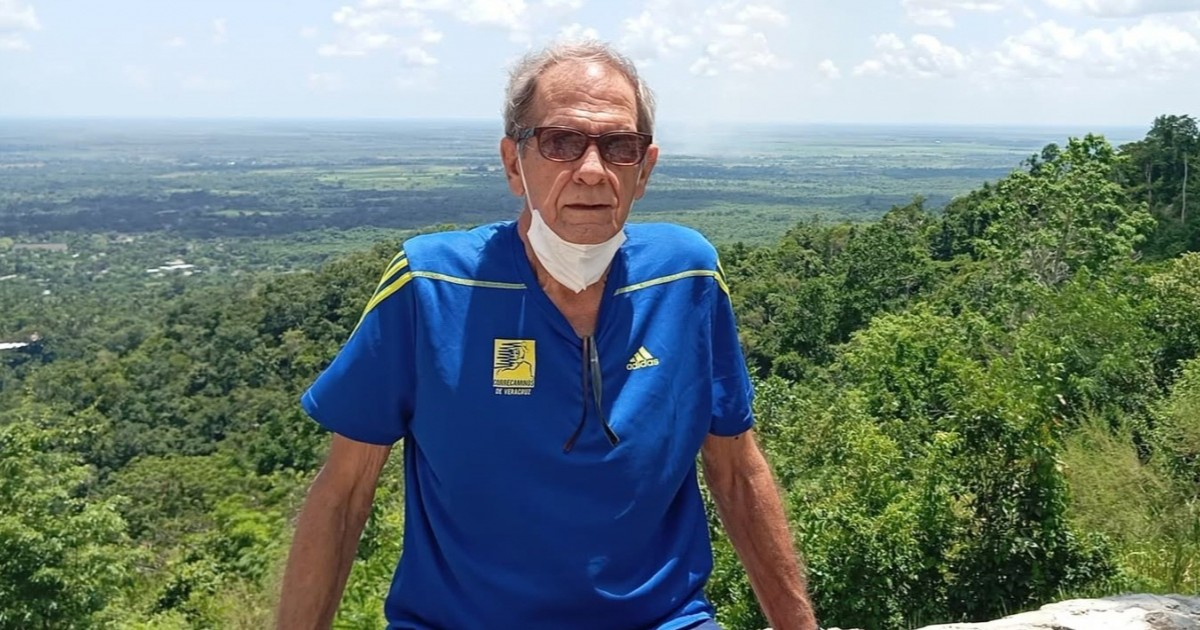
René Navarro Arbelo, the most iconic voice of sports commentary in the history of Cuban television and radio, posted a heartbreaking message on his Facebook profile in which he describes the current situation in Cuba as "a mental and physical torture that accelerates our desires for survival and brings us closer to the deadly crossroads: to live or to die."
The text, titled "Cuba Today," leaves no room for ambiguity: "Sadness overwhelms us every day," writes the communicator, who turned 80 in December 2025 and has spent decades witnessing and suffering from the gradual deterioration of living conditions on the Island.
Navarro highlights the elderly as the group bearing the greatest burden: "Older people suffer much more from these unexpected deprivations of all kinds." However, his criticism is not limited to his generation: he warns that "younger generations and children will also be forever marked by these sufferings."
The message concludes with two questions that encapsulate the hopelessness of millions of Cubans: "When will this nightmare end? Will there be sensitive and humane individuals who advocate for a true solution to this conflict?"
The publication is not an isolated gesture.
Navarro has been raising his voice on social media about his personal situation and that of the country for years.
In May 2019, he publicly questioned his pension: «Is it fair that after 43 years of working, 38 of them at the ICRT, I receive a ridiculously low salary?». He went on to reveal that he had to sell bottles and plastic containers to help feed his household.
In November 2020, during the height of the pandemic, she reported having stood in line for six hours at a pharmacy to obtain Enalapril, a basic medication for hypertension.
In January 2024, in an interview with CubaNet, he revealed that he had sold his car to avoid starving, with a pension of only 1,733 Cuban pesos per month. "What can you do with 1,733 pesos after so many years of work? That pension is unfair and affects a great many people, including many of the sports legends," he stated at the time.
The paradox is striking: in October 2022, the Cuban Institute of Radio and Television awarded him the National Television Award for Lifetime Achievement, the highest recognition in the field, while he was living in extreme poverty.
Navarro's cry comes at the worst moment Cuba has faced in decades. According to data from 2026, 33.9% of Cuban households report persistent hunger, blackouts last between 20 and 25 hours daily in several provinces, and only 30% of the basic medicine supply is available in the country.
Retirees are the most affected group: 39% receive the minimum pension of 1,528 pesos per month, which is less than 10 dollars, and barely half can afford one or two meals a day.
The elderly in Cuba is synonymous with poverty and abandonment, a reality that the regime itself has acknowledged by recognizing that 2026 will be "a difficult year."
Navarro is not the only cultural figure to have denounced this situation in recent months, but few voices carry the symbolic weight of the man who, for nearly five decades, narrated the greatest triumphs of Cuban sports in eight Olympic Games, 11 Pan American Games, and nine Central American Games.
"When will this nightmare end?" Navarro asks. It is the same question that millions of Cubans who heard him shout "Cuba up, up Cuba" are asking today as they survive, like him, on an island that has abandoned them.
Filed under: