
Related videos:
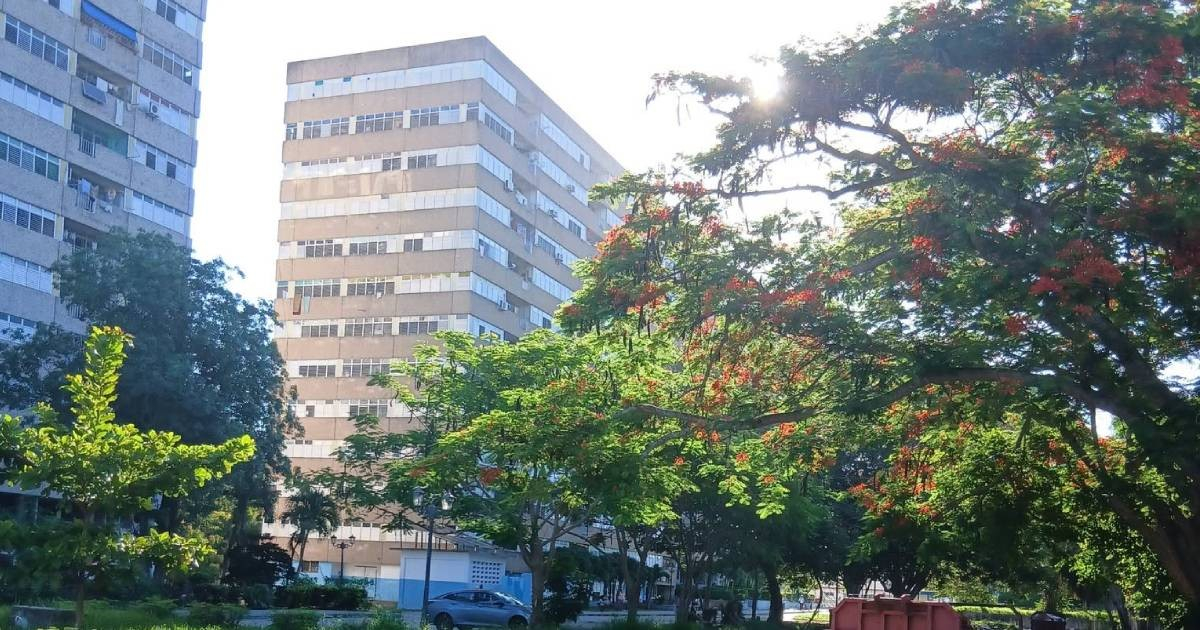
More than a hundred families living in a 12-story building in the El Sandino neighborhood of Santa Clara have been without electricity for over 112 consecutive hours, a situation that has also left them without running water since the building relies on electric turbines for pumping.
The report was shared by the Villa Clara rapper Omar Mena, a resident of the United States, who posted the case on Facebook on Tuesday, July 7, when the building had already gone 96 hours without electricity. At the time this information was published, the blackout had exceeded 112 hours.
According to the artist, the neighbors have reported the issue multiple times without receiving a solution.
"The answer is that it will be resolved shortly. Well, we all know the brevity of the revolution," he wrote.
The prolonged interruption of service has led to food loss and worsened the living conditions of the residents. Without electricity, the pumps cannot push water to the apartments, leaving the entire building without supply.
"Reports are coming in about food being discarded, as the building needs turbines for pumping and water supply," Mena stated.
The rapper placed special emphasis on the situation of the elderly living in the building and questioned the lack of response from the authorities.
"Let's remember that the youth can defend themselves a bit, but what about the elderly who live there? How do they address these issues? How do they carry a bucket of water up twelve floors without an elevator?" she asked.
Her post concludes with a message directed at the Government of Santa Clara: "Government of Santa Clara, stop the mockery."
A recurring problem
The situation recalls other recent episodes caused by the deterioration of the Cuban electrical system. In March of this year, a building in Matanzas was left without electricity for more than 100 hours due to a broken neutral cable, while in June, an overload after a blackout caused explosions and damage to 14 homes in Santa Clara.
Electric problems are compounded by the unsanitary conditions reported by residents of these buildings. On July 5th, a resident described the 12-story buildings in Santa Clara as "dumpsters", reported the presence of mosquitoes, rats, and unpleasant odors, and requested the intervention of the Provincial Health Directorate of Villa Clara.
Villa Clara, among the most affected provinces
The case occurs in the midst of the worst energy crisis Cuba has faced in decades. On Monday, July 6th, the country experienced its seventh total collapse of the National Electro-Energy System in just 18 months and the third in 2026, following the shutdown of the Nuevitas thermoelectric plant.
Although the Electric Union reported that the system was reconnected again during the early hours of Wednesday, power outages continue due to the significant generation deficit, which exceeds 2,017 MW during peak hours.
In Villa Clara, the situation remains particularly critical. The director of the provincial Load Office, Yadier Ruiz, informed the station CMHW that this Wednesday the province has only 50 MW of generation available, enough to power just 47 circuits, while 140 secondary outages remain active, with 115 concentrated in Santa Clara. Municipalities such as Ranchuelo and Santo Domingo remain completely without electricity since the collapse on Monday.
The growing social discontent over the prolonged blackouts has also been reflected in the streets. In the early hours of this Wednesday, reports emerged of clanging protests in Alamar and La Hata in Guanabacoa, where residents even set piles of garbage on fire as a form of protest.
Filed under: