
Related videos:
The Cuban researcher and essayist Hilda Landrove published an analysis on Facebook this Thursday in which she describes Cuba as a "concentration camp" and directly points to the Castro regime as "the main responsible party" for the devastation the island is suffering, in a text that has resonated among Cubans both inside and outside the country.
The catalyst for the written piece was the interview with Raúl Guillermo Rodríguez Castro, known as "El Cangrejo", grandson of Raúl Castro and colonel in the Ministry of the Interior, published in USA Today on July 6, in which the official offered to negotiate with Donald Trump about the future of Cuba and stated that he feels "sorry" that the rest of the Cubans cannot live like him.
Landrove, a PhD in Mesoamerican Studies from the National Autonomous University of Mexico and residing in that country, dismantles the official narrative of the revolution as a collective project in her Facebook publication and reframes it bluntly: “The revolution was always the project of a family clan that summoned the enthusiasm of a nation and, with that same enthusiasm, destroyed it.”
The scholar draws a direct line between the enrichment of the Castro clan and the impoverishment of the people: “As that clan, led by Fidel, became more comfortable, the people—first enthusiastic, then resistant, and finally weary, broken, and desolate—grew poorer and became more silenced.”
Regarding the emergence of "El Cangrejo" as a potential negotiator, Landrove is unyielding. He describes the official as "a bodyguard who has never been chosen for such responsibility" and ironically criticizes certain sectors of the ruling party for being offended by his prominence, as if power in that system requires any democratic legitimacy: "If they want, tomorrow El Cangrejo could be the president of Cuba, and they would sell the whole country to the United States without a flicker of concern, because the owner of the estate requires no legitimacy for the foreman to carry out his designs."
The public appearance of "El Cangrejo" takes place in the context of ongoing negotiations. The CIA director, John Ratcliffe, met with him in Havana on May 14, 2026, and Prime Minister Manuel Marrero Cruz confirmed this Thursday that the regime is maintaining conversations with the United States with the approval of the "highest leadership." A leader of the Communist Party also publicly supported the role of "El Cangrejo" as the official interlocutor.
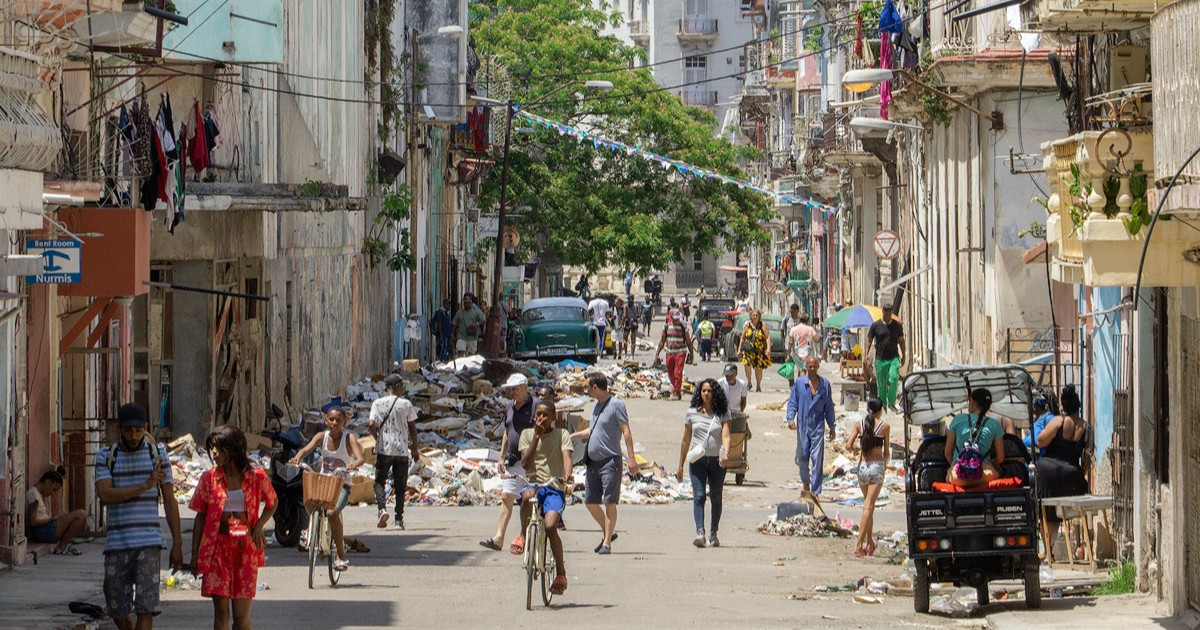
For Landrove, this game of appearances is intolerable in light of the magnitude of Cuban suffering. “Cuba right now is a concentration camp, with people going out every night to protest against a backdrop of absolute devastation,” he writes, describing the country as made “of distances, deaths, dislocations; wounds so deep that healing seems an unreachable dream.”
The nighttime protests mentioned by the academic are a documented and growing reality. Cuba recorded 1,245 demonstrations in March 2026, 1,133 in April, and 1,311 in May, figures that are nearing the historical monthly record. The cacerolazos and street blockades have spread to more than 12 municipalities in Havana and other provinces, amidst power outages of up to 22 hours a day and a deficit in electricity generation exceeding 2,100 MW. Child mortality has doubled to 9.9 per 1,000 births, food production has fallen by 60%, and only 30% of usual medications are available.
This is not the first time Landrove has analyzed the Cuban crisis with such clarity. Last June, she had already described the economic measures announced by Miguel Díaz-Canel as “empty promises” that come “late and poorly”, arguing that the system is irreformable due to a lack of political will.
In her text this Friday, the academic concludes with an invocation to José Martí and his concept of “infinite pain” of political imprisonment, reinterpreting it to describe the situation of the entire island, alongside a call to shame for the intellectuals who still support the regime or turn a blind eye: “Out of respect for that endless pain, that ‘infinite pain’ with which Martí described political imprisonment and which today serves to describe all of Cuba, they should refrain from pretending to be the organic intellectuals, the offended, and the champions of a ‘different’ order that never existed.”
Filed under: