
Related videos:
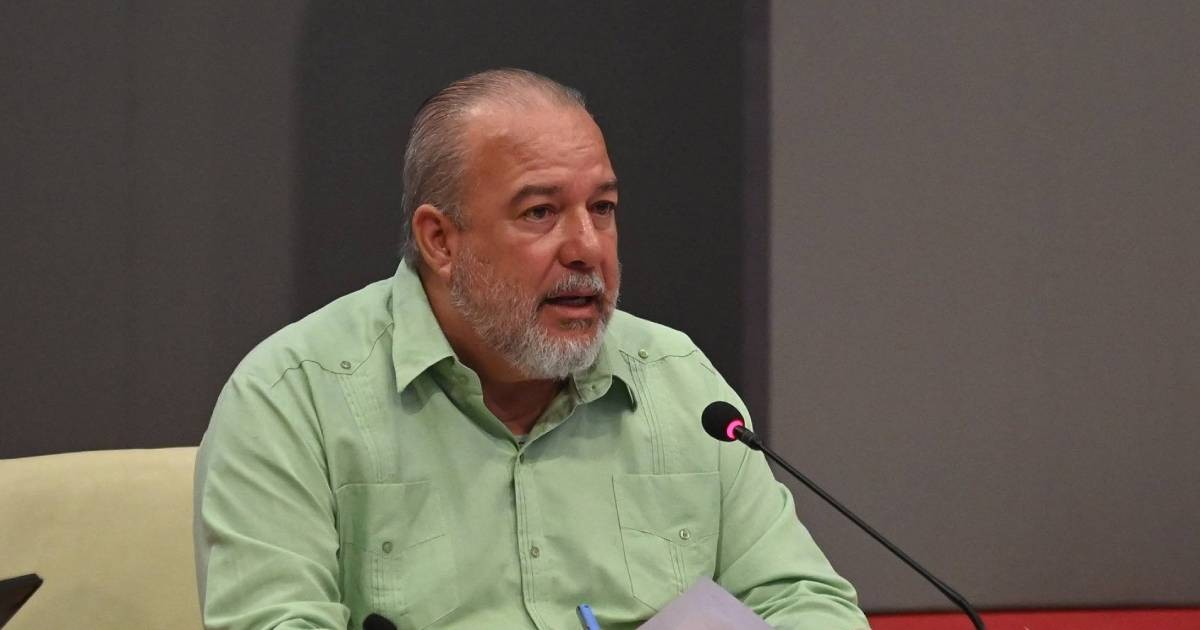
Cuban Prime Minister Manuel Marrero Cruz defended on Thursday the discussions the regime is having with the United States and asserted that the criticisms arising around this process are part of a "well-designed plan" to sow uncertainty and distrust.
In a series of posts on his X account, Marrero confirmed that Havana is in contact with representatives of the U.S. government and reaffirmed the support of the Cuban leadership for the team responsible for those negotiations.
"Conversations have been held with representatives of the U.S. government aimed at seeking solutions, through dialogue, to the bilateral differences," he wrote.
He added that the negotiating group "has the trust, support, and mandate of the Army General and the First Secretary of the Central Committee of the Party and President of the Republic," referring to Raúl Castro and Miguel Díaz-Canel.
But it was her response to the criticisms that set the tone for her messages.
"Reputation assassinations, manipulations, and calls for disunity and division are part of a well-designed plan to create uncertainty and distrust. Every step, at this crucial historical moment, is in defense of the Revolution and our sovereignty," he stated.
The controversy over "El Cangrejo"
Marrero's statements come days after the interview granted to USA Today by Raúl Guillermo Rodríguez Castro, known as "El Cangrejo," grandson of Raúl Castro and colonel in the Ministry of the Interior.
In that conversation, published on July 6, Rodríguez Castro stated that he was willing to negotiate directly with the administration of President Donald Trump if he received that responsibility.
"If appointed, I can negotiate with anyone selected by the United States government. Given the opportunity, of course, it would be with Trump," he declared.
The interview generated a wave of reactions both inside and outside of Cuba. Intellectuals, artists, and individuals associated with the regime itself questioned why he took on such a visible role in the negotiations without holding a political or government position.
Criticism also arose regarding the contrast between the public image associated with Raúl Castro's grandson —linked to a high standard of living— and the profound economic crisis faced by the Cuban population.
On the same Thursday, leaders of the Communist Party also came out in defense of the negotiating process and of Rodríguez Castro's role, insisting that he acts on mandate from "the highest leadership of the country."
The statements from Marrero and the Communist Party aim at the same goal: to confirm the existence of discussions with Washington, publicly support the negotiating team, and frame the criticisms as part of a campaign intended to discredit the process.
A dialogue that progresses slowly
Contacts between both governments began in early 2026.
According to a study published by Axios in February, Secretary of State Marco Rubio held discreet talks with representatives from Raúl Castro's circle, considering that real power in Cuba remains concentrated around the former president.
Although Cuban authorities initially avoided acknowledging these contacts, in March Miguel Díaz-Canel confirmed the existence of the dialogue and subsequently admitted that Raúl Castro played a central role in the process.
Despite this, the Cuban government itself has acknowledged that the negotiations are progressing slowly. Both Foreign Minister Bruno Rodríguez and Deputy Minister Josefina Vidal have admitted that the communication channel remains open, but without significant progress.
All of this is happening while Cuba is undergoing a severe economic and energy crisis, characterized by prolonged blackouts, shortages of food and fuel, and a contraction of economic activity that continues to worsen living conditions on the island.
Filed under: