
Related videos:
There are words that are born to break chains but end up being used to construct them. Few political expressions have had as much symbolic power as the word "revolutionary." For generations, it represented discontent, rebellion, a desire for change, and the willingness to confront structures deemed unjust. It was a word associated with movement, criticism, and the hope of transforming society.
But history shows that words can also be conquered by power. When a political concept ceases to be an open idea and begins to transform into an obligatory identity, it loses its essence. This happened with the word "revolutionary" in various political processes of the 20th century: it stopped defining a person willing to change reality and began to identify those who claimed to possess the correct interpretation of history.
The revolutionary ceased to be the one who questioned the established order and instead became, in certain official discourses, the one who defended a new order deemed untouchable. That is where the transformation of the word began.
Because any revolution that rejects criticism ultimately contradicts its own origin. A society does not change because an elite claims to hold the absolute truth; it changes when its citizens can participate, debate, and freely decide about their fate.
The problem arises when a political cause stops accepting questions and begins to demand loyalty. When an idea becomes dogma, dissent is no longer seen as a different opinion but starts to be portrayed as a threat.
The history of the twentieth century showed how terms filled with hope were also used to justify concentrations of power. Words like justice, equality, people, and revolution were able to mobilize millions of individuals, but they were also employed to legitimize systems where individual freedom was subordinated to an official ideology.
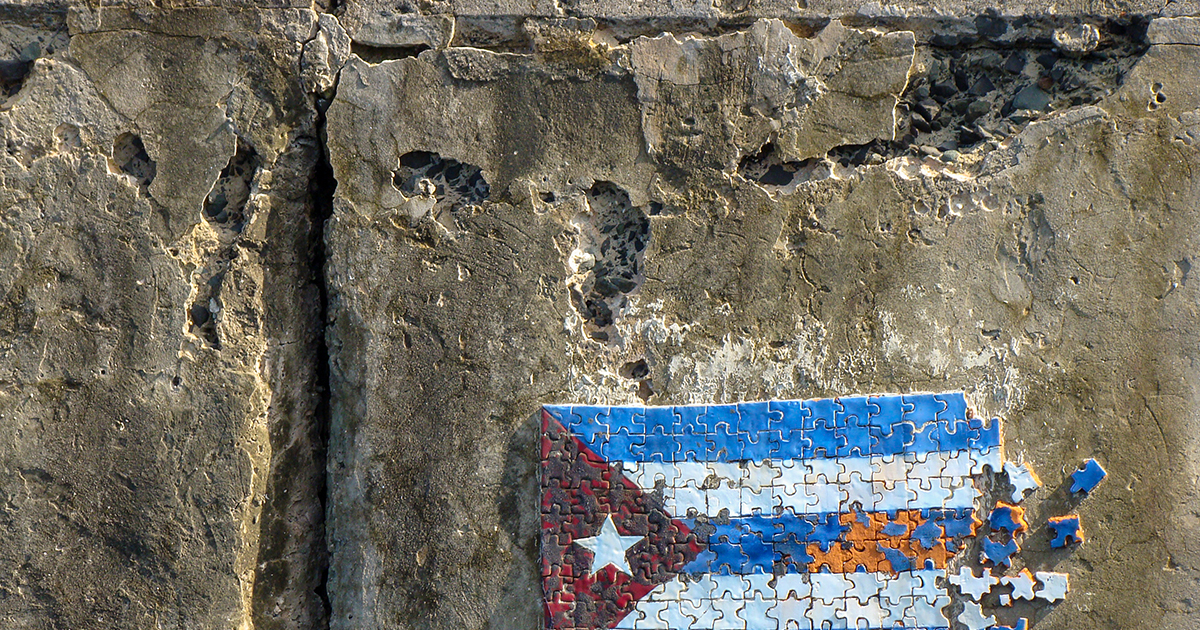
Cuba is one of the most visible examples of that transformation.
The word "revolution," initially associated with the promise of social change and national renewal, ended up being linked for decades to a political system where power declared itself the exclusive representative of the nation, where criticism was limited, and where political plurality was excluded.
The revolution ceased to be presented as a project subject to the judgment of the citizens and became an established truth.
Defending it was considered a duty. Questioning it could be interpreted as a betrayal.
But no word retains its greatness when it loses its connection to freedom.
True social change does not require fear, censorship, or silencing. Societies progress precisely because there are differences, because ideas can clash, and because no government, movement, or party should place itself above the citizens' right to question.
The problem has never been the pursuit of deep transformations. The issue arises when those who speak in the name of change end up denying the principles they claimed to uphold.
A revolution that stops opening paths and begins to raise walls ceases to be a transformative force and becomes a structure for the conservation of power.
Words have memory. They also have history.
"Revolutionary" lost some of its original meaning when it ceased to represent rebellion against authority and began to be used as a justification for the authority itself.
Recovering the true meaning of political concepts also means regaining the ability to think freely.
Because no word belongs forever to an ideology. Words belong to society, to debate, and to human consciousness.
And when a word born to change the world ends up being used to prevent the world from changing, it begins its own death.
Filed under:
Opinion article: Las declaraciones y opiniones expresadas en este artículo son de exclusiva responsabilidad de su autor y no representan necesariamente el punto de vista de CiberCuba.