
Related videos:
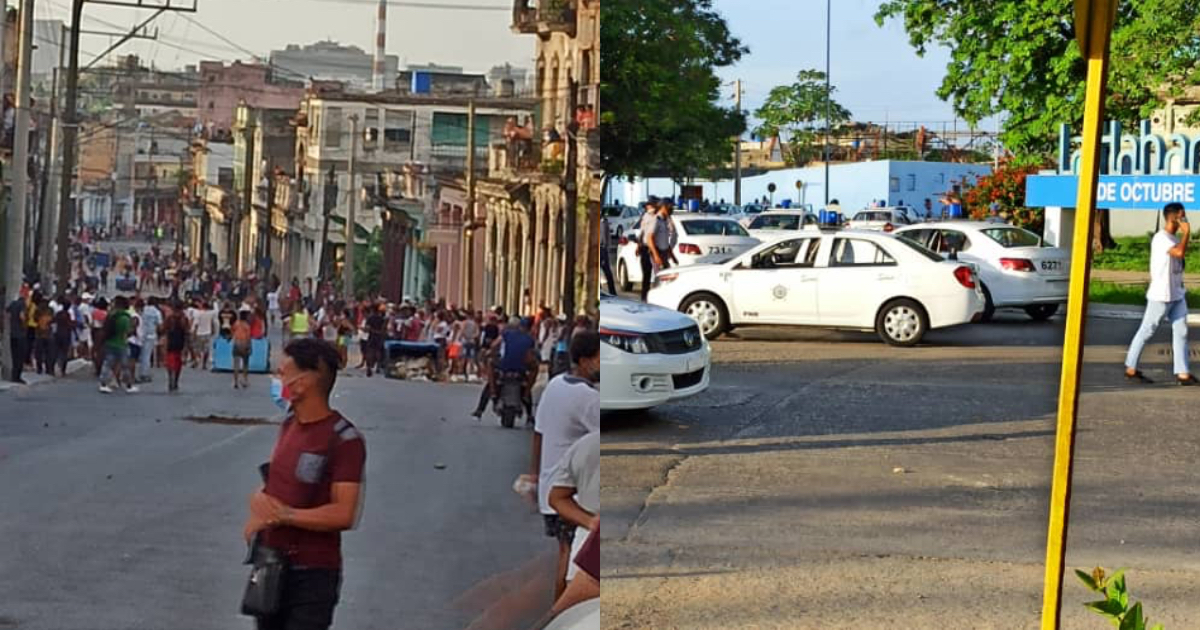
The protests on July 11, 2021, were the largest against the dictatorship in Cuba since the Castros took power in 1959. At 11:00 a.m. that day, now a significant date in the national calendar, Carlos Manuel Pupo called for a protest along with young Julián Manuel Mazola Beltrán from the Church of San Antonio de los Baños, 30 km from the capital.
They were and are members of PUNCLI, the Party for Union for a Free Cuba, led by political prisoner and former guerrilla Roberto Azcuy from Miami, and in Cuba by Pupo himself, as well as José Elías González Agüero and Moraima Rodríguez Batista, among others, who are also promoters of Dr. Oscar Elía Biscet's Emilia Project.
That Sunday, Cubans also took to the streets in over 40 cities, including Palma Soriano, Santiago de Cuba, Havana, Santa Clara, Camagüey, Holguín, Cárdenas, and others. People filled the streets, which once "belonged to Fidel," chanting "Freedom" and "Homeland and Life"—reformulating the slogan "Homeland or Death," which was previously associated with Fidel, demanding an end to the regime.
The puppet Miguel Díaz-Canel appeared on TV: “We call on all revolutionaries to take to the streets... The order for combat has been given.” With this phrase, he sealed his fate. There will be no washing of hands or faces, as there were immediately casualties. The repression equally included cutting off the Internet and mobile phone services, as the widespread use of cell phones had facilitated communication to the point that a spark turned into a blaze.
In prison, more than 1,400 people were detained, including minors, and years later, nearly 700 remained incarcerated. These protests, the largest since El Maleconazo of 1994, would surpass this in both geography and numbers, and this time social media would join traditional media. There was no way to hide the sun with a finger.
Revulsion now overshadowed revolution due to the images of police brutality and the black berets with batons, especially against children born in revolution who were expressing themselves freely for the first time, potentially suffering at a young age what their elders had been experiencing for some time.
In this context, the song "Patria y Vida" represents the cry of these child heroes. The song made the regime so anxious that they detained people for playing it. This won them two Latin Grammys for: Song of the Year and Best Urban Song to Yotuel, Gente de Zona, Descemer Bueno, El Funky, and Maykel Osorbo (who is still imprisoned today, this member of the San Isidro Movement).
The protest was fueled by numerous sources: by hunger for food and freedom; by shortages of basic necessities and opportunities to build a life; by power outages and dreams; and by poor management of the government in general and the COVID-19 epidemic in particular.
Today, more reasons come together for another 11J: tourism has ended, foreign companies have left, there is no escape valve for emigration by air or sea. There is no one to send oil, no one to survive. Trash accumulates, but hope does not.
Filed under:
Opinion article: Las declaraciones y opiniones expresadas en este artículo son de exclusiva responsabilidad de su autor y no representan necesariamente el punto de vista de CiberCuba.