
Related videos:
The Cuban Minister of Energy and Mines, Vicente de la O Levy, responded this Friday to the fourth total blackout of the year with a message on X that combines resistance rhetoric with a brief promise of restoration: “We are already working on the restoration of the SEN”, the official wrote hours after the collapse.
The National Electric System (SEN completely disconnected at 4:30 PM this Friday, as confirmed by the Electric Union on its social media: "Now, 4:30 PM. Total failure of the National Electric System."
In his post, Levy appealed to the efforts of workers in the sector to justify the institutional response: "The dedicated and committed electrical and oil workers of Cuba fight daily against the blackouts. No one gives up here."
The minister's message comes at the worst time of the Cuban energy crisis. Just four days earlier, on July 6, Cuba recorded its third total blackout of the year, leaving approximately 9.6 million people without electricity.
The collapse this Friday is the eighth in approximately 24 months, and it occurred under already critical prior conditions: the availability of the SEN during peak hours was barely 935 MW compared to a demand of 3,100 MW, with an expected deficit exceeding 2,100 MW.
In addition, 106 distributed generation plants remained halted due to a lack of fuel, representing an additional 890 MW unavailable.
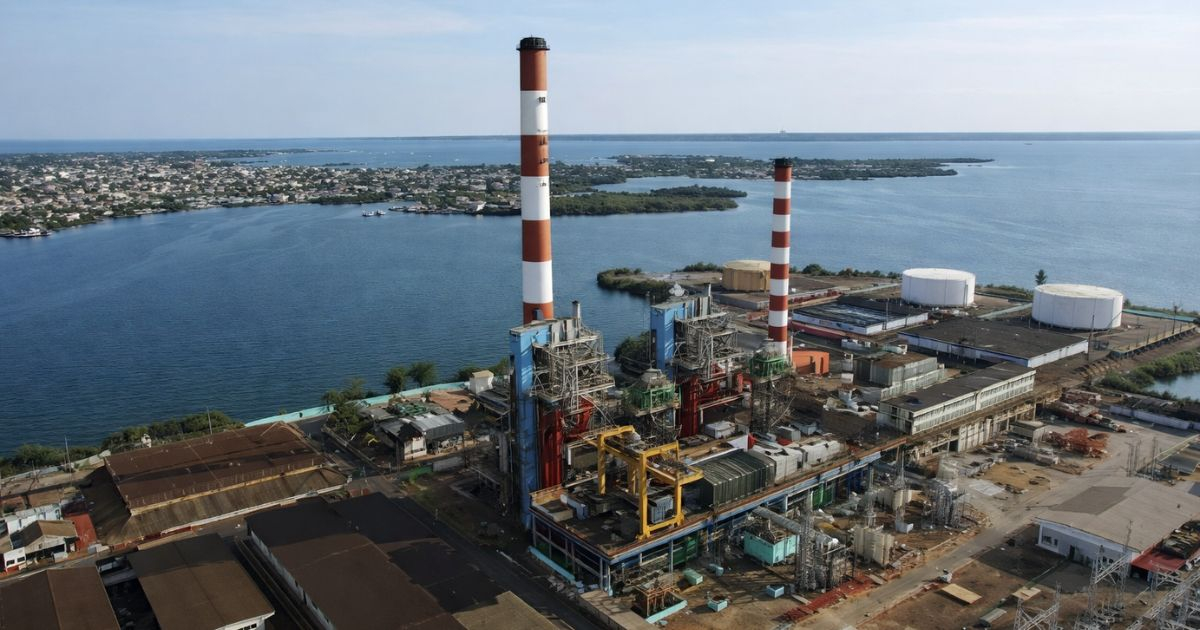
That same day, the authorities had promised the startup of the Antonio Guiteras Thermoelectric Power Plant to connect to the national grid during peak demand hours, a promise that generated widespread skepticism among the population, as the plant has gone offline 17 times just in 2026 so far.
On July 8, the largest energy deficit in the country's history was recorded: 2,341 MW, with 73% of the population affected simultaneously.
The causes are structural. The Cuban thermoelectric plants are between 40 and 60 years old without comprehensive capital maintenance, and Cuba has gone over three months without receiving oil shipments, operating on solar energy, natural gas, and plants in precarious conditions.
In May 2026, Levy himself had publicly admitted that Cuba has no reserves of fuel oil or diesel, relying solely on associated gas and national crude oil.
While the minister published his message of resistance, Díaz-Canel was calling to "better organize" the blackouts without announcing any concrete measures to increase electrical generation, and the Electric Company of Havana abandoned the block management strategy to adopt a circuit system due to the impossibility of maintaining any rotation scheme.
In some areas of Matanzas, power outages have lasted up to 87 consecutive hours, while in Havana the average is 15 hours daily without electricity, a situation that has sparked pot-banging protests in several cities.
Filed under: