
Related videos:
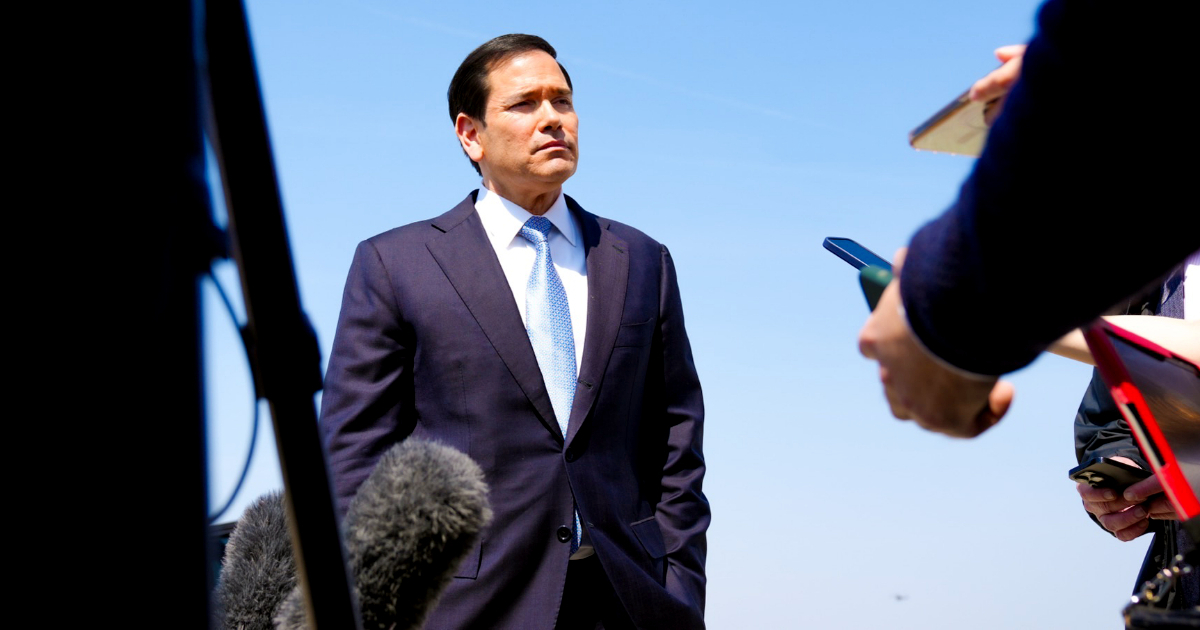
On the fifth anniversary of the protests on July 11, 2021, Secretary of State Marco Rubio revealed this Saturday that the Trump administration has offered Cuba economic assistance, support for reconstruction, and a new bilateral relationship, contingent upon the regime undertaking genuine political and economic reforms.
In an official statement from the State Department, Rubio stated that “President Trump and I want a better future for Cuba and its people, who have suffered so much,” and acknowledged that the Cuban economy is “in free fall” while citizens endure blackouts, hunger, and deprivations after decades of repression and mismanagement.
The Secretary of State emphasized that Washington has made this offer concrete: "In this administration, we have offered Cuba aid, assistance with reconstruction, and the promise of a new relationship between our two countries, if the regime agrees to implement political and economic reforms that will give the country a chance for prosperity."
However, Rubio denounced that Havana has systematically rejected any opening.
"Unfortunately, the regime and its corrupt elites continue to reject any effort for meaningful reform, instead prioritizing the perpetuation of their total control over the Cuban people and their dogmatic adherence to their failed and ideologically corrupt Marxist ideology," he stated.
The official also accused the Cuban leaders of stealing and hiding the few resources that remain on the island abroad, while blaming others for their own failures.
Rubio also warned that Cuba poses a direct threat to U.S. national security by harboring military forces, intelligence units, and networks linked to the terrorism of enemy nations less than 100 miles from U.S. territory.
"The United States will continue to use all tools at its disposal to address the threats to national security posed by the Cuban communist regime, and to promote economic and political reforms that will provide Cuba with a better future," he promised.
Rubio reiterated the call for the immediate release of all political prisoners on the island.
The Secretary of State concluded his statement with a direct warning to the regime's leadership: "The leaders of Cuba must commit to real reforms, peace, and prosperity before it is too late."
The statement arrives at a time of maximum pressure from Washington on Havana. In May 2026, the U.S. offered 100 million dollars in humanitarian aid distributed through the Catholic Church and independent non-governmental organizations, without the involvement of the Cuban government.
The regime formally accepted those funds on July 3, 2026.
Meanwhile, in June 2026, the administration imposed new sanctions against GAESA entities and against Annalie Lilliam Rueda Cardero, the wife of Alejandro Castro Espín, son of Raúl Castro, in response to the 176 economic reforms approved by the Cuban National Assembly, which Washington described as “superficial smoke signals”.
Five years after the 11J, hundreds of Cubans remain incarcerated for having taken to the streets that day. According to human rights organizations such as Justicia 11J and Prisoners Defenders, Cuba has between 1,281 and 1,306 political prisoners, of which at least 338 are directly linked to the protests.
Filed under: