Related videos:
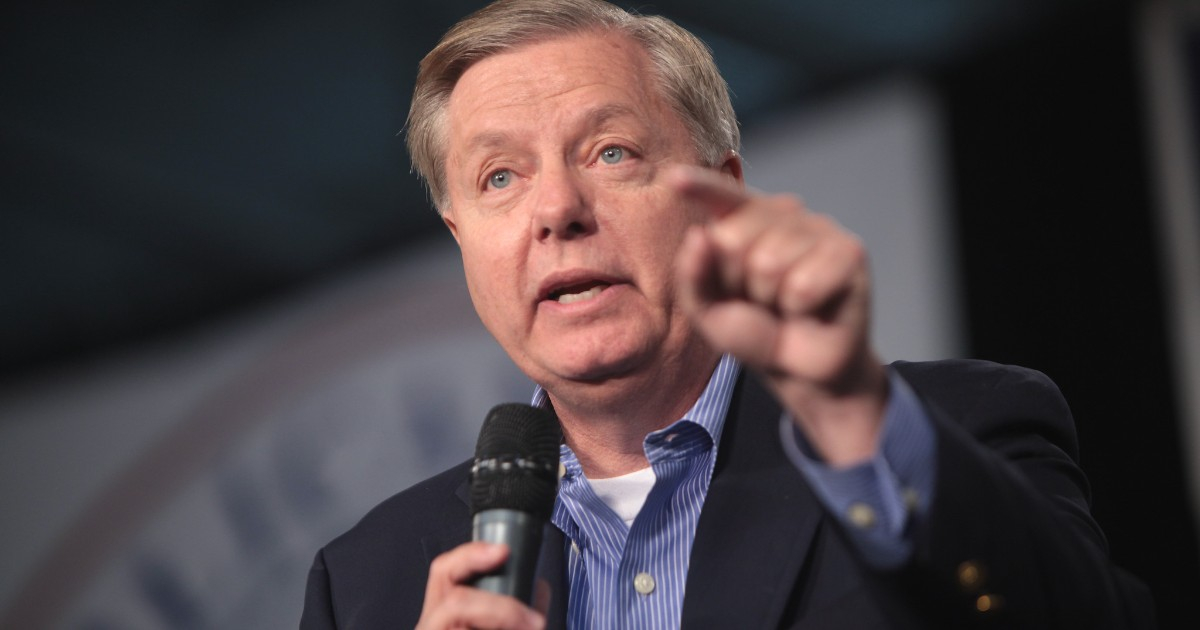
The Republican senator Lindsey Graham, one of the most influential allies of U.S. President Donald Trump in Congress and one of the strongest voices against the Cuban regime, passed away this Saturday at the age of 71.
The news was confirmed by his office through a statement posted on the legislator's official account on the social network X.
"On the night of Saturday, July 11, U.S. Senator Lindsey Graham passed away after a brief and sudden illness," the statement said.
The senator's family expressed gratitude for the support and prayers received, while requesting privacy during this "incredibly difficult" time. For now, no further details have been provided regarding the illness or the circumstances of his death.
The death of Lindsey Graham triggered a swift wave of reactions in American politics. Cuban-American congressman Mario Díaz-Balart mourned the loss of someone he described as “more than a colleague,” considering him a friend, and highlighted their collaborative work in support of national security. He also asserted that the United States is today “a stronger and safer country” thanks to his leadership. Meanwhile, fellow Cuban-American congressman Carlos A. Giménez expressed that he was “deeply saddened” by the senator’s passing and emphasized his legacy of public service, his commitment to national security, and his defense of democratic values. He also recalled the support Graham provided for decades to the cause of freedom and democracy for the Cuban people, stating that his legacy “will not be forgotten.”
Graham, who had just turned 71 two days prior, had represented South Carolina in the Senate since 2003. Throughout his extensive political career, he held various influential positions and served as the chair of the Senate Budget and Judiciary Committees.
Before entering national politics, he served as a military attorney in the United States Air Force. He retired from the Reserves in 2015 with the rank of colonel, after more than three decades of service.
Although he was a rival and critic of Trump during the 2016 Republican primaries, he later became one of his closest allies, especially on issues related to national security and foreign policy.
One of the most powerful voices against the Cuban regime
Graham's death has a special impact on much of the Cuban exile community and opposition, as in recent months the senator had made the liberation of Cuba one of his main political causes.
The legislator openly supported the maximum pressure policy advocated by President Trump and Secretary of State Marco Rubio against the ruling elite in Havana.
After the capture of Nicolás Maduro, Graham stated that Cuba was "the head of the serpent" of authoritarianism in Latin America and warned that the days of the communist dictatorship were numbered.
“Wait and see what happens with Cuba”, declared the senator at that time, who held the Castro regime responsible for sustaining and exporting repressive systems to countries like Venezuela and Nicaragua.
Days later, he issued a direct warning to the Cuban communist leaders. Graham advised them to contact Maduro to ask what to do, adding that if he were in their position, he would start looking for "a new place to live."
In March, he publicly stated that “Cuba is next” and compared Trump's international strategy to the policy pursued by Ronald Reagan towards the Soviet Union.
Shortly after, he appeared on television wearing a cap with the phrase “Cuba libre” and urged the audience to stay alert because, as he stated, the Cuban regime was running out of time.
In April, he delivered one of his most explicit messages to the Cuban people, urging them to “throw out the communists” and to reach out to President Trump and the United States.
The statement was a response to Miguel Díaz-Canel, after the Cuban ruler claimed that the leaders of the Island were willing to die to prevent a supposed American invasion. Graham then questioned how many citizens Díaz-Canel truly represented.
The senator also supported efforts to hold Raúl Castro criminally accountable for the shooting down of the planes from Brothers to the Rescue in 1996, an attack in which four pilots were killed, three of whom were American citizens.
Graham described that crime as a "cowardly and despicable" act and stated that accountability had taken too long.
In one of his latest statements regarding the Island, he asserted that "the liberation of the wonderful people of Cuba from the grips of communism is very near".
His passing represents the loss of one of Donald Trump's main allies in the Senate and one of the Republican figures who most firmly advocated for the end of the Cuban dictatorship and a democratic transition on the Island.
Filed under: