Related videos:
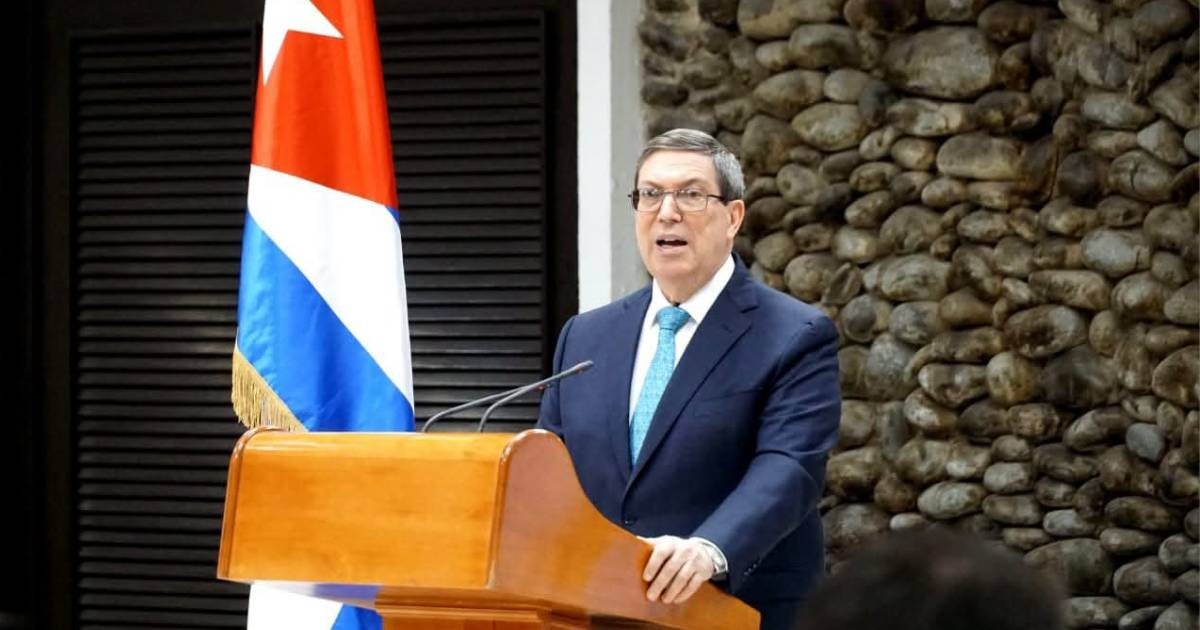
Cuban Foreign Minister Bruno Rodríguez Parrilla accused the so-called "anti-Cuban mafia" this Sunday of coordinating with the State Department to justify what he described as an aggression against Cuba, while simultaneously acknowledging that the population is facing "severe deprivation and suffering."
In a message published on the social network X, the Minister of Foreign Affairs asserted that these sectors act "with the usual opportunism of trying to mobilize the immense military and technological power of the U.S. against Cuba."
"The anti-Cuban mafia has organized itself, with its usual representatives, around the State Department in an effort to justify the crime and aggression against the Cuban people," he wrote.
The chancellor added that, despite the difficult situation the country is experiencing, "Cubans face the harsh daily reality, with severe deprivations and suffering, but in peace, united, and in solidarity, striving to overcome this moment."
The post coincides with the fifth anniversary of the historic protests on July 11, 2021, amid a new escalation of tensions between Havana and Washington.
Crossing of statements
The expression "anticuban mafia" is commonly used by the Cuban regime to refer to exile organizations in Miami and to Cuban-born leaders in the United States, including Secretary of State Marco Rubio and Congressman Mario Díaz-Balart, whom they blame for promoting a tougher policy toward Havana.
Rodríguez's message adds to a series of increasingly confrontational statements made in recent weeks.
On July 1, the chancellor labeled Rubio as a "liar" and stated that any U.S. military action against Cuba would result in "a bloodbath" with thousands of deaths in both countries. On the same day, he also asserted that the talks between Havana and Washington "show no progress" and accused the U.S. delegation of maintaining a policy of "constant threats."
Later, on July 7, he participated in an extraordinary session of the UN General Assembly convened by Cuba, where he denounced an alleged "multidimensional war" against the island.
Pressure from Washington
The chancellor's statements come after Marco Rubio issued a message for the anniversary of 11J on Saturday, in which he demanded the release of the 1,306 Cuban political prisoners and accused the regime of continuing to ally with adversaries of the United States, which he claimed represents "a serious threat to national security."
On the same day, President Donald Trump posted a message on Truth Social in which he promised to “expel communism from our shores”, while on Sunday the United States Senate pushed a resolution to commemorate the 11J protests and once again call for the release of Cuban political prisoners.
The atmosphere of confrontation arises additionally in a context marked by the indictment presented before a federal grand jury in the Southern District of Florida against Raúl Castro for the shooting down of the aircraft belonging to Brothers to the Rescue in 1996, an attack in which four American citizens lost their lives.
Despite the hardening of the political rhetoric, U.S. officials informed Associated Press last May that Washington does not contemplate any imminent military action against Cuba, although they noted that “all options” remain on the table.
Filed under: