
Related videos:
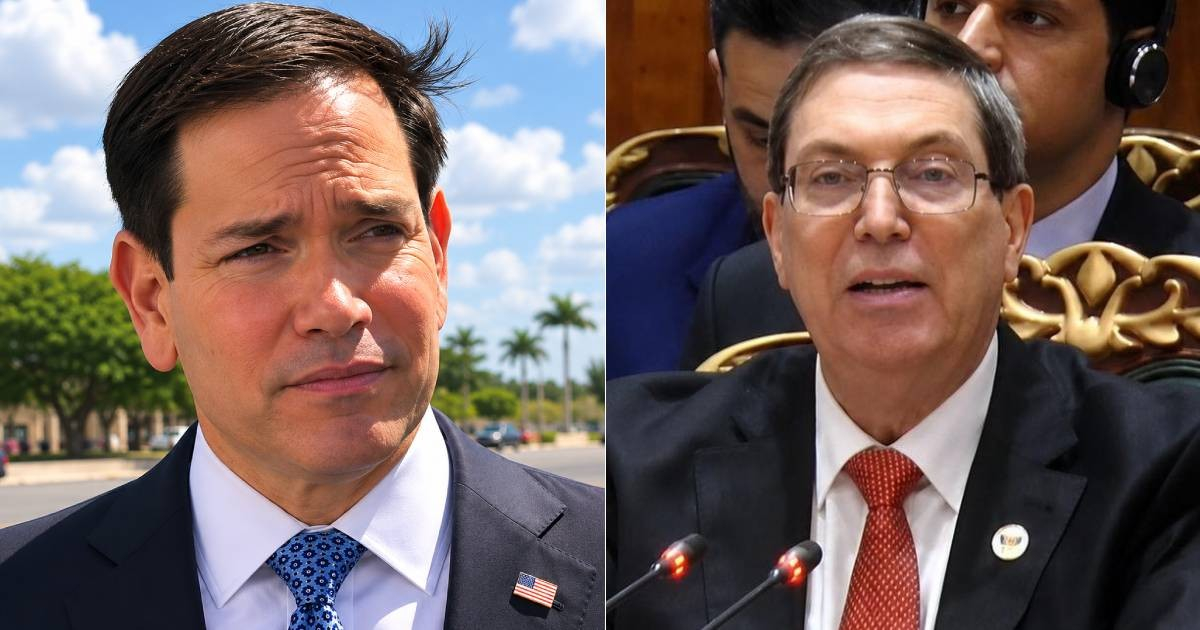
The Cuban Chancellor Bruno Rodríguez Parrilla described Marco Rubio as a liar on Wednesday and questioned his validity as a diplomatic interlocutor, in an interview given to CNN en Español from Havana, where he also warned that any military aggression by the United States against Cuba would be "a bloodbath."
Rodríguez noted that there is a "blatant contradiction" between the tone maintained by Washington diplomats in bilateral discussions and the behavior of the Secretary of State and the Trump administration outside those negotiation tables.
The statements come one day after the chancellor challenged Rubio at a press conference and referred to him as "dishonest and deceitful" several times, in what has become a sustained verbal escalation from Havana against the head of U.S. diplomacy.
"There are diplomatic conversations between the governments of the United States and Cuba that show no progress," Rodríguez admitted, who despite everything insisted that the Cuban regime remains open to dialogue and continues to cooperate with Washington in areas such as the fight against drug trafficking, terrorism, organized crime, and human trafficking.
The chancellor attributed the severe energy crisis the island is experiencing to what he described as an "energy siege" imposed by the United States, which he claimed is "practically equivalent to a naval blockade."
"The government of the United States has barred the entry of fuel supplies to Cuba for seven months," he stated, labeling this policy as a "violation of international law," "collective punishment," and a "crime against humanity."
The electrical deficit in Cuba exceeded 2,208 MW on June 25, leaving nearly 70% of the country without electricity, amid blackouts that in some areas extend up to 25 hours a day.
Rodríguez acknowledged that the situation is "painful" and that the Cuban people are enduring "truly harsh suffering, deprivations, and distress," although he rejected comparisons to the pandemic crisis.
Regarding President Trump's threats—who publicly stated that after addressing the issue with Iran he would turn his attention to Cuba—and the U.S. intelligence reports indicating that Havana has acquired over 300 military drones, the chancellor responded assertively: "Cuba is not and cannot be a threat to the national security of the United States. It sounds ridiculous."
At the same time, he warned that a military intervention would have devastating consequences: "A military aggression against Cuba will have to be met with all our strength. It will be a bloodbath. Thousands and thousands of Cubans will die, and young Americans will also die, sent to a war that is not theirs and that would make no sense."
The immediate context of these statements includes the new sanctions announced by Rubio on June 23 against five Cuban entities linked to the military business conglomerate GAESA and against Annalie Lilliam Rueda Cardero, wife of Alejandro Castro Espín, son of Raúl Castro.
These sanctions were enacted under Executive Order 14404, signed by Trump on May 1, 2026, which adds to Executive Order 14380 from January 29, in which he declared Cuba a "national security threat" and imposed secondary tariffs that reduced Cuban energy imports by 80% to 90%.
Cuba has called for a session of the UN General Assembly on July 7, 2026 to discuss, for the 32nd time, the resolution against the embargo, in a move that Rodríguez presented as a response to what he described as pressures from Washington to prevent this debate.
Filed under: