Related videos:
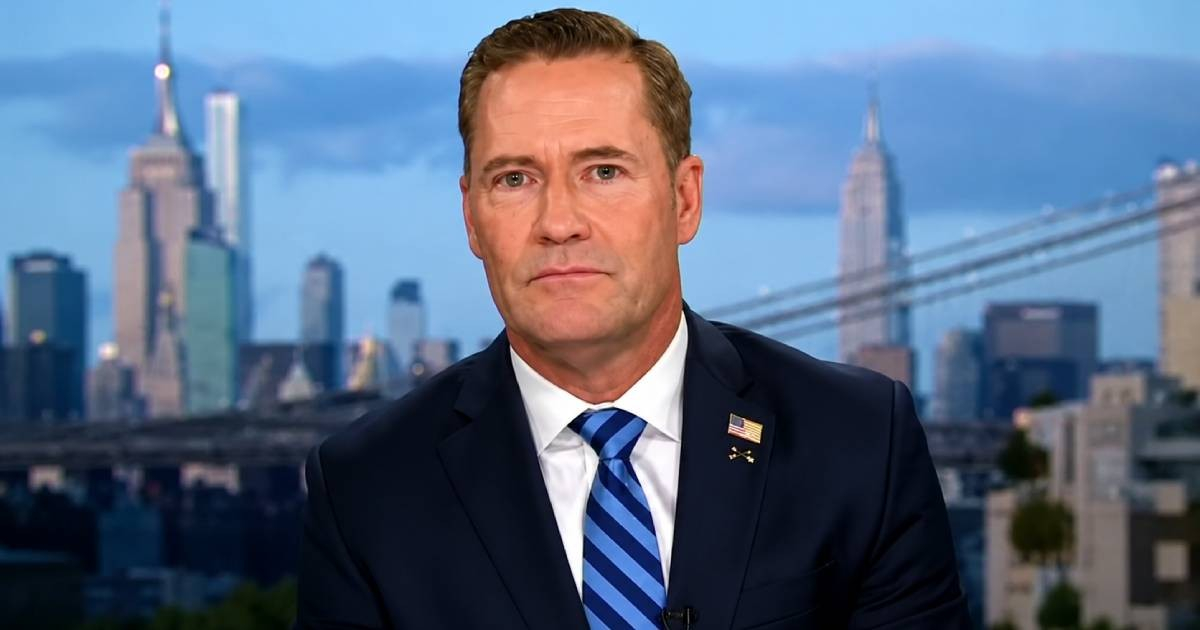
The United States ambassador to the UN, Mike Waltz, stated this Sunday that the Cuban regime poses a threat to U.S. national security due to the presence of Chinese and Russian intelligence facilities on the island, and affirmed that the Donald Trump administration will not tolerate this situation.
"There are still multiple Chinese sites collecting information about our military bases in Cuba. Both Chinese and Russian: the Cuban regime is not just a threat to its own people, it is a threat to national security. This administration will not tolerate it any longer," Waltz stated in a segment of an interview with Fox News released on the social media platform X.
The statements come in a week marked by the fifth anniversary of the protests on July 11, 2021 and by a new exchange of accusations between Washington and Havana.
Last Monday, during a session of the General Assembly of the UN, Waltz had a tense confrontation with Cuban Foreign Minister Bruno Rodríguez Parrilla, whom he accused of representing an "illegitimate and brutal" regime while displaying photographs of Cuban political prisoners.
When Rodríguez called him a "liar," the American diplomat responded: "This is not Havana. This is the United States of America, the UN, and we are not going to be silenced."
In the same session, the United States reiterated its call before the United Nations for the release of Cuban political prisoners and defended the right of the island's people to live in freedom.
The concern for the foundations of intelligence
Waltz's warning comes amid growing concern in Washington about the activities of China and Russia in Cuban territory.
A report from the Center for Strategic and International Studies (CSIS) claims that at least 12 signal intelligence facilities linked to China are operating in Cuba. Among the key locations are those in Bejucal, El Wajay, Calabazar, and El Salao, the latter situated about 70 miles from the Guantanamo Naval Base.
In June, new satellite images revealed recent activity at the Bejucal facility, including the completion of a large interception antenna, raising concerns among U.S. authorities once again.
Russia also maintains significant intelligence infrastructure on the island, regarded by analysts as one of its main information gathering platforms outside its territory. Additionally, it operates two stations of the GLONASS satellite navigation system.
Military cooperation between Moscow and Havana drew attention again in June 2026, when a Russian naval flotilla, including the nuclear-powered submarine Kazan among other vessels, visited the port of Havana. Following this deployment, Defense Secretary Pete Hegseth stated that Cuba poses a threat to the national security of the United States by allowing Russian military vessels to use its ports.
Intelligence reports released between 2025 and 2026 indicate that China and Russia have significantly increased their intelligence personnel presence in Cuba since 2023.
In June, Secretary of State Marco Rubio defended before the Senate Cuba's inclusion on the U.S. list of state sponsors of terrorism, arguing, among other reasons, the presence of foreign intelligence infrastructure on the island and the regime's support for armed organizations such as the ELN and FARC.
Since Donald Trump's return to the White House, his administration has tightened its policy towards Havana. On January 20, 2025, he reinstated Cuba on the list of state sponsors of terrorism, and since then, over 240 new sanctions have been imposed, including an executive order signed in May 2026 that restricts the entry into the United States of regime officials and their adult family members.
For his part, Miguel Díaz-Canel has dismissed the accusations regarding the existence of Chinese bases in Cuba, labeling them as part of a "campaign of intimidation." However, Waltz's statements indicate that the presence of Chinese and Russian intelligence infrastructure on the island remains a central concern in Washington's national security agenda.
Filed under: