Related videos:
A 45-year-old diver who disappeared on Saturday while exploring the reefs of Key Largo was rescued alive by the U.S. Coast Guard, thanks to a small safety device that allowed them to quickly locate him in the waters of the Florida Keys.
The emergency began around 11:45 in the morning when the crew of the diving boat Island Hopper reported to the Key West Sector of the Coast Guard that the man had not returned to the surface 15 minutes after the expected time, they reported on their website.
The diver was about five miles off the coast of John Pennekamp Coral Reef State Park, one of the most popular diving destinations in Florida.
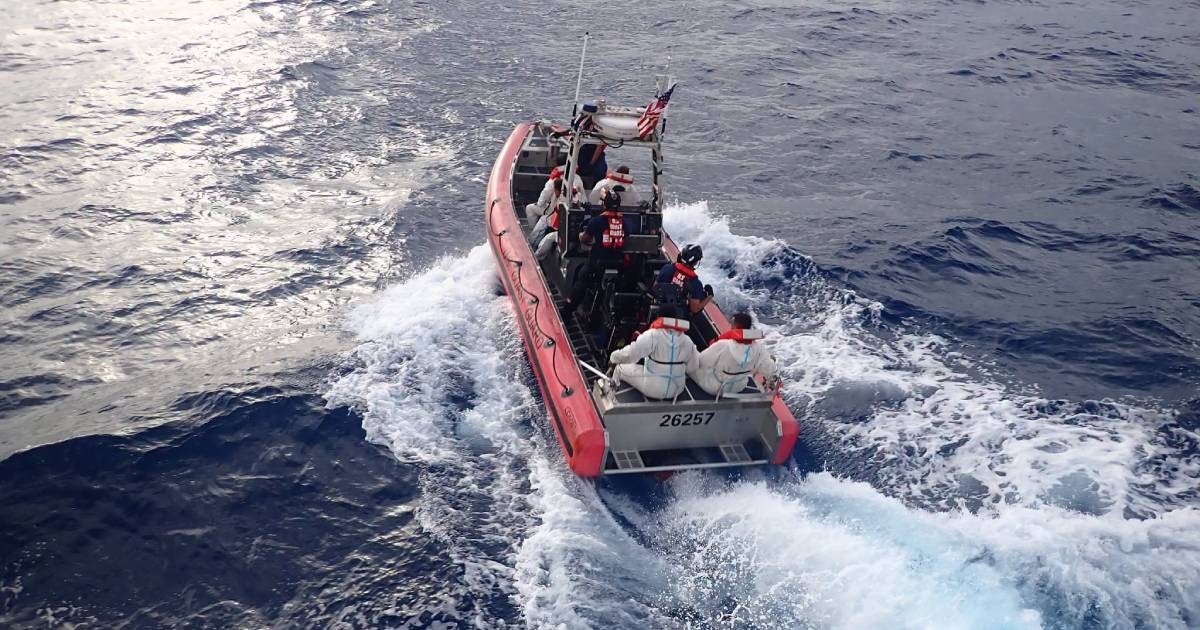
After receiving the alert, the Coast Guard issued an urgent maritime warning and deployed a vessel from the Islamorada Station. A helicopter from the Miami Air Station, along with aerial and maritime resources from the Florida Fish and Wildlife Conservation Commission (FWC), also joined the operation.
The search ended shortly after when the crew from Islamorada found the diver within the initial search area and transported him in stable condition to emergency medical services at Garden Cove Marina in Key Largo.
The buoy that made the difference
According to the Coast Guard, the rescue was made possible because the diver was using a delayed surface marker buoy (DSMB), a safety device that is deployed from the seabed and allows the diver's position to be indicated before surfacing.
"The diver was successfully located thanks to the delayed surface marker buoy he was wearing, which allowed us to identify his position at approximately a quarter of a mile away," explained Second Class Petty Officer Damian Burnham from the Islamorada Station.
The official emphasized that this type of equipment can significantly reduce search times and increase the chances of a successful rescue.
"This incident underscores the importance of carrying a delayed surface marker buoy while diving, as it significantly enhances the diver's visibility at the surface and can greatly improve the speed and effectiveness of their location," he added.
The DSMB is part of the recommended safety equipment for divers and consists of an inflatable buoy that rises to the surface via a line, allowing boats and rescue teams to more easily detect the location of the diver.
An area of intense rescue activity
The incident occurred at the John Pennekamp Coral Reef State Park, which opened in 1960 and is regarded as the first underwater park in the United States. Located in Key Largo, it protects part of the only living tropical coral reef in the country and attracts thousands of divers each year.
The Islamorada Station, one of the most active units of the Seventh District of the Coast Guard, has participated in numerous rescue operations during 2026, including the rescue of a mariner near Cayo Largo, a 13-year-old girl who was adrift off Rodriguez Key, and a 71-year-old kayaker trapped in that same area.
After the operation, the Coast Guard reiterated its recommendations for those engaging in recreational diving: to use emergency signaling devices, maintain communication with the support vessel, and ensure that family or friends are aware of the dive plan before heading out to sea.
Filed under: