Related videos:
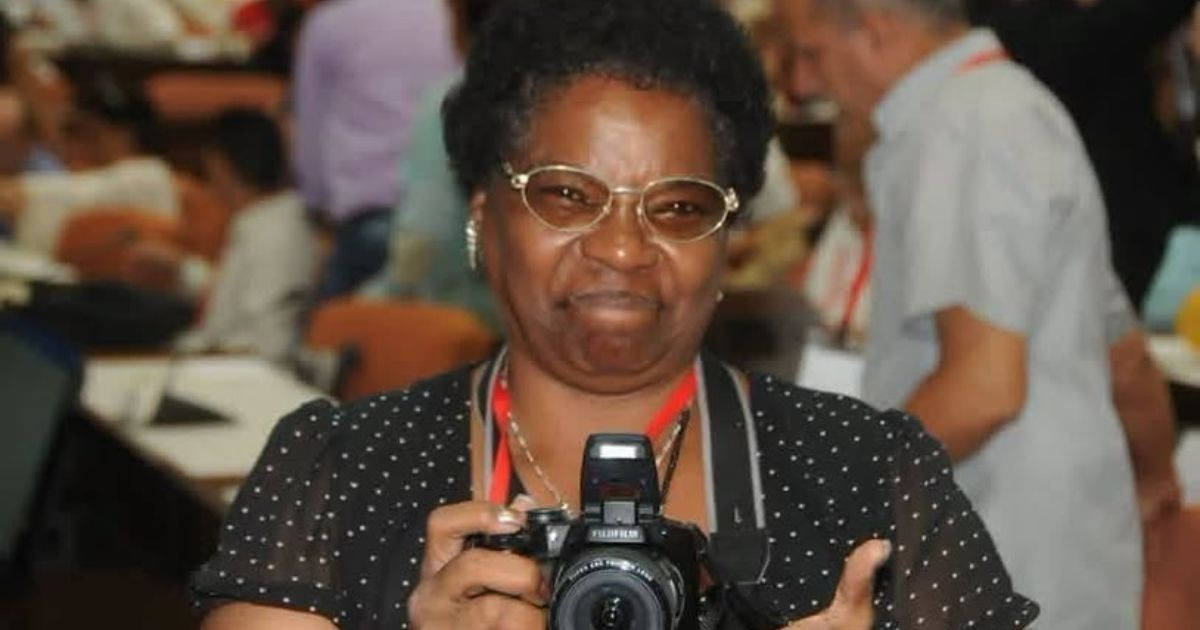
María Salomé Campanioni, a journalist with four decades of experience in Cuban radio and recipient of the Micrófono de la Radio Cubana, passed away on Tuesday, July 7 in Havana due to a cardiac arrest, at the age of 63.
The Portal of Cuban Radio announced the news with "profound sorrow" and described her as "joyful, tireless, charismatic, an excellent professional and human being," calling her departure "a great loss for Cuban Radio."
Her career included stations such as Radio Rebelde and Radio Reloj. At the former, she directed the Exclusive News and was the head of information for the program Haciendo Radio; at the latter, she created the movement of correspondents and collaborators for the oldest news channel in Cuba. Her author profile on the Portal notes 40 years of uninterrupted work.
Her most unique legacy was in the digital realm: she founded the web system and the Portal of Cuban Radio on the Internet, created the first radio profile on the social network X —under the username @radionline—, established the National Internet Editorial Group of Cuban Radio, and served as an advisor in the founding of the Digital Magazine En Vivo. Her colleagues bid her farewell with the nickname that encapsulates her life amid screens and microphones: "SaloWeb."
The journalist Álvaro de Álvarez, a colleague of Campanioni at Radio Rebelde and now in exile, published a lengthy text titled “The Late Salutation”, in which he recounts the life of the person affectionately known as "la Negra." "I find out that María Salomé Campanioni has died from a video in which she is still alive," he wrote at the beginning of his text.
Álvarez revealed that it was Campanioni who, during the toughest years of the Special Period, suggested using the song "Hoy puede ser un gran día" by Joan Manuel Serrat as the theme for the program Haciendo Radio. Years later, when he was no longer in Cuba, she became the information director of that same program. In 2020, Campanioni herself recalled that moment: "Congratulations Álvaro, I still remember you shaping life stories and confirming to me that today can be a great day. Sound hug."
Álvarez also highlighted a quality that defined Campanioni beyond his profession: "the ability to stand in front of a cataclysm and point out, without irony, without slogans, the few things that were still worth looking at." A virtue that is not insignificant in today's Cuba, with its crumbling streets, its blackouts, and its massive exodus.
Despite the 26 years that have passed since Álvarez left Cuba in 2000, Campanioni never stopped keeping in touch with him on social media. "He never stopped telling me that he loved me, even though I carried the invisible label of someone who left," wrote his colleague, appreciating this gesture as an act of personal loyalty in the face of political pressures.
The writer and National Prize for Cultural Journalism Reinaldo Cedeño Pineda also paid her a public tribute: “Thank you for opening the doors of your home, your family, your soul to me... Rest, my dear sister. I am crying for you in solitude. We had so many paths left to walk.”
The death of Campanioni adds to a streak of losses that has struck Cuban radio in recent months: in December 2025, the announcer René Parapal Reinoso of Radio Rebelde passed away, and in May 2026, journalist Santiago Ramírez Frías, the voice of Radio Ciudad Bandera, died. In 2020, when his colleague Celia Guido passed away, Campanioni wrote some words that his colleagues now echo as an epitaph: "Some people leave, but they remain. That is a pure reality."
Filed under: