Related videos:
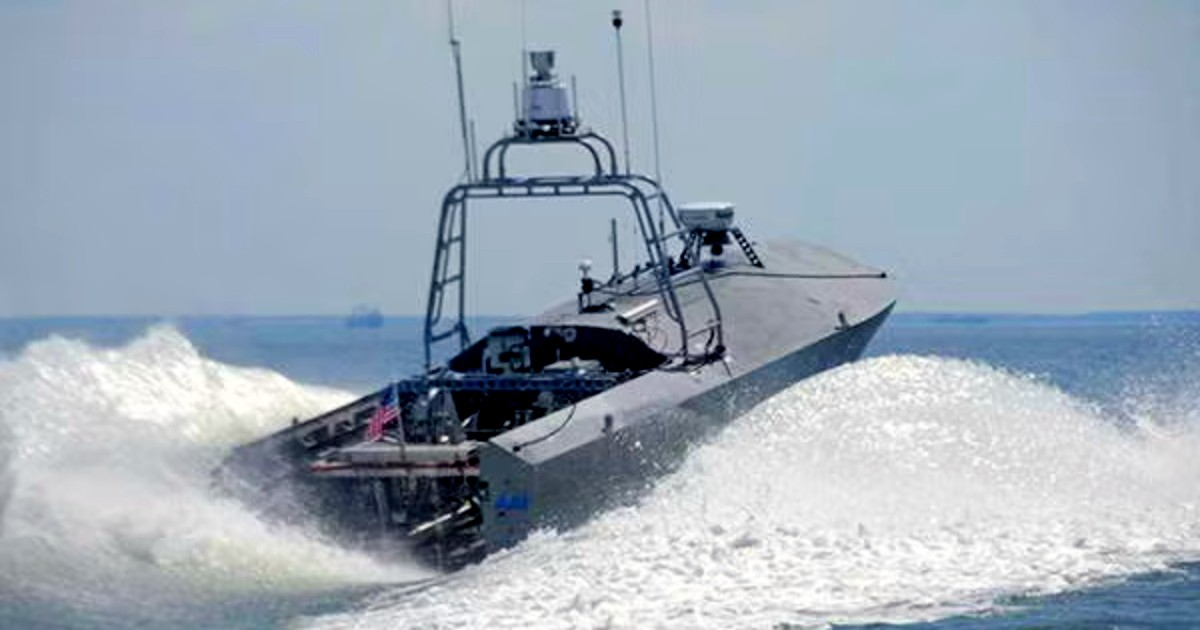
The U.S. Central Command (CENTCOM) employed, for the first time in combat on Monday, one-way attack maritime drones against targets of the Iranian regime, marking a milestone in unmanned naval warfare and turning the conflict into a real-world laboratory for new U.S. weapon systems.
According to the statement from CENTCOM reported by The Jerusalem Post, U.S. forces "attacked Iranian air defense systems, coastal radar sites, missile and drone capabilities, and small vessels using fighter jets, naval ships, one-way attack drones, and one-way maritime attack drones for the first time."
The command did not specify the exact type of platform used, but confirmed that the Sunday night operation struck dozens of targets in multiple locations with precision munitions, aiming to degrade Iran's capability to continue attacking international maritime traffic in the Strait of Hormuz.
This new wave of attacks is a response to the Iranian regime's decision to attack at least three merchant vessels in the Strait on July 6 and 7, including the Qatari gas tanker Al Rekayyat and the Saudi oil tanker Wedyan, which violated the ceasefire agreed upon in June.
Since the beginning of the bombings on July 8, the U.S. has accumulated over 300 targets attacked in three rounds of strikes, including a second wave that destroyed more than 80 targets in southern Iran, among them air defenses and over sixty vessels of the Revolutionary Guard.
The conflict is accelerating the deployment of cutting-edge military technology that Washington has been developing for years.
In the maritime field, Task Force 59 — established in 2021 under the command of then Vice Admiral Brad Cooper, now the head of CENTCOM — serves as the focal point for integrating unmanned surface vehicles (USVs) and artificial intelligence into naval operations.
In June of last year, a USV Corsair manufactured by Saronic rescued two crew members from a downed Apache helicopter in the Strait of Hormuz off the coast of Oman; now those same platforms are being used in an offensive mode.
On land, CENTCOM has also deployed the LUCAS drones (Low-cost Uncrewed Combat Attack System), developed by SpektreWorks through reverse engineering of the Iranian drone Shahed-136, with an approximate cost of $35,000 per unit, and used for the first time in combat in February 2026.
The Pentagon's strategic bet is clear: to move away from costly traditional cruise missiles and invest in inexpensive, disposable autonomous systems capable of achieving the same precision at a fraction of the cost.
Meanwhile, Qatar is seeking to mediate in order for both sides to de-escalate the conflict, in a scenario where the Strait of Hormuz —through which 20% of the world's oil and 20% of global liquefied natural gas passes— remains the main point of tension.
The combination of Task Force Scorpion Strike on land and Task Force 59 at sea, according to analysts, aims at building a regional drone strike network in one of the most contested areas on the planet.
Filed under: