Related videos:
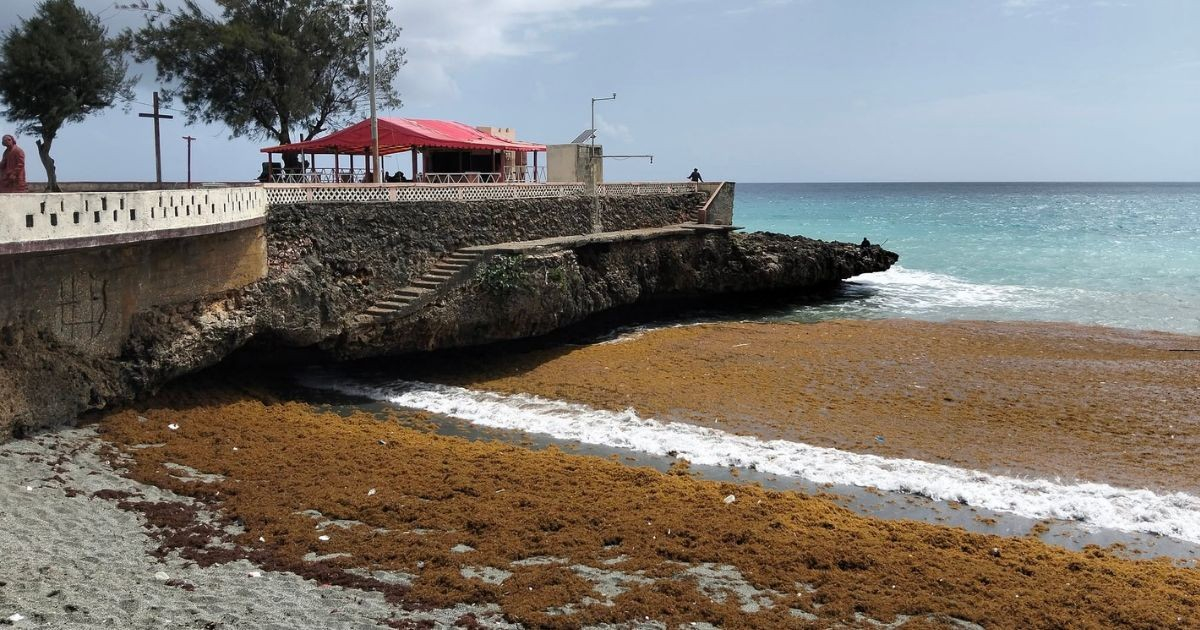
A new invasion of sargassum covers the beaches of Baracoa, in the province of Guantánamo, in eastern Cuba, generating a health alert for residents and visitors of the affected coastal areas, including Playa Caribes, Pilón, and Tortuguilla.
According to local sources, the algae arrives in two annual episodes carried by ocean currents.
However, the sargassum that reaches the Caribbean does not come from the Strait of Magellan, as the source suggests, but from the Great Atlantic Sargassum Belt, which stretches across tropical waters between West Africa, Brazil, and the Caribbean.
Its proliferation is associated with currents and winds, warm waters, ocean upwelling, nutrients brought by rivers such as the Amazon and the Orinoco, and Sahara dust, rich in iron and phosphorus.
The Guiana, Antilles, and Caribbean currents are what transport the macroalgae northwest to the Cuban coasts.
The phenomenon often intensifies during the warm months and arrives in 2026 amid a season that scientists anticipate could be potentially record-breaking.
In Baracoa and other locations in Guantánamo, local authorities, along with students and faculty from Medical Sciences, have organized work for cleaning the beaches that have been affected in the past.
However, the authorities themselves acknowledge the lack of technical and technological resources for the collection and final disposal of sargassum.
This is not the first time that Guantánamo has faced a crisis of this kind.
In June 2025, CITMA issued a high alert for the massive arrival of sargassum on the coasts of the province, and by May 2026, satellite data was predicting that the season would be critical.
On the other hand, the main danger does not come from the algae itself, but from its decomposition. When it rots, sargassum releases hydrogen sulfide (H₂S) — recognizable by its rotten egg smell — and ammonia (NH₃), toxic gases that cause eye irritation, nausea, headaches, dizziness, and respiratory issues.
In high concentrations, they can cause neurological and cardiovascular damage.
Filed under: