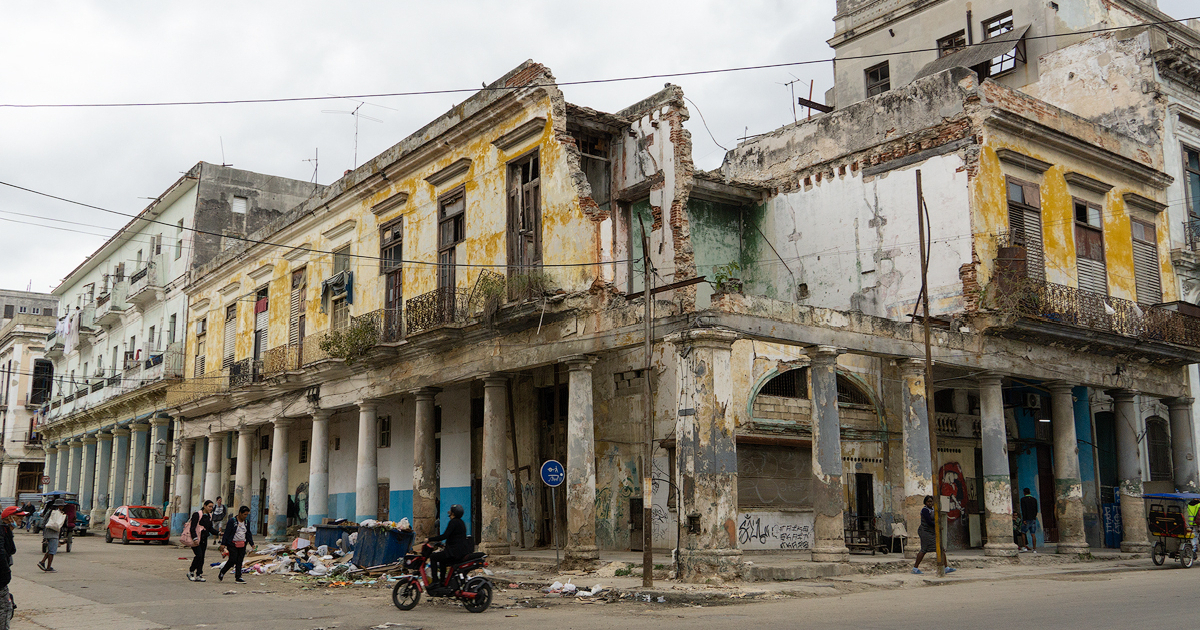
While Cuba faces an official deficit of over 929,000 homes and thousands of families live under crumbling roofs, the Society of Architecture of the Union of Architects and Engineers of Construction of Cuba (UNAICC) called on its members to prepare presentations for the III International Congress "Living in Housing in Latin American Cities," which will be held virtually on August 26 and 27.
The announcement was published on Monday by Ramón Félix Recondo Pérez, president of the Architecture Society of UNAICC, on his Facebook profile. The deadline for organizers to receive the summaries of the presentations is August 7.
Recondo Pérez described the meeting as “an academic exchange space to analyze the challenges and opportunities of housing from interdisciplinary perspectives” and invited architects to “showcase their research and take part in the dialogue about the future of housing in Latin America.”
The contrast between the academic tone of the announcement and the housing reality of the country is hard to overlook. According to official figures from 2026, 35% of Cuba's housing stock is in fair or poor condition, and in Havana, approximately 1,000 buildings collapse every year.
The construction industry is virtually at a standstill: cement plants are operating at 10% of their installed capacity, with more than seven years without significant maintenance, against a national demand of four million tons per year.
Construction plans are also not being met. In 2025, the regime built only 2,382 of the 10,795 planned homes, achieving a completion rate of 22%. In the first quarter of that year, the percentage dropped to just 12.4%. The "modular homes" program—one of the government's initiatives to address the emergency—had delivered only 133 units across the country by April 2026.
This virtual congress is not the only academic event on housing held amid the crisis. The Circular CreLab 2026 Hackathon on construction innovation took place on July 2 in Holguín, co-funded by the European Union through the Erasmus+ program, and also received criticism for the gap between academic debate and the housing emergency faced by Cubans.
In the regulatory framework, the National Assembly published in June a draft of a new Housing Law consisting of 190 articles that would repeal the current regulation in effect since 1988. The text introduces, for the first time, long-term mortgage financing and subletting, establishes mandatory monthly fees for owners in multifamily buildings, and authorizes the State to recover abandoned properties with structural deterioration. However, the draft is still pending final approval, and analysts point out that it does not address the structural causes of the problem.
The housing crisis affecting thousands of Cuban families worsens in a context of widespread material shortages, a collapse of the cement industry, and decades of accumulated disinvestment under the dictatorship. While architects debate in virtual forums, thousands of Cuban families continue to wait for solutions to a housing crisis that shows no signs of improvement.
Related videos:
Filed under: