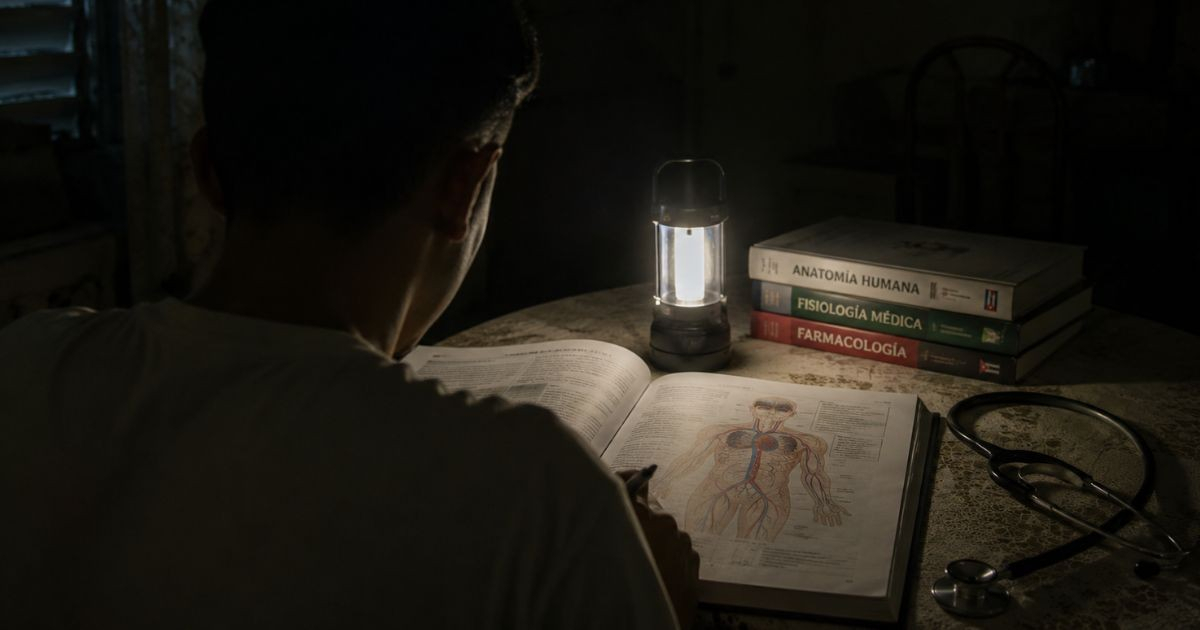
The electrical grid in Cuba collapsed for the third time in July this Tuesday, plunging millions of Cubans into darkness amid a crisis that, according to an analysis by CNN correspondent Patrick Oppmann, is pushing the resilience of the population to its limits.
Oppmann, who has been living in Havana for almost 15 years, describes a reality where electricity, water, and fuel have become luxuries that few can take for granted.
Blackouts often exceed 30 consecutive hours, and in some areas of the country, outages have extended for more than 85 uninterrupted hours.
After the second national blackout on Friday, the Havana neighborhood where the journalist lives was without electricity for 36 hours.
The power returned at four in the morning on Sunday, and the neighbors rushed to wash, cook, and charge devices, taking advantage of the few hours available.
Jorge, one of those neighbors, summed up what most people feel with a question: "We had four hours of uninterrupted electricity. When was the last time that happened?"
For Jorge Piñón, senior energy researcher at the University of Texas at Austin, the magnitude of the problem exceeds any internal solution: "Solutions to Cuba's energy crisis can no longer come from within the island; they must come from outside."
Piñón points out that, although Cuba produces its own oil, "at any given moment, half of the thermoelectric plants are halted for maintenance," making that production insufficient to meet the demand.
The geopolitical landscape exacerbates the situation. The fall of Nicolás Maduro eliminated the island's main oil supplier: Venezuela had sent over 100,000 barrels a day in 2021 and virtually cut off the supply in 2026.
Mexico, which accounted for 44% of Cuban oil imports in 2025, suspended its shipments due to threats of tariffs from Washington. Russia, embroiled in the war in Ukraine, is also unable to compensate for the deficit.
Social desperation is increasingly expressed in more visible ways. The regime maintains a WhatsApp channel to inform about the duration of blackouts, to which Cubans respond with poop emojis or the American flag.
In some neighborhoods, nighttime pot-banging can be heard, although Oppmann warns that there are no organized protests in a country where the government treats dissent as treason.
The fifth total blackout of July occurred on Tuesday, caused by the shutdown of Unit 1 of the Felton thermoelectric plant in Holguín.
Meanwhile, the contrast between the suffering of the people and the privileges of the elite was highlighted in an interview that Raúl Guillermo Rodríguez Castro, grandson and head of security for Raúl Castro, gave to USA Today this month, showing gold chains and luxury brands.
The regime has presented him as a negotiator in discussions with the Trump administration, even though he holds no official high-ranking position. The Cubans that Oppmann knows were appalled.
Homero, a friend with a state job, summarized it this way during lunch: "It's as if they don't know how we live, how our salaries lose value every day."
Related videos:
Filed under: