An analysis published this Wednesday in the Spanish newspaper ABC warns that the lack of democratic demands from the Trump administration towards Venezuela could become the argument that drives the Cuban regime to negotiate a deal with Washington under similar terms: with no immediate political conditions.
The journalist Emili J. Blasco, a specialist in Latin America, argues in his analysis that the Cuban and Venezuelan issues have been intertwined for nearly thirty years and that this interdependence continues to shape the current geopolitical landscape.
"The Cuban and Venezuelan issues go hand in hand. They have for nearly thirty years and continue to do so," he writes.
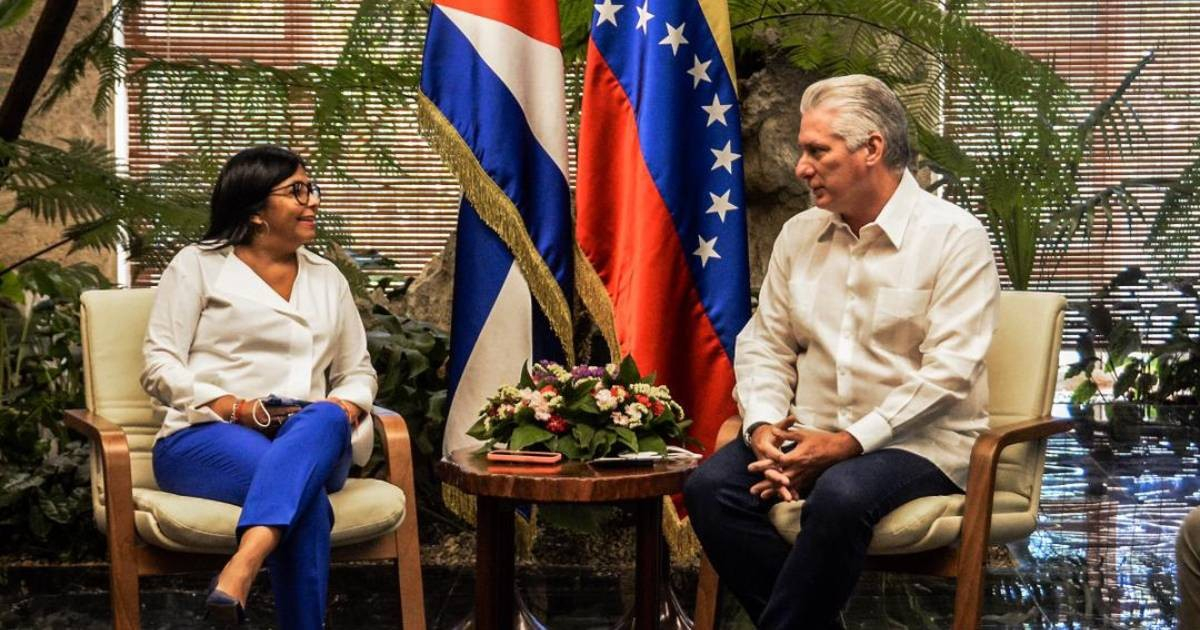
The central argument of the analysis revolves around a precedent that Havana is closely watching: Washington formally recognized Delcy Rodríguez as a representative of the Venezuelan government in March 2026 without imposing a democratic electoral timeline, despite the collapse of the chavista state.
For Blasco, that decision sends a permissive signal to the Castro regime. "If Washington had imposed an electoral timetable on Delcy Rodríguez, they would be more reluctant to yield to U.S. pressures in Havana," he points out.
The analysis coincides with the fifth anniversary of the protests on July 11, 2021, the largest demonstrations against the regime in Cuba's history, which the regime suppressed with brutal repression without implementing any real reforms.
Blasco lists the missed opportunities: Fidel Castro's retirement in 2008, his brother Raúl's, and the events of July 11, when the regime could have responded with openness but chose stagnation and repression instead.
The package of 176 economic measures approved in June 2026 includes the removal of the 100-worker limit per company, the authorization of private banking, the possibility for Cubans abroad to invest in the island, the establishment of foreign fast food chains, and the opening of currency accounts without prior authorization.
However, Blasco warns that that package was only approved due to U.S. pressure, and was not based on the regime's own conviction, and it may end up being "just a mere list of good intentions."
Another alarming signal identified by the analyst is the figure of the Cuban negotiator. Raúl Guillermo Rodríguez Castro, grandson of Raúl Castro and nicknamed "El Cangrejo," has been conducting informal negotiations with Washington since February 2026 without holding any public office.
Blasco openly questions him: “Who runs Cuba?”, and adds that “the explanations provided for his lifestyle and personal expenses come off as grotesque,” which, in his opinion, highlights the lack of a genuine desire to win over the population.
The historical background highlighted by Blasco is crucial: chavismo has transferred over 21 billion dollars in oil to Cuba since 2000, sustaining the Castro regime after the Soviet collapse.
Now, with a reconfigured chavismo under Trump's tutelage, the Cuban regime could find in that model a mirror to reflect upon.
"Chavismo supported a financially struggling Castroism after the fall of the USSR, and a reconfigured 'chavismo' backed by Trump could serve as an argument for a Castroism with that same variant," concludes the analyst.
Related videos:
Filed under: