
Related videos:
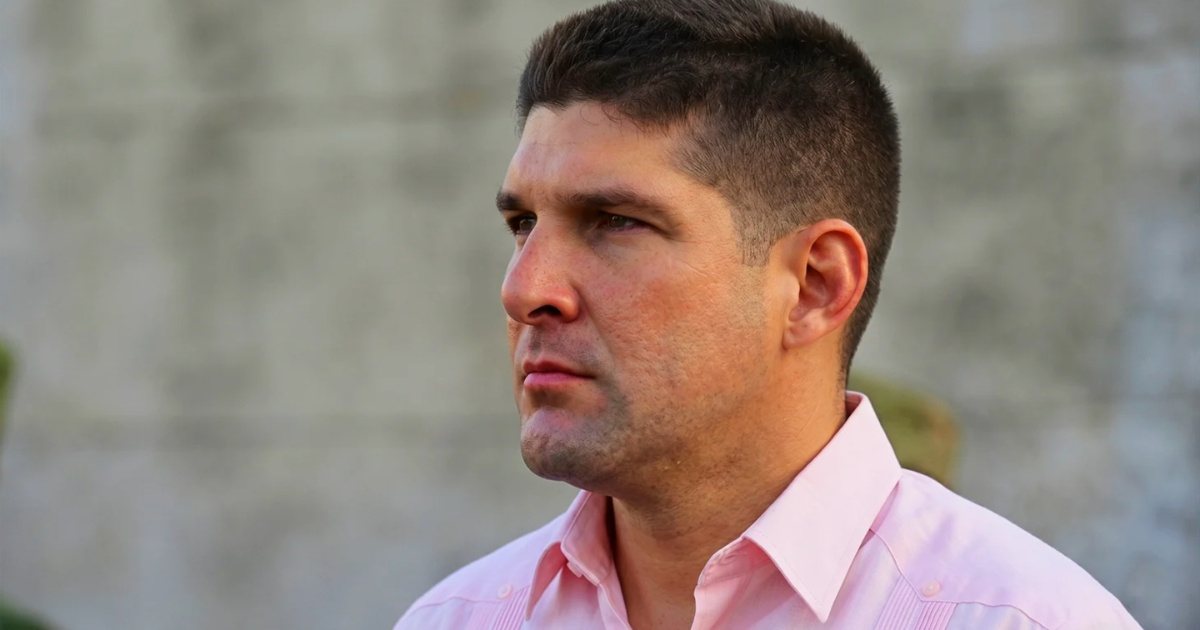
In tight jeans, a Hugo Boss t-shirt, and Hermès sneakers, Raúl Guillermo Rodríguez Castro —the 42-year-old grandson of Raúl Castro, known as "El Cangrejo"— granted his to a U.S. media outlet, published this Monday by USA Today, in which he positioned himself as the man ready to negotiate directly with Donald Trump about the future of the island.
"I can negotiate with anyone designated by the U.S. If given the opportunity, of course with Trump," he stated during two days of talks in June in Havana, sitting in the same office his grandfather occupied in the Convention Center, the seat of the Cuban parliament.
Tall and muscular, with light green eyes and a shaved head, his appearance stands in stark contrast to that of the revolutionary leaders who came before him, though not due to the luxurious lifestyle he enjoys, including his clothing and footwear.
He wears a gold chain with a medallion engraved with the initials “FCR” and “RCR” —Fidel Castro Ruz and Raúl Castro Ruz—. “If there’s one thing I believe in, it’s these two men,” he said while showing it.
Rodríguez Castro does not hold an official position in the government, but he is a colonel in the Ministry of the Interior and the main informal operator between the regime's leadership and Washington.
His nickname has a physical origin: he was born with six fingers on his right hand and underwent three surgeries before the age of eight.
He is the son of the late General Luis Alberto Rodríguez López-Calleja, who led GAESA —the military conglomerate that controls a significant portion of the Cuban economy— until his death in 2022.
Since his teenage years, he attended state meetings, including the debates between Fidel and Raúl Castro, which earned him the second nickname: "Raulito."
"It is the favorite grandson. Raúl Castro trusted his father, and he is the grandson he loved the most," noted Frank Mora, a professor of politics and international relations at Florida International University.
Their public emergence occurs under extreme pressure. The sanctions imposed by the Trump administration have reduced Cuba's energy imports by between 80% and 90%, resulting in blackouts of up to 25 hours a day in more than 55% of the territory and a projected GDP contraction of -6.5% for 2026.
Rodríguez Castro has accumulated contacts with Washington that no other Cuban official can claim: he spoke with Marco Rubio in January, following the U.S. military operation in Caracas that resulted in the deaths of 32 Cuban soldiers guarding Nicolás Maduro; he met with Rubio in St. Kitts in February; and he was present when the CIA director visited Havana in May.
Significantly, it has not been sanctioned by Washington.
"This administration has helped create Raulito. It has achieved consensus among the various factions of the Cuban state in favor of a market opening. But that is not enough for those surrounding Rubio, who want to see a political change, not just an economic one," stated Ricardo Herrero, executive director of the Cuba Study Group.
His lifestyle openly contradicts the rhetoric he advocates. According to joint research by La Prensa, Armando.Info, Transparencia Venezuela en el Exilio, and the Centro Latinoamericano de Investigación Periodística, he made at least 23 private jet trips to Panama between 2024 and the end of 2025 for luxury shopping.
And yet, he stated: "It pains me that many people cannot live like I do. It weighs on me how people struggle. And I work every day to change that situation."
In April, he sent a secret letter to Trump with proposals for economic cooperation, but it was intercepted by a Customs agent at Miami airport; its bearer, businessman Roberto Carlos Chamizo, was sent back to Havana.
On June 18, the regime presented a package of over 170 measures to privatize part of its socialist economy, reforms that Rodríguez Castro promoted.
Washington described them as "superficial smoke signals," and Rubio responded with new sanctions against GAESA entities, including the International Financial Bank.
About the political prisoners, Rodríguez Castro stated that Cuba is willing to release, under the appropriate conditions, “people considered political prisoners,” and added: “Truth is not absolute.”
Filed under: