President Donald Trump renewed his threat on Tuesday to escalate attacks against Iran, warning that next week the country's power plants and bridges will be targeted if Tehran does not return to the negotiating table, as reported by CNN live.
Next week will really get bad for them because next week the power plants are coming. Next week the bridges are coming, Trump declared in an interview with Fox News, adding that if Iran does not reach an agreement, "there will be no one left for them".
The statements come after the fourth consecutive night of U.S. bombings against Iranian territory, in a seven-hour operation that targeted dozens of military objectives near the Strait of Hormuz and in coastal areas, according to U.S. Central Command.
At least seven Iranian soldiers were killed in the nighttime attacks against the Bampur base in the southeastern province of Sistan and Baluchistan, where the U.S. launched 13 missiles at barracks, housing facilities, and guard posts, according to the Iranian state agency IRNA.
The spokesperson for the Iranian government, Fatemeh Mohajerani, stated this Wednesday that more than 30 civilians have lost their lives in the recent U.S. attacks over the past few days.
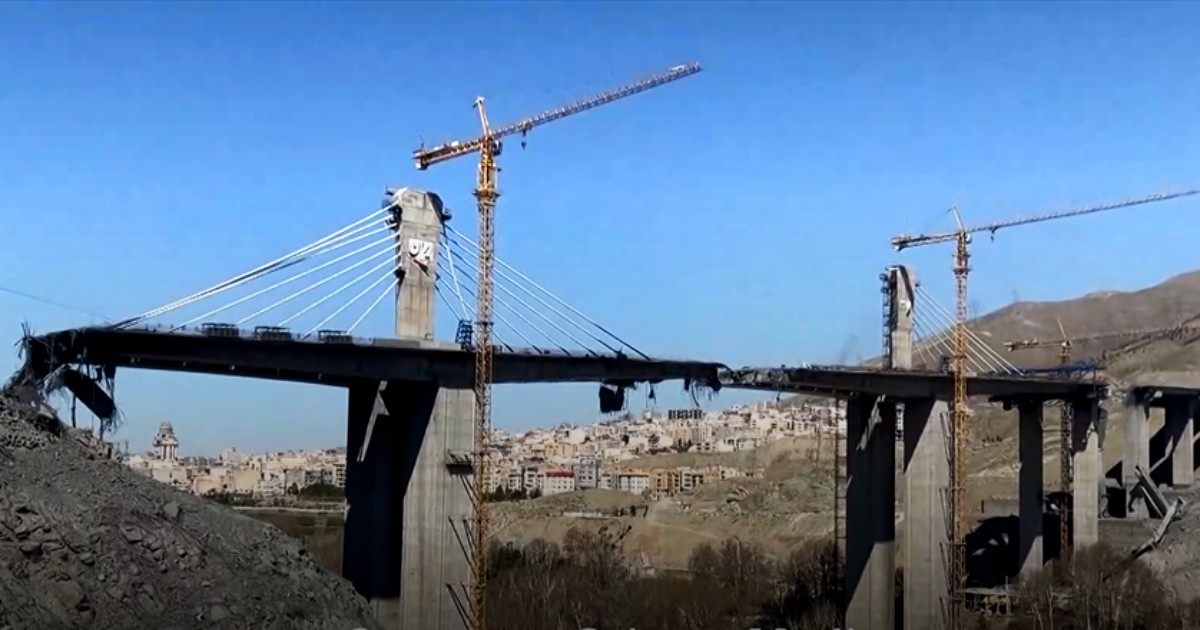
This is not the first time that Trump has threatened to strike Iranian infrastructure. On April 3, 2026, the U.S. destroyed the B1 Bridge in Karaj —the longest in Iran and the Middle East— resulting in at least eight deaths and between 95 and 100 injuries. Trump justified the attack by claiming that the structure was being used to transport ballistic missiles.
In response to those threats, thousands of Iranian civilians formed human chains in front of power plants and bridges in an attempt to protect them from possible bombings.
The conflict resumed on July 8, 2026, when Trump declared the end of the ceasefire from the NATO summit in Ankara, claiming that Iran had attacked commercial vessels in the Strait of Hormuz between July 6 and 7, violating the truce agreement signed in June in Switzerland.
Iran responded to the latest attacks by striking U.S. military infrastructure in Kuwait, Jordan, and Bahrain. The Islamic Revolutionary Guard Corps (IRGC) further threatened to close additional energy export routes in the region: "The export of oil and gas from the region will be for everyone or for no one."
The escalation has direct consequences on energy markets. Only 17 commercial ships passed through the Strait of Hormuz on Tuesday, compared to approximately 100 that would typically make the journey on an average day before the war, according to the analysis firm Kpler. The price of Brent rose by 0.3% to $85 per barrel this Wednesday.
Legal experts and international organizations have warned about the legal limits of Trump's threats. Retired Brigadier General Mark Kimmitt pointed out to CNN that "the bridges and infrastructure that are primarily used to support military forces are legitimate military targets," although he clarified that "we hope to remain focused on military objectives."
However, Heba Morayef, the regional director of Amnesty International for the Middle East and North Africa, warned that the potential for "devastating" civilian harm resulting from attacks on energy infrastructure poses a "substantial risk that such attacks could violate international humanitarian law and in some cases could constitute war crimes."
The UN Special Rapporteur on counter-terrorism and human rights, Ben Saul, had already condemned in March the threats from both sides against civilian energy infrastructure, describing such attacks, if carried out, as "war crimes under international law."
Related videos:
Filed under: