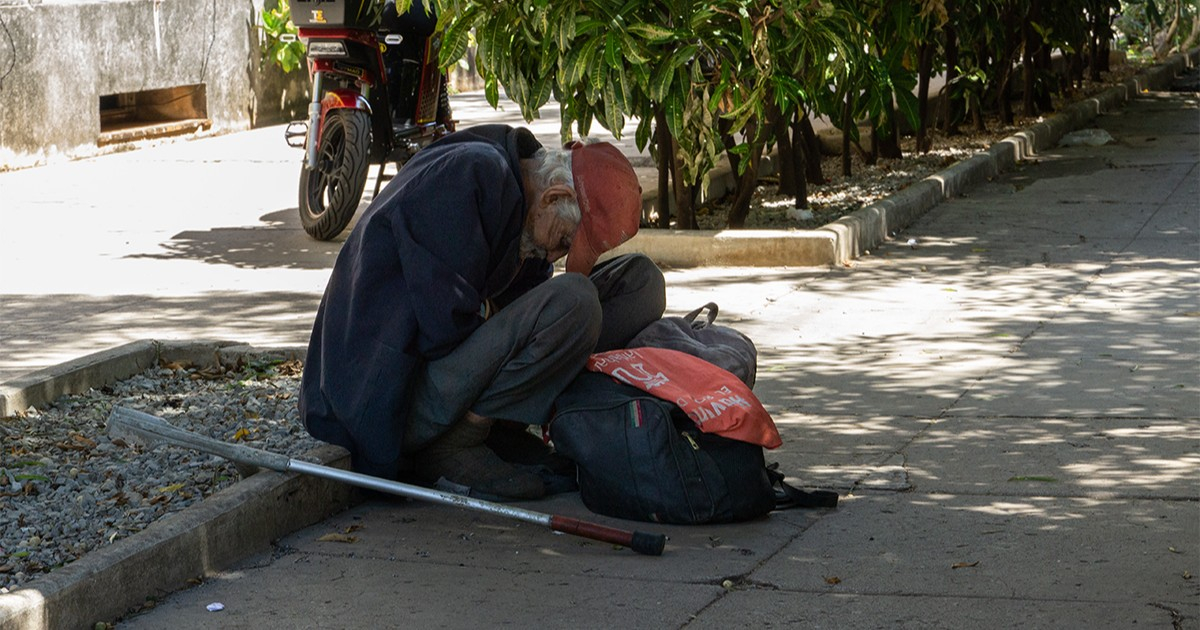
The rapid aging of the Cuban population, combined with the loss of purchasing power of pensions, the scarcity of food and medicine, and the mass emigration of family members, is worsening the living conditions of hundreds of thousands of elderly individuals on the island.
The regime cannot conceal the vulnerable situation of the elderly, and this issue is beginning to make headlines in foreign press, like a recent photo report from DW, showcasing how elderly individuals gather in churches in Havana to receive one meal a day.
According to the National Office of Statistics and Information (ONEI), by the end of 2024, 25.7% of the Cuban population was 60 years old or older, placing Cuba among the most aged countries in Latin America.
Official projections indicate that this group will continue to grow in the coming years, driven by low birth rates and the ongoing emigration of young people from the country.
Although the Government raised the minimum pension to 4,000 Cuban pesos in September 2025, this increase has not kept pace with inflation or the sustained rise in prices in the informal market, where many food and basic products can only be purchased at prices far above the income of most retirees.
Economic difficulties are compounded by the gradual weakening of family networks. The emigration of millions of Cubans in recent years has left many elderly individuals living alone or relying on neighbors, friends, and religious organizations to meet basic needs such as food and companionship.
The inadequacy of geriatric care services also increases the vulnerability of this demographic. Various specialists and organizations have warned that the infrastructure designated for the care of older adults is insufficient in the face of the rapidly aging population, while many families lack the resources to assume that responsibility.
In this scenario, churches and religiously inspired organizations have expanded their community assistance programs through food kitchens, food distribution, and support for vulnerable individuals.
These initiatives have become an essential support for numerous elderly people, although their managers acknowledge that the demand far exceeds their capacity to respond.
The shortage of medications remains one of the main challenges for the elderly in Cuba, especially for those suffering from chronic illnesses who require ongoing treatments.
The combination of low incomes, supply difficulties, and an insufficient care system reflects one of the greatest social challenges facing Cuba today: ensuring dignified living conditions for a growing number of elderly people living in poverty, isolation, and vulnerability.
Related videos:
Filed under: