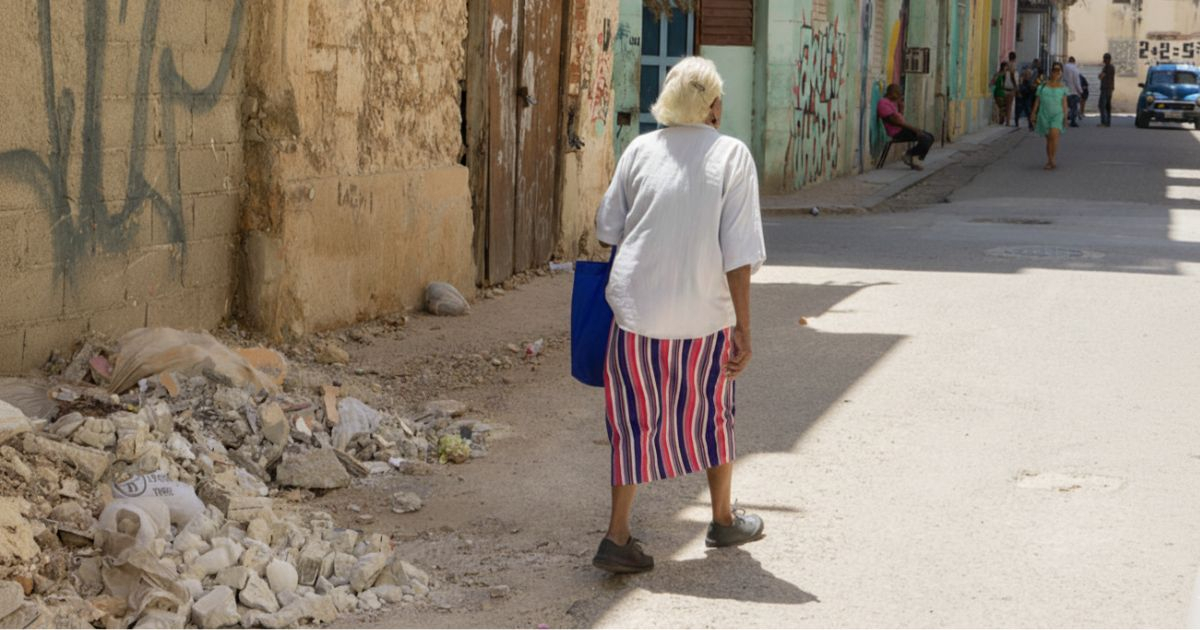
This Thursday, while the official media outlet Cubadebate called on experts for its program "Cuadrando la Caja" to analyze the package of 176 economic transformations approved by the regime, the reaction from Cubans on social media was drastically different: skepticism, irony, and fatigue.
The State Council approved two new decree-laws related to the reform package this Thursday, during an extraordinary session, without waiting for the regular session of the National Assembly scheduled for July 29.
The measure sparked a new wave of reactions on social media that summarized the popular sentiment: “So what’s the new invention now?”
The package of 176 measures was approved by the National Assembly of People's Power on June 18 and 19, presented by Prime Minister Manuel Marrero Cruz as the largest attempt at structural reform since the Special Period of the 1990s.
Among the most unprecedented measures since 1959 are the authorization of private banking, private currency exchange, the removal of the 100-worker limit for MIPYMES, the opening up to foreign capital in the private sector, and the transformation of state enterprises into joint-stock companies.
However, for a population that endures blackouts lasting between 20 and 40 consecutive hours, an informal inflation rate nearing 70%, and an average salary of just 15 dollars per month, the announcements sound like promises already made.
"The same dog with a different collar," circulated on social media. "Many decrees and laws every year, but nothing is fulfilled in reality," wrote another user. A viral phrase summed it up more bluntly: "176 measures to steal a country".
Skepticism is not just emotional: it has roots in a history of unfulfilled reforms. The Guidelines of 2011, the opening to MIPYMES in 2021, and the Ordering Task that same year did not reverse the structural deterioration. Since 2020, the Cuban GDP has contracted by more than 26%.
The activist Laritza Camacho posed the question that many are asking: “Who guarantees that those who have done everything wrong will suddenly start doing everything right?”
Economists are also not showing optimism. Pedro Monreal described the package as a “monster” or “deformed hybrid” because it does not substantively recognize the right to private property and, without independent courts or the rule of law, could lead to a “cronystic capitalism” that benefits groups with political connections.
The economist Emilio Morales was more direct: he spoke of a "false willingness for change" and pointed out that the regime is not interested in the prosperity of Cubans.
Analysts also warn that the implementation requires modifying more than 148 legal norms and approving 32 new ones, without a complete public calendar in place. Many agree that the package is primarily designed to send signals to foreign investors and the U.S. government, without altering "a bit of the political system."
The discontent was not limited to screens: protests with pots and pans were reported in Santiago de Cuba, Santa Clara, and Havana as a physical expression of citizen frustration.
While Cubadebate frames the measures within the official objective of "recovering the economy and preserving the achievements of the Revolution," Cubans on social media respond with another phrase that circulates anonymously: "They want to save themselves."
Related videos:
Filed under: