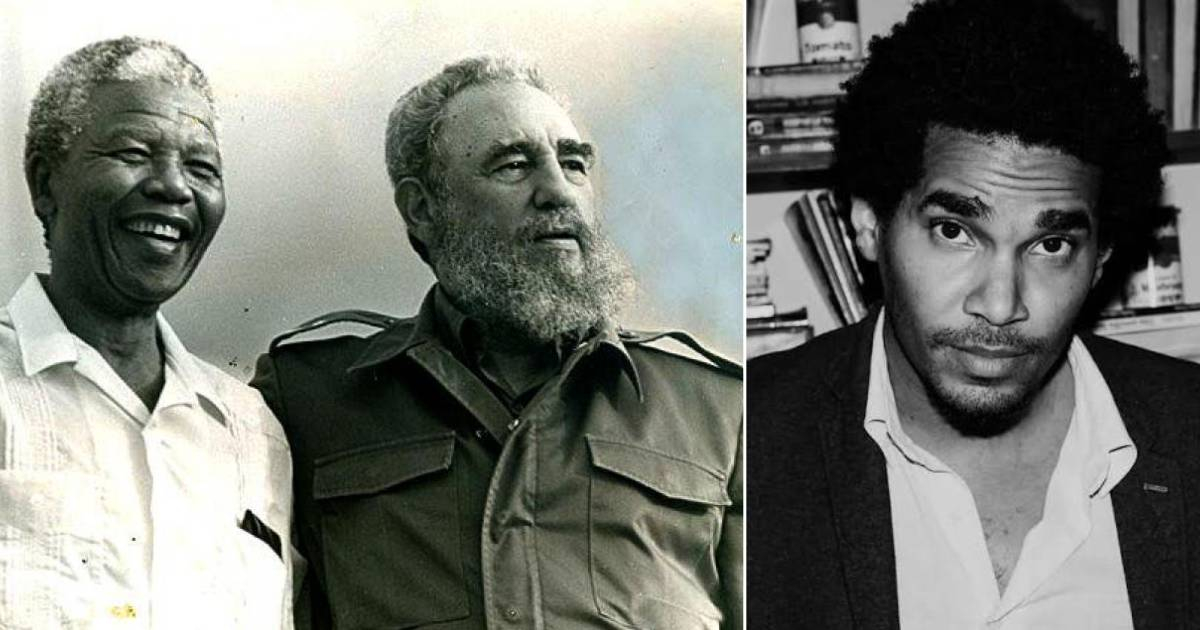
The state media Canal Caribe aired a 15-minute program dedicated to Nelson Mandela this Saturday in observance of the International Day that the UN celebrates every July 18, which marks the 108th anniversary of the South African leader's birth.
The official tribute of the Cuban regime takes place on the same day that Cuban political prisoner Luis Manuel Otero Alcántara goes into exile, and it starkly contrasts with the reality of its prisons, where international standards bearing the name of Mandela are systematically violated.
The United Nations Standard Minimum Rules for the Treatment of Prisoners, renamed "Nelson Mandela Rules" by a General Assembly resolution on December 17, 2015, establish 122 standards that prohibit torture, limit solitary confinement to a maximum of 15 days, and require medical care, adequate nutrition, and access to family visits.
The Canal Caribe program detailed the conditions that Mandela endured during his 27 years of imprisonment under apartheid: forced labor in limestone quarries, one visit and one letter every six months, and the prohibition of attending the funeral of his mother and a daughter.
"To defend the just, he went to prison for 27 years, but he never faltered or wavered in his beliefs. He stood tall the entire time," asserted the narrator of the state program.
What the regime omits is that those same conditions —and worse— characterize Cuban prisons today.
At the end of May 2026, Prisoners Defenders recorded a historic high of 1,281 political and conscience prisoners in the island's jails, according to a report collected by Infobae. Of these, 449 suffer from serious illnesses without adequate treatment and 52 endure severe mental disorders without psychiatric care.
The daily intake in Cuban prisons ranges between 250 and 353 kilocalories, barely 10-14% of the minimum requirements, according to a report from Prisoners Defenders from April 2026.
The documented torture techniques include "the Turkish bed," "the bicycle," and the use of shackles that completely immobilize the inmate, known as "shakiras," according to a 2024 report on methods in Cuban prisons.
Between 2024 and 2025, the Center for Documentation on Cuban Prisons documented at least 60 deaths in custody. Only between January and June of 2025 were there 24 reported deaths and 160 allegations of torture, according to data that raised alarms about the prison situation.
In June 2025, representatives of the regime stated before the UN that they respect the human dignity of their inmates, a claim that human rights organizations deemed false. Human Rights Watch also confirmed that the release of more than 2,000 prisoners announced in April 2026 explicitly excluded political prisoners.
Rule 1 of the regulations named after Mandela states: "All inmates shall be treated with the respect that their inherent dignity and worth as human beings deserve. No inmate shall be subjected to torture or to other cruel, inhuman, or degrading treatment or punishment."
This Saturday, historian and activist Alina Bárbara López Hernández, under house arrest in Matanzas since June 2024, published her own tribute to Mandela calling for civil disobedience and peaceful protest, anticipating that her gesture could lead to another arrest.
The official slogan for Mandela Day 2026, set by the UN, is "It is still in your hands to fight poverty and inequality," a message that the Cuban regime recites while keeping over a thousand people imprisoned for political reasons, many of whom were sentenced for participating in the protests on July 11, 2021.
Related videos:
Filed under: