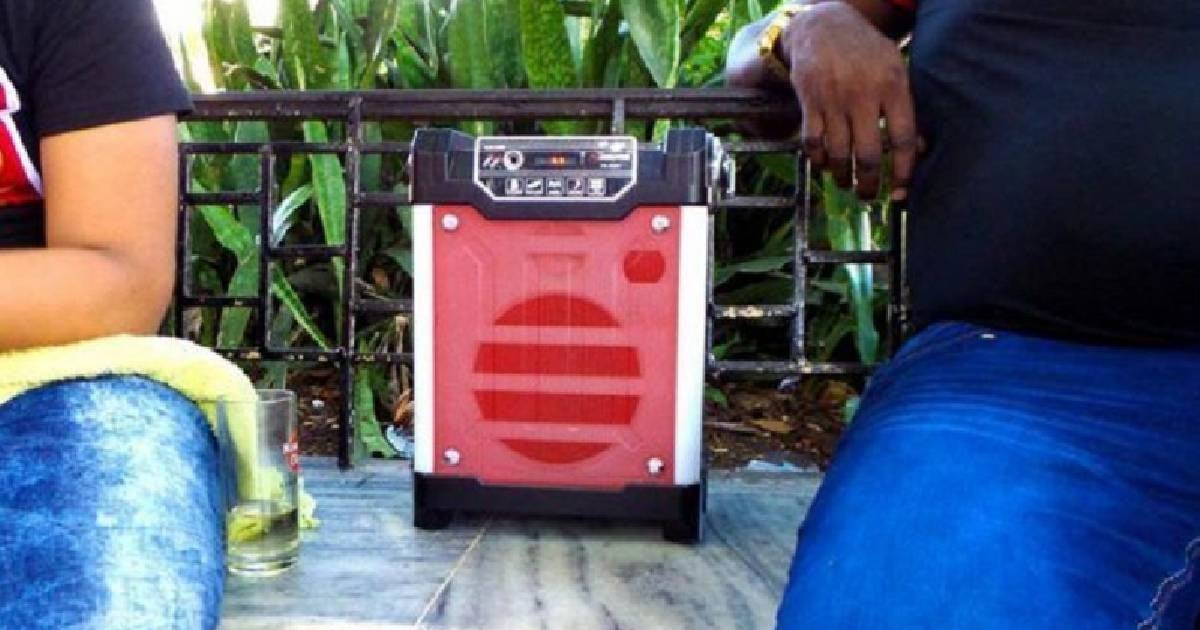
This Saturday, on World Listening Day, the official newspaper Escambray published a report that confirms what the residents of Sancti Spíritus have been denouncing for years: that noise pollution in the province not only persists but has worsened since the same medium alerted about the issue in 2022.
Four years ago, Escambray warned about the "impunity of those who generate true auditory violence" and the "deafness of some agencies authorized to uphold silence as a citizen's right."
The diagnosis for 2026 is more dire: noise has spread like an epidemic throughout the urban areas of the province, lamented the outlet.
Portable speakers, bicitaxis, and scooters blasting music at full volume, vehicles with modified exhausts, and nighttime activities in bars and cultural centers lacking proper acoustic conditions create a soundscape that systematically violates legal limits.
The Cuban Standard for Noise and Vibrations sets a maximum of 70 decibels during the day and 66 at night for residential areas.
These thresholds are regularly surpassed at critical points such as the Cultural Plaza of Olivos I, in the capital of Sancti Spíritus, or the Historic Center of Trinidad.
Residents of the 12 Plantas building in the capital report that the noise prevents them from sleeping until well into the early morning, especially on weekends.
In Trinidad, the situation also affects the built heritage, as the vibrations generated by the music in venues without sound insulation damage the historical structures.
Exposure to levels above 70 decibels can cause permanent hearing damage, and continuous noise is also associated with insomnia, stress, and irritability, according to specialists quoted by Escambray.
Cuba has a legal framework to address the problem: Law 150 of 2022, Decree 96 of 2023, and Decree Law 200/99, which establishes fines ranging from 200 to 2,250 pesos for emissions exceeding 65 decibels. However, its enforcement is virtually nonexistent, and the population perceives it as empty words.
The phenomenon is not exclusive to Sancti Spíritus. In April 2025, residents of Los Arabos, in Matanzas, reported noise complaints every weekend due to activities endorsed by the municipal government itself, with authorities failing to respond for over five months.
In September of that same year, a survey in Las Tunas revealed that more than 70% of respondents rated the music played on motorbikes, pedicabs, and recreational centers as "deafening" and "irritating."
The energy crisis has added a new layer to the problem. In June, a resident of the Granma building in Nuevo Vedado, Havana, reported the unbearable noise from Etecsa's generator that operates 24 hours a day while the neighborhood receives barely two hours of electricity a day.
Recently, the authorities in Guantánamo launched operations against resonators and loud music on motorcycles, with vehicle retention costing 1,000 pesos per day for storage, in a province that endures power outages of up to 30 hours a day.
Related videos:
Filed under: