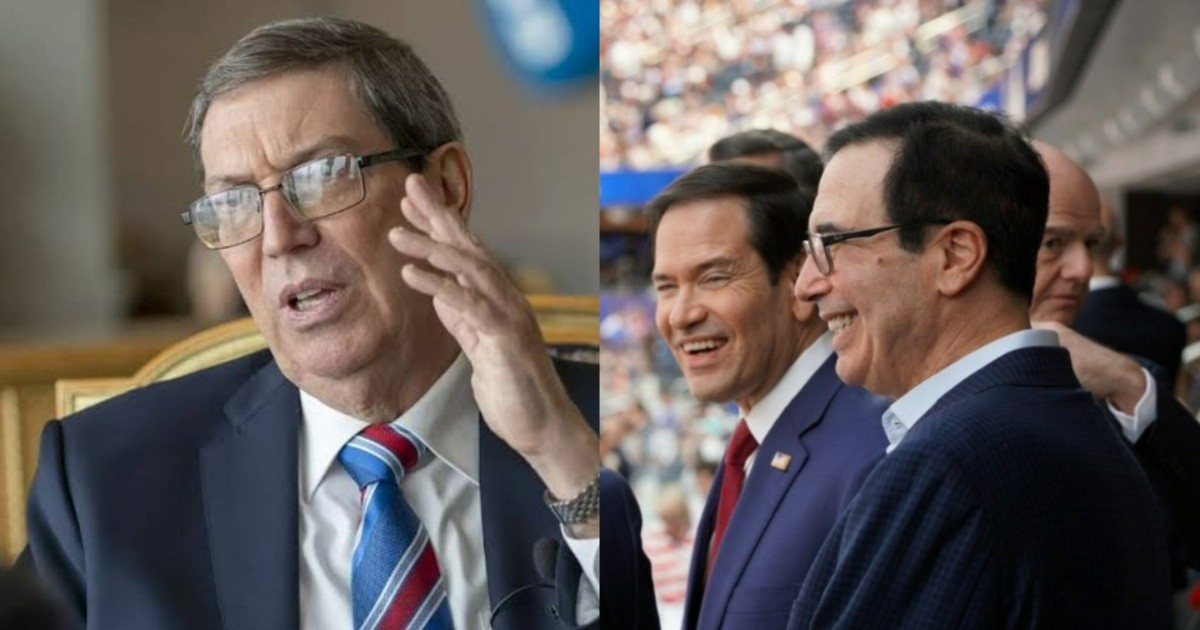
The Cuban Foreign Minister Bruno Rodríguez Parrilla took the opportunity this Sunday—on the day of the 2026 World Cup final between Argentina and Spain—to publish an extensive statement on Facebook in which he attributes the difficulties faced by Cubans in following the tournament to the U.S. embargo, while indirectly acknowledging the existence of "unbearable blackouts" on the island.
"The energy blockade by the US against Cuba could not prevent the World Cup, although it made it difficult for us to watch and follow it," wrote the Minister of Foreign Affairs in his Facebook post, shifting all responsibility to Washington and avoiding the structural crisis of the Cuban electrical system.
The reality experienced by Cubans during the tournament month was different: power outages of between 20 and 24 hours daily in Havana and up to 87 consecutive hours in provinces like Matanzas, with a record electricity deficit of 2,341 megawatts recorded on July 8.
The National Electricity System experienced at least five total collapses in 2026 alone, three of which occurred during the World Cup itself—on July 6, 10, and 14—according to documented technical data.
While Rodríguez spoke of the "extraordinary sports achievements" that Cubans "celebrate and enjoy," the state television Tele Rebelde barely broadcasted 10 minutes of the tournament's opening ceremony before switching to cycling and volleyball, and the Cubans who were able to watch the matches did so by gathering at the entrance of the Cine Yara in Havana, as it was impossible to do so in their homes.
The state platform Picta, presented as a broadcasting alternative, was inaccessible to the majority of the population due to a lack of electricity and low connectivity.
Experts indicate that the main cause of the blackouts is the structural obsolescence of the electrical infrastructure: the Antonio Guiteras thermoelectric plant, for example, experienced 17 disconnections in 2026 without having received capital maintenance since 2010, decades before the most recent sanctions.
In his post, the chancellor also took the opportunity to criticize several real controversies of the tournament. He denounced the denial of visas and the "humiliating screenings" of players, referees, and fans, referencing cases such as that of the Somali referee Omar Abdulkadir Artan, who was held for 11 hours in Miami and deported despite having a valid visa and diplomatic passport.
Rodríguez also criticized the pressure from the White House on FIFA to overturn the expulsion of American forward Folarin Balogun, describing it as "brutal interference." The European Parliament has opened an investigation into whether FIFA President Gianni Infantino was politically pressured by the White House in this case.
The minister also criticized the ticket prices, which reached up to $30,000 in resale for the final, describing it as an "obscene increase" benefiting the elites.
Rodríguez ended his post with a quote from the late Argentine star: "As Maradona said, the ball does not get stained!"
It's not the first time the chancellor has used this argument at international forums: in July 2026, he presented a gallery of photos of blackouts in Havana —including dark operating rooms— to blame the U.S. embargo for the energy crisis, which has become a systematic strategy of the regime to divert attention from its own responsibilities.
Related videos:
Filed under: