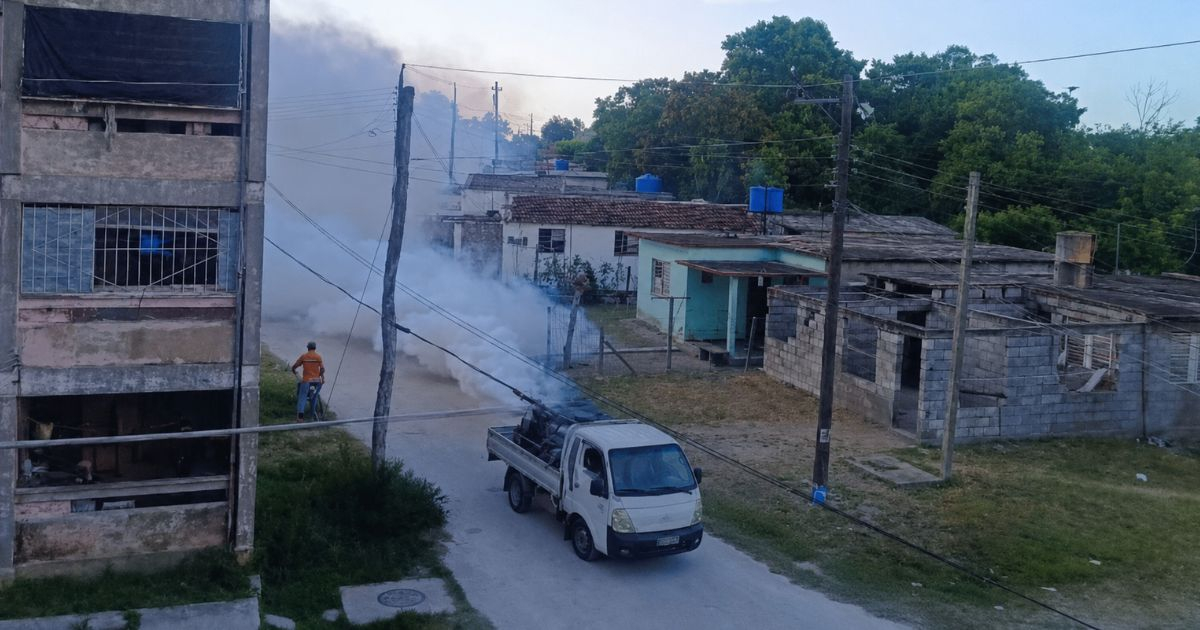
Microbiologists from the province of Villa Clara confirmed on Monday the simultaneous circulation of dengue serotypes II and IV in the municipality of Ranchuelo, a combination that health authorities described as especially dangerous because "it can worsen the patient's condition in hours and pose a risk to their life."
The alert arose during a session of a Temporary Group convened to address the epidemiological situation in the municipality, with the presence of the provincial vice governor Noel Cecilio Chinea Pérez and political and governmental authorities from the area.
Dr. Yarelyn Lorenzo Oyarzabal, director of Hygiene and Epidemiology of Villa Clara, reported that 12 patients remain in stable condition at the isolation center established at the Las Tecas motel in Ranchuelo.
According to the official, the authorities have been working in the area for over 15 days due to the increase in people showing feverish symptoms. To date, more than 10,300 surveys have been conducted, and interventions are taking place in 114 affected blocks, covering a total of 5,286.
On this Monday alone, 562 houses were fumigated, and abate is being applied to stored water to curb the reproduction of the Aedes aegypti mosquito, which transmits the virus.
The director of Epidemiology warned that "all residents of Ranchuelo will be screened in order to ensure timely medical intervention," highlighting the seriousness of the issue, and added that, due to geographic proximity, residents of Manicaragua, Santa Clara, Placetas, and Sagua la Grande should also seek healthcare services at the first sign of any febrile symptoms.
Multiple entities have been mobilized for the investigation: Community organizations, ETECSA, TRANSMEC, the Electoral Commission, INDER, the Efraín Alfonso Agroindustrial Company, and the municipal and provincial Health departments, among others.
The authorities recommended scrubbing water storage containers in homes, keeping them covered, and protecting the body from the vector, even in the high temperatures of summer.
DENV-2, one of the circulating serotypes in Ranchuelo, has been associated with a higher risk of severe manifestations, such as hemorrhages and shock, although the progression of the disease also depends on other factors, including the patient's immune history.
The simultaneous presence of two distinct serotypes also increases the risk of severe illness in individuals who have previously had dengue, as a reinfection with a different serotype can trigger an immune response that worsens the clinical picture.
In June, the Ministry of Public Health and confirmed the simultaneous circulation of all four serotypes of the virus, a situation that increases the risk of outbreaks and serious complications.
Villa Clara has a recent history of severe outbreaks. In October, the provincial government reactivated its emergency plan in response to the simultaneous increase of dengue, chikungunya, and Oropouche, during which 14 severe cases were reported and at least one death due to hemorrhagic dengue in the municipality of Cifuentes.
Related videos:
Filed under: