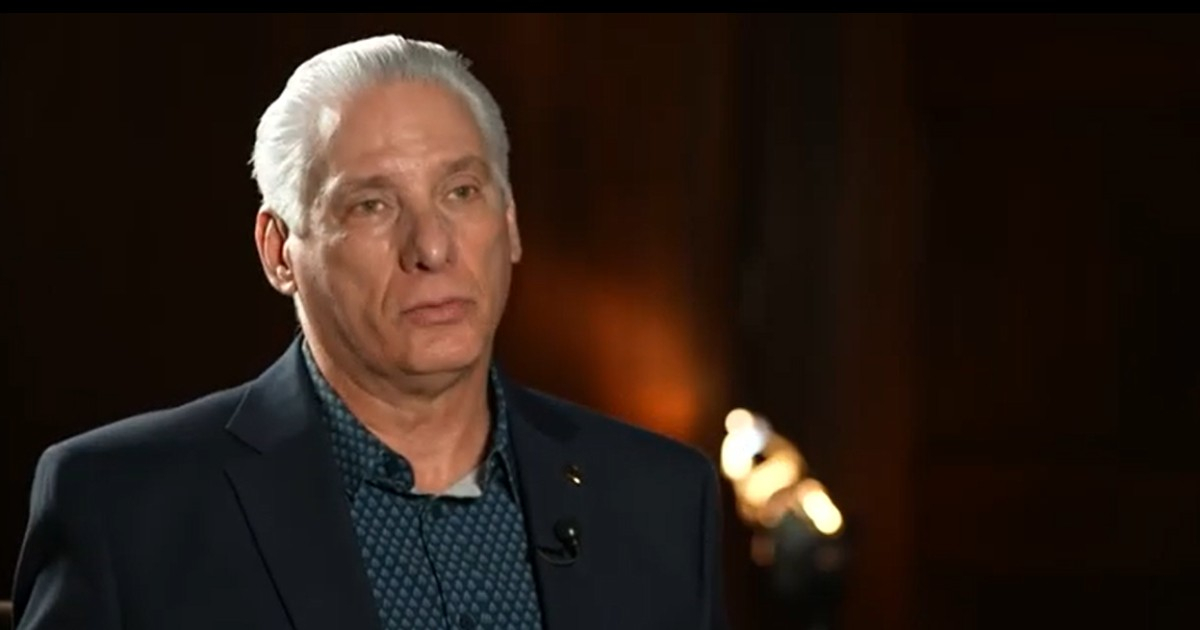
Miguel Díaz-Canel responded this Tuesday on Facebook to the report by the Department of State on Cuba, accusing the Trump administration of resorting to "transnational neo-McCarthyism" to "curtail civil liberties in the U.S." and to justify aggression against the island.
The Cuban leader's post comes shortly after Secretary of State Marco Rubio shared on social media the report "Cuba: the Capital of 21st Century Communism", a document of approximately 100 pages that accuses Havana of nearly seven decades of espionage, infiltration in elite universities, and support for radical groups on U.S. soil.
Díaz-Canel began his post with the proverb "The thief believes that everyone is of his condition" and directly attacked Rubio, whom he labeled as "one of the most corrupt officials of the current administration, with proven ties to drug traffickers and terrorists in Florida."
The Cuban leader reversed the accusations from the report and pointed to Washington as the real aggressor: "If one country has spied on and attacked another at obscene levels, it has been the U.S. against Cuba."
To support that argument, he listed a series of historical episodes that he attributes to the United States: "plagues and diseases introduced in Cuba, hemorrhagic dengue that claimed the lives of 101 children; the downing of a plane with 73 people on board; bombs in hotels; assassination attempts or psychological warfare."
Regarding the U.S. embargo —which the regime refers to as a "blockade"— Díaz-Canel asserted that it takes on a "genocidal dimension" with the current reinforcement and the "energy siege," describing it as "the greatest act of subversion against a state, conceived and officially described by the U.S. to exhaust the people and undermine their support for the Revolution."
The central focus of the publication is the accusation that "the transnational neo-McCarthyism being reinstated in the U.S., stemming from a clearly fascist movement, resorts to lies to create pretexts for carrying out aggressions against Cuba and curtailing civil liberties in the U.S."
Díaz-Canel concluded his argument by stating that "Cuba has never acted to harm the American people, nor has it intended to affect the national security of the U.S."
The speech of the Cuban leader contrasts with the documented reality within the island: human rights organizations report over 1,200 political prisoners in Cuba in 2026, and the country ranks 165 out of 180 in the Press Freedom Index by Reporters Without Borders.
This statement is part of a sustained rhetorical escalation. On July 17, Díaz-Canel had already compared Trump's policies to "Hitlerian fascism" and Operation Condor; in May, he referred to the administration as a "fascist government"; and in March, he spoke of the "resurgence of fascism" attributed to Washington.
The report by Rubio is the most recent step in a policy of maximum pressure that began on January 20, 2025, when Trump re-added Cuba to the list of state sponsors of terrorism on his first day as president, and which has accumulated more than 240 sanctions imposed on the island since then, including direct sanctions against Díaz-Canel and his wife Lis Cuesta Peraza in June 2026.
Related videos:
Filed under: