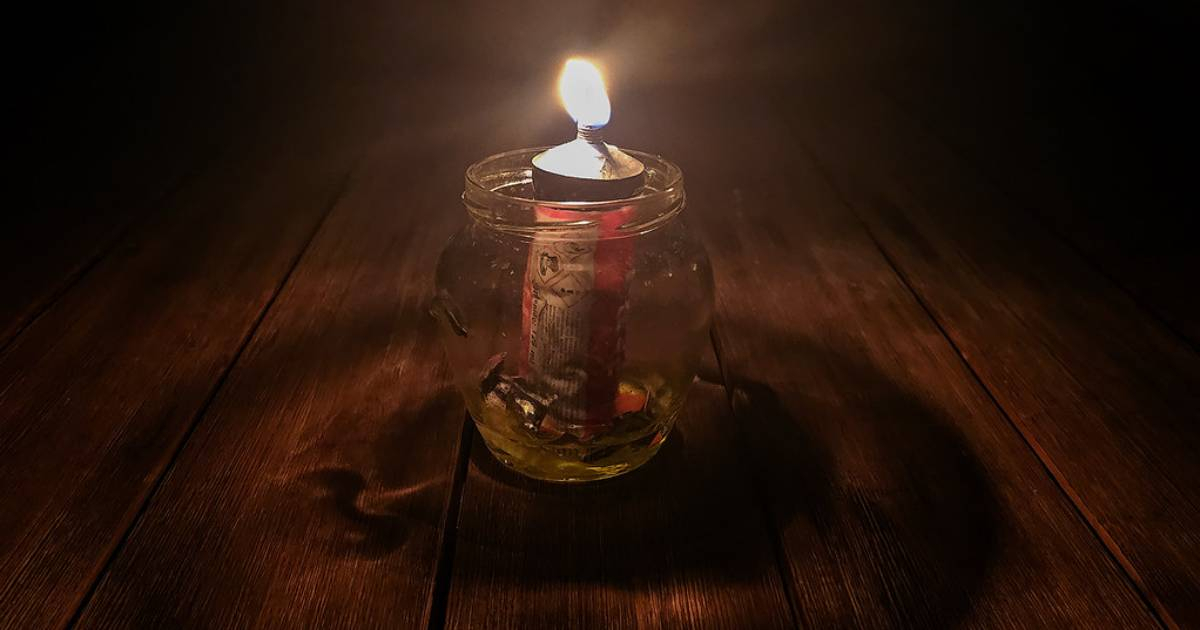
Cuba woke up this Tuesday to another day of widespread blackouts with no signs of relief.
According to the official information note from the Unión Eléctrica, on Monday the service was interrupted for 24 hours, including overnight, with a maximum impact of 2,128 MW recorded at 9:40 PM that affected all provinces in the country.
For Tuesday, the state agency forecasts an even worse situation: an impact of 2,150 MW during peak hours, with a mere availability of 1,080 MW against a projected maximum demand of 3,200 MW.
In practical terms, the Cuban electrical system can only meet one third of the country's needs.
The breakdown of issues in the thermoelectric plants reflects the state of structural collapse in generation.
Five units of the thermoelectric plants remain out of service due to breakdowns: Máximo Gómez in Mariel, Artemisa; Ernesto Guevara in Santa Cruz del Norte, Mayabeque; Lidio Ramón Pérez (Felton) in Holguín; and Antonio Maceo (Renté) in Santiago de Cuba.
In addition to those breakdowns, there are four other units undergoing maintenance at the CTE Ernesto Guevara, Antonio Maceo, and Diez de Octubre in Nuevitas, Camagüey.
The situation at the Antonio Guiteras thermoelectric plant, the largest in the country, further worsens the outlook.
The plant is preparing for a new outage from the National Electro-Energy System (SEN) due to a water loss in its boiler, just one day after reconnecting.
Previously, the facility announced on its social media that it is generating "150 MW at this moment" and that it is "limited by high water consumption," well below its optimal capacity of between 270 and 280 MW. The installation has gone over 15 years without major maintenance.
This debacle is compounded by the fact that 106 distributed generation plants are out of service due to a lack of fuel, along with the Regla Patana, the Melones Patana, the Mariel Fuel Plant, and the Moa Fuel Plant.
The 54 photovoltaic solar parks generated 4,989 MW/hour on Monday, with a maximum output of 780 MW, which is insufficient to offset the decline in thermal generation and does not meet nighttime demand.
This Tuesday falls within a catastrophic July for Cubans. On July 8, the largest historical deficit of the system: 2,341 MW was recorded. So far this month, the system has completely collapsed at least five times, leaving the entire Island without electricity for hours.
The impact on the population is devastating. In Havana, power outages exceed 24 consecutive hours; in Matanzas, there have been reports of up to 87 consecutive hours without electricity, while hotels in Varadero have a continuous supply thanks to their own generators.
Social desperation has translated into record street protests: in June, 107 demonstrations were recorded, with slogans escalating from "We want power!" to "Freedom!" and "Down with the dictatorship!".
The government of Miguel Díaz-Canel has responded by blaming the U.S. oil embargo and denouncing that Washington seeks to "induce a social explosion by suffocation," without providing specific timelines for the restoration of service.
Meanwhile, Cuban families are improvising with charcoal and makeshift stoves to cook in the absence of electricity, which the regime cannot guarantee.
Related videos:
Filed under: