Related videos:
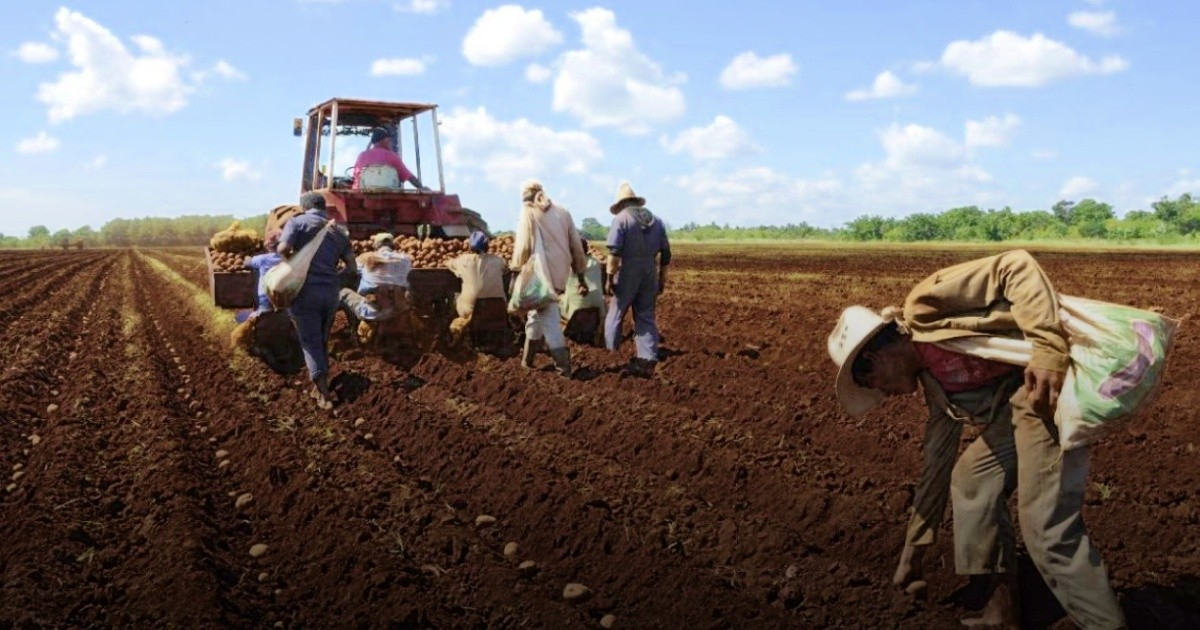
The Cuban regime announced this Sunday the elimination of the hectare limitations for the granting of land in usufruct and the opening of this mechanism to all economic actors, including small and medium-sized enterprises, mixed companies, and foreign investment, according to the official source Cubadebate.
The announcement was made by Vice Prime Minister Jorge Luis Tapia Fonseca during a meeting with cooperatives and producers from municipalities in the west of Havana, as part of the implementation of the Government's Economic and Social Program 2026.
The Minister of Agriculture, Ydael Pérez Brito, specified that the area to be allocated will no longer be subject to a fixed cap, but will be determined based on the submitted productive project and the programs prioritized by the State.
The only essential requirement is that anyone requesting new land must have already developed the land they currently possess.
The delivery process is also simplified: companies in the Agriculture System will be able to directly assign the land to applicants in coordination with the cooperatives, with an estimated timeframe of 15 to 20 days, compared to the previous times that could be considerably longer.
Economic actors, regardless of the sectors. Anyone who wants to go to the land to work can do so, clarified Tapia Fonseca.
Among the additional news, the lands granted for usufruct can be inherited, including those belonging to individuals who emigrated from the country but retain their effective citizenship, who will also be able to request new allocations.
The area designated for improvements is increased to 5% of the total land available to the producer, and when the producer achieves positive results for more than five years, the dwelling constructed on that land will become their property.
Claims regarding inheritances and legal processes related to land are no longer under the jurisdiction of the Ministry of Agriculture and are transferred to the courts and the municipal and provincial justice departments.
These measures are part of a broader package of reforms.
The new Agricultural and Forestry Land Law being prepared by the regime —scheduled for approval in the regular session of the National Assembly on July 29— will unify more than 25 scattered legal provisions, extend usufruct contracts to 25 renewable years, and raise the limit for individuals to 67.10 hectares.
The backdrop of these reforms is an agricultural crisis of historic proportions: rice production fell from 304,000 tons in 2018 to just 111,000 in 2025, root vegetables decreased by 44%, and eggs by 43%.
Cuba imports between 70% and 80% of the food it consumes, at a cost of nearly 2 billion dollars annually, and a survey revealed that 1 in 3 Cuban families suffers from hunger.
The regime also announced in June the disappearance of the Ministry of Agriculture, which will be replaced by a new Ministry of Agro-Food that will integrate agriculture, food industry, fishing, and the sugar sector.
Tapia Fonseca summarized the urgency driving all these measures with a direct warning: "If we don't produce more, if we don't put more people on the land, then we won't make progress."
Filed under: