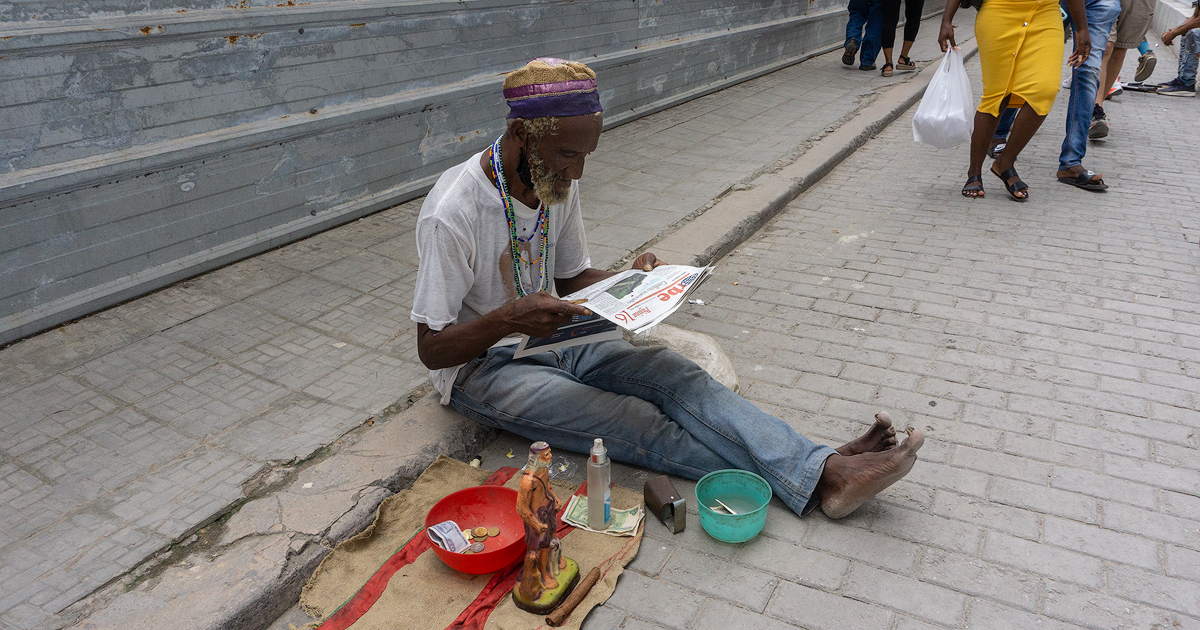
One of the first signs of a democracy beginning to die emerges when a society loses something essential: the right to know the truth.
Authoritarian regimes do not always begin by immediately eliminating all freedoms. Often, the first step is more subtle: controlling information, deciding what can be said, what can be published, and which version of reality the population must accept.
The Cuban experience represents one of the longest demonstrations of this phenomenon in Latin America. From the early years of the revolutionary process, the government understood that controlling information meant controlling collective consciousness.
When a state makes truth its official property, society becomes defenseless. The citizen ceases to be a free participant in public life and transforms into a recipient of an imposed discourse.
The unique truth as an instrument of power
The information monopoly is founded on a dangerous idea: there is only one truth, and that truth belongs to the government. Independent media disappear, criticism becomes a crime, and dissent is increasingly portrayed as treason.
In Cuba, for decades, the official press has operated as an extension of political power. The State's narrative permeates all spaces: television, radio, newspapers, schools, and social organizations. The consequence is profound: an entire generation can grow up hearing only one interpretation of history, one explanation for national issues, and one response to all failures. When there is no contrast of ideas, propaganda replaces thought.
Control of language is control of the citizen
Authoritarian governments understand that an informed society is a society that is difficult to manipulate. That’s why censorship does not only aim to prevent criticisms from being published; it seeks to create fear. Citizens learn that certain questions can have consequences, that certain opinions must be kept silent, and that caution can become a form of survival.
History shows that no society remains free when its citizens are afraid to express their thoughts. Imposed silence does not equate to conformity; often, it signifies fear. New technologies have broken the monopoly, but they have increased repression
For decades, the Cuban state was able to control almost entirely the flow of information. However, the arrival of the internet and social media opened small windows to a different reality. Cubans began to show the world images of everyday life: scarcity, blackouts, protests, economic decline, and demands for change.
Reality ceased to be exclusively the official version
In response to the loss of absolute control over the narrative, authoritarian governments often react with increased surveillance, restrictions, and persecution against those who use information as a civic tool.
But once a society discovers that there is another reality beyond propaganda, it becomes increasingly difficult to return to the old monopoly on truth.
The warning for Latin America
The Cuban lesson does not belong solely to Cuba. It serves as a warning for the entire continent. Democracies should not wait for elections to disappear before defending their freedoms. A democracy begins to weaken when a free press is attacked, when attempts are made to silence the opponent, and when a government seeks to become the absolute owner of the truth.
The danger is not just in shutting down newspapers or radio stations. It also lies in creating societies where a portion of the population accepts that only one voice has the right to speak.
History teaches that no power controlling information remains indefinitely without consequences. The official lie can last for years, but sooner or later, reality prevails.
Cuba leaves a clear lesson
A country where the state decides what to think, what to remember, and what to say gradually loses an essential part of its freedom. The freedom of information is not a privilege for journalists; it is a right for all citizens. Because when a nation loses the ability to hear different voices, it also loses the capacity to correct its mistakes.
The first battle for freedom begins in a seemingly simple place: the defense of truth.
Related videos:
Filed under:
Opinion article: Las declaraciones y opiniones expresadas en este artículo son de exclusiva responsabilidad de su autor y no representan necesariamente el punto de vista de CiberCuba.