The Department of State of the United States designated nine entities and two officials linked to the Cuban regime this Thursday, in a new round of sanctions aimed directly at the energy sector, the evasion network of the military conglomerate GAESA, and the medical mission program abroad.
The measures were adopted under Executive Order 14404, signed by President Donald Trump on May 1, 2026, which authorizes sanctions against individuals and entities involved in repression in Cuba and threats to U.S. national security.
In the energy sector, Washington designated the Centro de Investigaciones del Petróleo S.A. (CEINPET), the research and development arm of the already sanctioned CUPET; the Empresa de Energía S.A. (ENERSA), importer of gas and lubricants; and EINARBO S.A., which supplies the regime with the same products from Mexico and India.
The sanction against CEINPET comes weeks after CUPET was designated on June 11, thus tightening the grip on the entire chain of exploration, importation, and distribution of fuels under the regime.
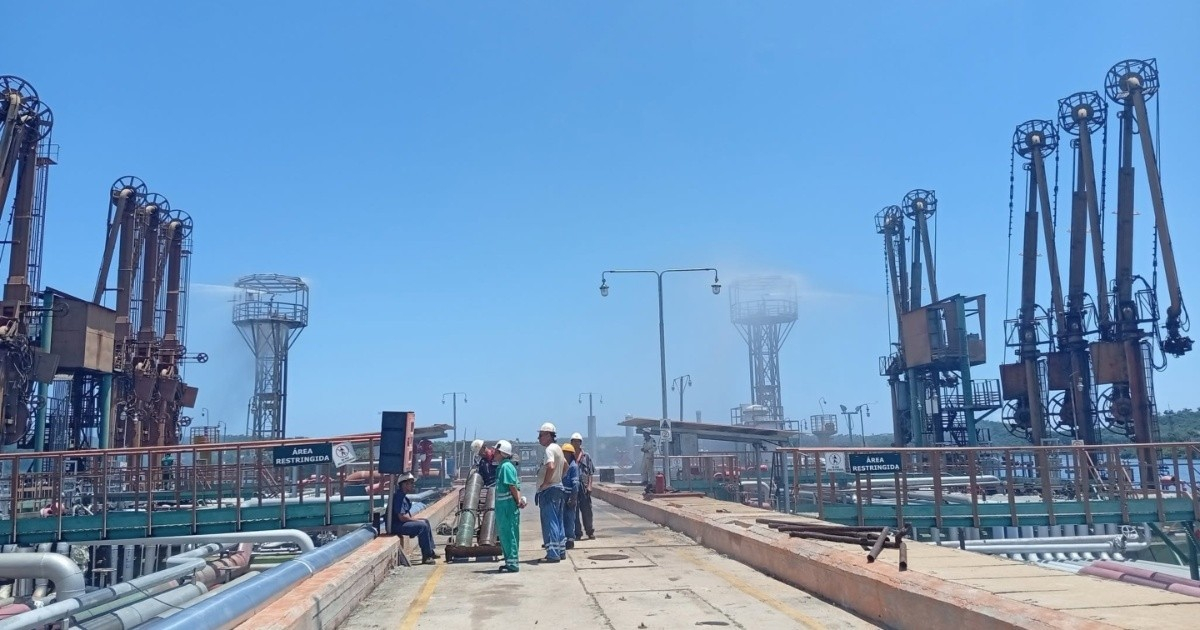
On the sanctions evasion front, the State Department accused GAESA of resorting to corporate restructuring to shield its assets. The Mariel Container Terminal S.A. —through which approximately 85% of Cuban imports pass— was sanctioned for transferring the Port of Mariel to Coral Marítima S.A. in mid-June, in an operation that Washington described as a deliberate evasion maneuver.
That transfer of the Port of Mariel to Coral Marítima was detected following the prior sanction against GAESA on May 7 and against Almacenes Universales S.A. on June 23. Coral Marítima, a subsidiary of the shipping group GEMAR —which was also sanctioned on July 13— was additionally designated this Thursday.
They complete the list of entities linked to evasion: CEIBA Investments Limited, a firm based in Guernsey that operates in Cuban real estate and whose Panamanian subsidiary took control of an old joint venture with GAESA following the designation of the conglomerate, and ORBIT S.A., a remittance processor that the State Department described as "almost certainly" controlled by GAESA.
The third axis of the sanctions targets the international medical missions program. The Cuban Medical Services Commercializer S.A. (CSMC) —described by Washington as "the main source of foreign currency for the Cuban regime, generating more income than any other sector of the economy"— and the Central Unit for Medical Cooperation (UCCM), responsible for recruiting professionals for abroad, were designated.
At the individual level, the Minister of Public Health, José Ángel Portal Miranda, and the director of the UCCM, Gretza Sánchez Padrón, were sanctioned. The State Department reiterated that the regime retains between 50% and 95% of the salaries paid by recipient countries, affecting tens of thousands of Cuban doctors in more than 50 countries.
The Secretary of State Marco Rubio warned that any foreign bank or company providing services to those sanctioned must immediately halt those activities: "Anyone who supports, sponsors, or provides services to these sanctioned actors runs the risk of being sanctioned themselves."
This is the fourth significant round of designations against Cuba in less than three months, following the actions of May 7, June 11, and July 13, when the U.S. sanctioned another ten entities, including the Ministry of Tourism, the Rapid Response Brigades, and the Territorial Troops Militias.
Related videos:
Filed under: