Dominican Republic resumed its egg exports to Cuba on Thursday with an initial shipment of 12 containers totaling 3,900,960 units, as reported by Miguel Lajara, a member of the Dominican Association of Poultry (ADA), to the Dominican outlet Diario Libre.
Shipments had come to a standstill due to maritime logistical difficulties stemming from the restrictions of the US embargo, which increased costs and reduced the availability of refrigerated containers on the route.
The export block that makes up this first shipment consists of the companies Agrokilda, Granja Wilse, Huevos Perla, and Agropecuaria SSK.
The reactivation of commerce was made possible thanks to a subsidy approved by the Dominican Government: 4,500 dollars for each exported container, with a limit of 20 containers per week.
The program has a fund of 25 million Dominican pesos, managed by the ADA in coordination with the National Association of Egg-Laying Hen Producers (Asonaprop).
Lajara stated that in this new phase, shipments will be made twice a month, which projects a volume of over 13 million eggs monthly to the island.
The figure contrasts with the 60 million units that the Dominican Republic was shipping monthly before the disruption, highlighting the ongoing logistical challenges that the route still faces.
The representative of the ADA emphasized that Dominican eggs are highly valued in the Cuban market for their quality and freshness, and that the geographic proximity between the two countries allows the product to reach the island without the need for refrigeration during transport.
Lajara also emphasized that the recovery of exports will help to "preserve thousands of jobs" in the Dominican poultry sector and maintain the stability of national production. The Cuban market once accounted for between 5% and 7% of the total egg production in the Dominican Republic.
The dependency of Cuba on Dominican imports reflects the collapse of its own poultry production.
In October 2024, the Cuban Minister of Agriculture, Ydael Pérez Brito, acknowledged that the island had gone from producing between four and five million eggs daily to just 1,200,000, and that the country had lost five million laying hens in four years.
The Cuban economist Pedro Monreal described this decline as more severe than that experienced during the Special Period of the 1990s. In provinces like Ciego de Ávila, production plummeted by 87% between 2016 and 2024, dropping from 120 million units to just 16 million.
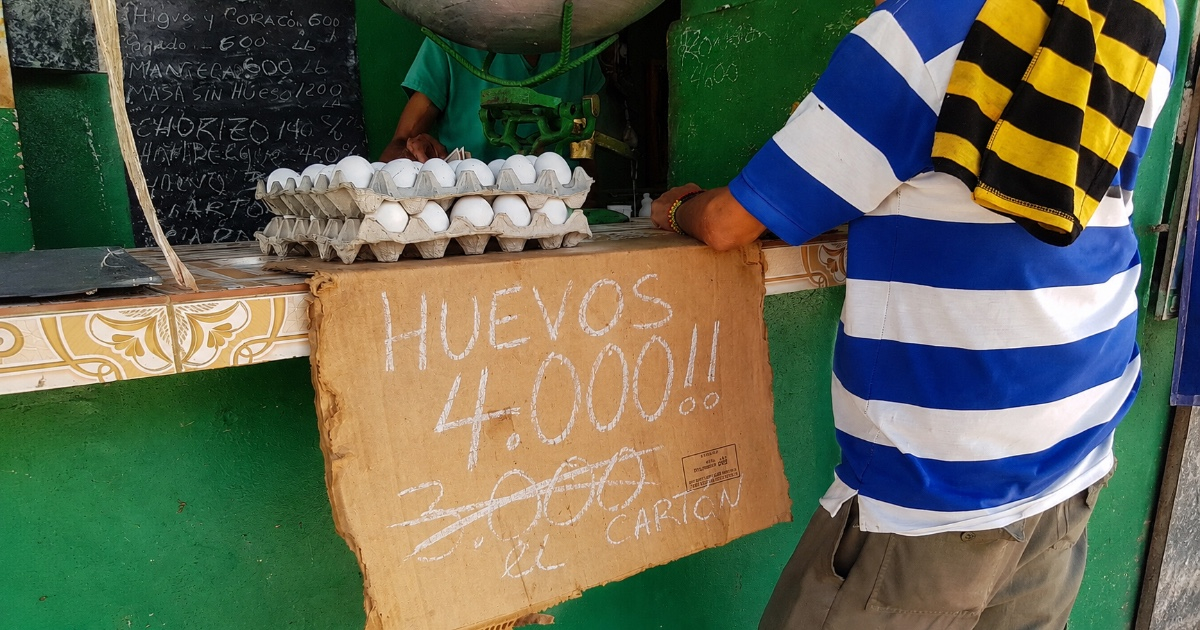
The scarcity has led to extreme situations on the island: a carton of eggs has exceeded 5,000 pesos in the informal market, and in Holguín, 54,000 laying hens were sacrificed due to a lack of feed. Cuba also imports eggs from Colombia and the United States, with the latter sold in state stores in foreign currency.
In October 2025, Dominican producers reported shipments of up to 65 million eggs per month to Cuba, a number that made the island the main support of the poultry industry of the neighboring country. Dominican entrepreneur Fabio Baba summarized it clearly: "If that door closes, we would lose one of the pillars that supports the current stability of the industry."
Related videos:
Filed under: