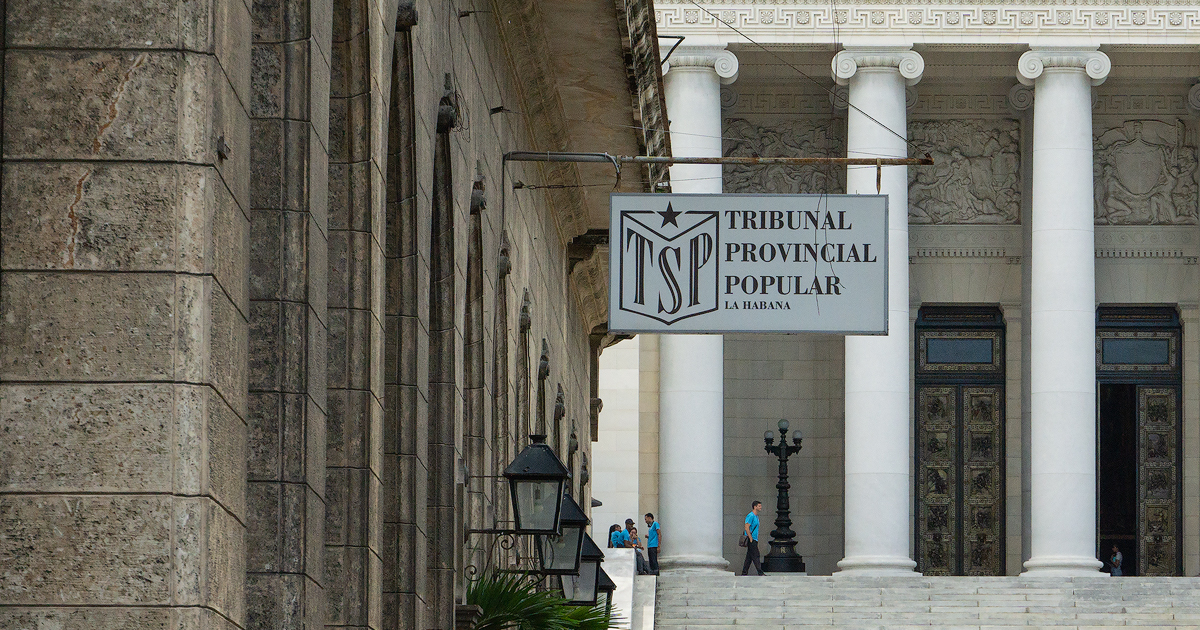
Democracies do not cease to exist solely when parliaments are closed or elections are suspended. Often, courts, codes, and judges continue to exist. What disappears is the independence of the judiciary.
When the Judiciary ceases to serve the law and begins to serve the ruler, the citizen loses the last refuge against the abuse of the State.
The Cuban experience is one of the clearest examples of this process in Latin America. After 1959, judicial independence was gradually replaced by a system where the courts became subordinate to the political interests of the regime. Justice ceased to be a power of the State and became an instrument of power.
Under those conditions, the accused is no longer facing just a prosecutor. In reality, they are up against the entire political apparatus that has already decided what the outcome of the process should be.
When a judge fears opposing power, the ruling ceases to rely on evidence and begins to depend on political convenience.
History shows that this phenomenon does not appear overnight. First, those who advocate for judicial independence are discredited. Then, laws are amended to increase the control of the Executive. Finally, the appointments, promotions, and tenure of judges become dependent on political loyalty rather than their professional capabilities.
From that moment on, the law loses its essence. It no longer protects the citizen from the State; it protects the State from the citizen.
The consequences are profound. Opponents encounter enormous obstacles in obtaining a fair trial. Critical journalists face disproportionate legal proceedings. Human rights defenders live under constant legal threat. The average citizen learns that seeking justice can become a personal risk.
Without an independent judiciary, public trust also disappears. The populace stops believing in the courts because they understand that many decisions are driven by political interests rather than the principle of impartiality.
This represents one of the most important lessons that Cuba presents to Latin America today.
It is not enough to preserve judicial buildings, wearing judges, or carefully drafted codes. What is truly essential is to maintain the autonomy of those who administer justice. When a magistrate receives instructions from political power, democracy begins to lose one of its fundamental pillars.
Judicial independence is not a privilege of judges. It is the right of all citizens to be judged solely by the law. When that principle disappears, freedom starts to depend on the will of those in power rather than on the protection of institutions.
Cuban history shows that no society loses justice all at once. It fades away gradually, through small concessions, opportunistic silences, and seemingly harmless reforms, until one day it realizes that there is no longer a court capable of defending the citizen against power.
That is, perhaps, one of the most valuable warnings that Latin America should heed before it is too late.
Related videos:
Filed under:
Opinion article: Las declaraciones y opiniones expresadas en este artículo son de exclusiva responsabilidad de su autor y no representan necesariamente el punto de vista de CiberCuba.